Takeaways from AP-Grist reporting on federal support for rural renewable energy
Advertisement
Read this article for free:
or
Already have an account? Log in here »
To continue reading, please subscribe:

Digital Subscription
One year of digital access for only $205*
- Enjoy unlimited reading on winnipegfreepress.com
- Read the E-Edition, our digital replica newspaper
- Access News Break, our award-winning app
- Play interactive puzzles
*First annual payment billed as $205.00 + GST for one year. This annual subscription will automatically renew at $233.00 + GST every 52 weeks (10% off the regular annual price of $259.35). Offer available to new and qualified returning subscribers only. Cancel any time.
To continue reading, please subscribe:
Add Free Press access to your Brandon Sun subscription for only an additional
$1 for the first 4 weeks*
- Enjoy unlimited reading on winnipegfreepress.com
- Read the E-Edition, our digital replica newspaper
- Access News Break, our award-winning app
- Play interactive puzzles
*Your next Brandon Sun subscription payment will increase by $1.00 and you will be charged $17.95 plus GST for four weeks. After four weeks, your payment will increase to $24.95 plus GST every four weeks.
Read unlimited articles for free today:
or
Already have an account? Log in here »
Farming in America can be a tough business, and for some producers, finding more affordable energy can make the difference between profit and loss. But getting federal support to help them do that with renewables has become much more difficult since Donald Trump’s return to the White House.
Trump has been hostile to renewable energy, instead promoting fossil fuels that he says are essential to American energy dominance. The Associated Press and Grist collaborated on a project to analyze how federal policy changes on energy are affecting farmers.
They found that two programs critical for renewable energy growth — a rural-focused initiative called REAP and a clean energy tax credit — have been sharply rolled back. In the fiscal year that started Oct. 1, they found that the U.S. Department of Agriculture hasn’t awarded a single dollar in rural energy grants or loan guarantees.
___
EDITOR’S NOTE: This story is a collaboration between Grist and The Associated Press.
___
Some takeaways from their reporting:
A longstanding renewable energy program is gutted
Through the Rural Energy for America Program, or REAP, the USDA issues grants and loans to farmers, ranchers, and rural businesses interested in renewable energy — like installing solar to lower utility costs. REAP has backed tens of thousands of renewable energy and efficiency projects, with grants totaling more than $1.8 billion, since it began nearly two decades ago.
The program was supercharged by funding from the Inflation Reduction Act in 2022, and had bipartisan support up until then.
But the Grist-AP analysis of USDA data found the program hasn’t committed a single dollar in renewable energy development since September. It has never reopened REAP’s grant application cycle though it said it would do so last October. Its loan guarantee program — geared toward larger farm and rural business projects — has remained open, but the analysis found that the agency has awarded no new agreements this fiscal year.
And on March 31, the USDA announced a suspension of all REAP grant awards so it could update regulations to comply with a Trump executive order issued in July.
A USDA spokesperson said the suspension was temporary but didn’t say for how long.
A tax credit begun under Bush is tightened, killing projects
The Energy Policy Act of 2005, signed by President George W. Bush, enacted a 30% investment tax credit for large-scale clean energy projects, boosting the solar industry. The tax credit was extended for eight years under President Obama and later extended under Trump in 2020.
When President Joe Biden signed the 2022 landmark climate bill, the tax credit was extended again through 2032 or when specific emissions targets were reached. But under Trump’s tax bill passed by Congress last year, the timeline for getting credits was moved up. Now, commercial solar projects have to be under construction by July 2026 or in service by the end of 2027 to be eligible for the credit.
The Grist-AP analysis found at least 126 solar projects proposed since 2024 — all of them on or near farmland — are awaiting regulatory approval. Together the projects would supply about 20 gigawatts of renewable electricity, enough to power about 4.5 million homes.
Some developers are abandoning projects because they say they can’t meet the deadlines.
What all this means for farmers
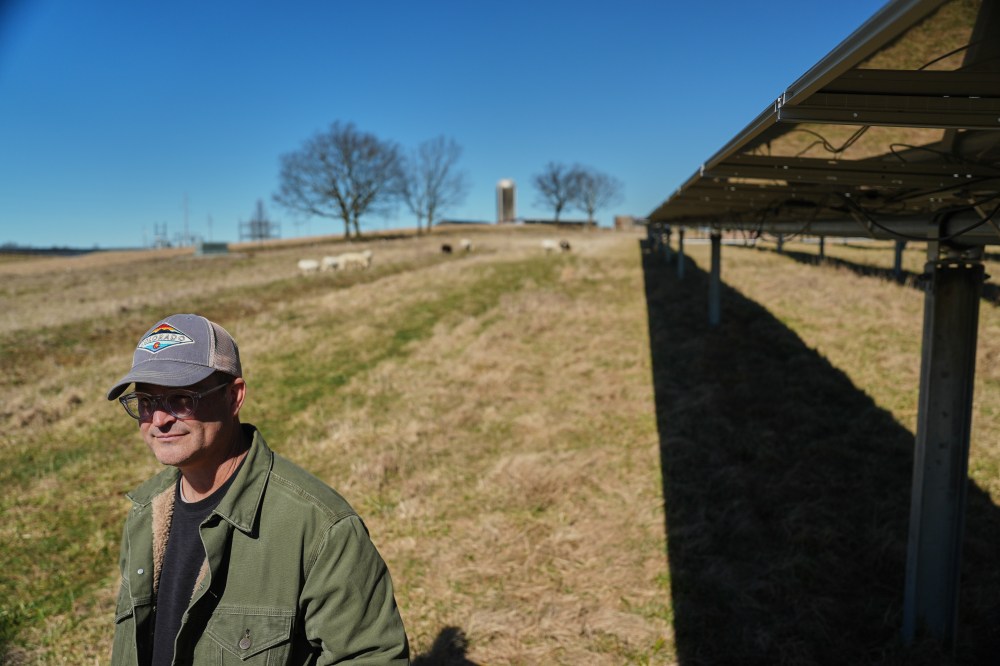
Daniel Bell, a Kentucky sheep farmer, is earning extra money by running his flock on land owned by a commercial solar operation. The sheep keep the grass down beneath solar arrays. With an expanding flock, now he needs a new barn, and he wanted to power it with rooftop solar — only to find that the Trump administration had effectively stopped the grants that would have made it possible on his own property.
Bell said for him it’s an issue of the freedom to do what he wants in a way that lowers his bills.
Robert Bonnie, who was undersecretary for farm production and conservation at the USDA under the Biden administration, said the retreat from funding renewables will be felt throughout rural America. Part of the USDA’s role has been to invest in rural areas while making rural prosperity part of the climate agenda.

“In places like Iowa and Texas, renewables matter, not just for additional power, and lower power bills, and clean energy, but also matters for farmers’ pocketbooks,” said Bonnie. “Anything you do to pull back on that is hugely problematic.”
___
This story has been corrected to show that new commercial solar projects can be eligible for a tax credit if they are under construction by July 2026 or in service by the end of 2027, not necessarily both.
___
The Associated Press’ climate and environmental coverage receives financial support from multiple private foundations. AP is solely responsible for all content. Find AP’s standards for working with philanthropies, a list of supporters and funded coverage areas at AP.org.