

Teacher spots in demand after certification changes

Advertisement
Read this article for free:
or
Already have an account? Log in here »
To continue reading, please subscribe:

Digital Subscription
One year of digital access for only $205*
- Enjoy unlimited reading on winnipegfreepress.com
- Read the E-Edition, our digital replica newspaper
- Access News Break, our award-winning app
- Play interactive puzzles
*First annual payment billed as $205.00 + GST for one year. This annual subscription will automatically renew at $233.00 + GST every 52 weeks (10% off the regular annual price of $259.35). Offer available to new and qualified returning subscribers only. Cancel any time.
To continue reading, please subscribe:
Add Free Press access to your Brandon Sun subscription for only an additional
$1 for the first 4 weeks*
- Enjoy unlimited reading on winnipegfreepress.com
- Read the E-Edition, our digital replica newspaper
- Access News Break, our award-winning app
- Play interactive puzzles
*Your next Brandon Sun subscription payment will increase by $1.00 and you will be charged $17.95 plus GST for four weeks. After four weeks, your payment will increase to $24.95 plus GST every four weeks.
Read unlimited articles for free today:
or
Already have an account? Log in here »
Universities are being flooded with applications from aspiring teachers now that it’s easier to become certified in Manitoba.
Following years of struggle to fill available seats, faculties of education are scaling up after-degree programs this fall to meet newfound demand.
The University of Manitoba is adding 105 undergraduate seats in September, with a specific focus on graduating more kindergarten-to-Grade 8 teachers.
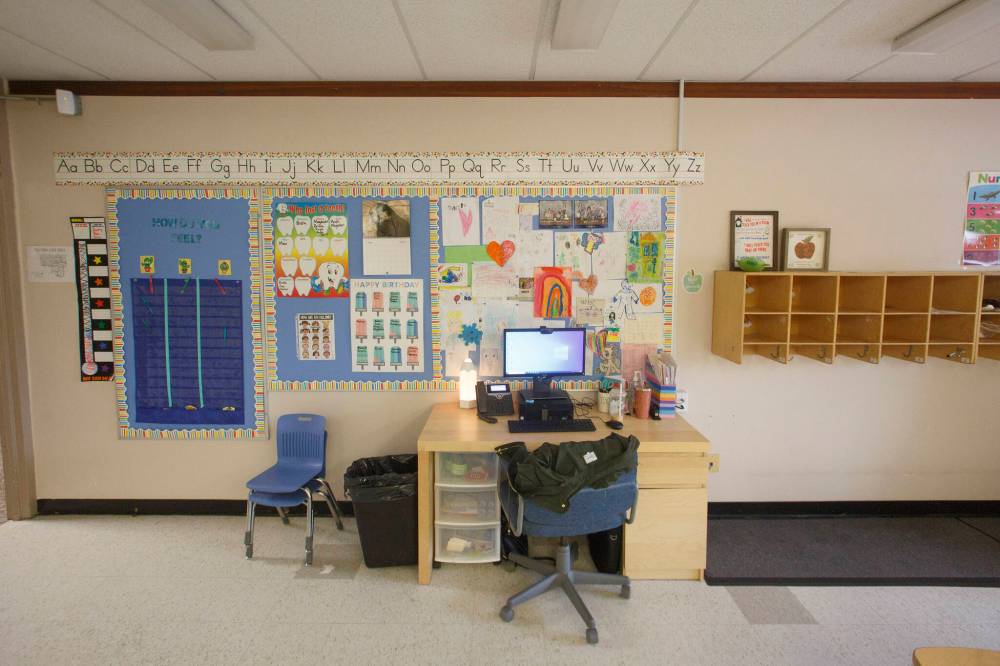
MIKE DEAL / FREE PRESS FILES
Manitoba no longer requires specialization in a list of approved subject areas known as major or minor “teachables,” and post-secondary education programs are now seeing an influx of applications.
“We need to get more fully trained teachers out in the field to address the provincial needs. We can’t have classrooms without teachers,” education dean Jan Stewart said.
Far too many students, primarily in rural, northern and French-language classrooms, are being taught by adults with limited teaching permits, Stewart said.
The U of M academic supported the education department’s controversial decision to loosen criteria for certification — which dictates university admissions and programming — during the 2024-25 school year.
Manitoba no longer requires specialization in a list of approved subject areas known as major or minor “teachables.”
The province has also stopped mandating K-8 teachers complete extra training in mathematics, science, one of Canada’s official languages, and either history or geography.
Critics have expressed concerns the regulatory changes will lead to more teachers being ill-equipped to deliver math and other core subjects.
Proponents argue education faculties will ensure graduates still know how-to teach curricula of all sorts and these updates were necessary to address labour shortages.
The regulatory changes have invited a broader range of applicants to the University of Winnipeg, said Marc Kuly, director of undergraduate teacher education.
Kuly said the faculty has issued acceptance letters to candidates with degrees ranging from mechanical engineering to environmental studies.
U of W is planning to double its after-degree intake this fall by enrolling 70 extra students.
Brandon University and Canadian Mennonite University have also reported high demand for their respective after-degree education programs.
BU applications are up 41 per cent. CMU received more than three times the applications than available spots in its inaugural 34-seat cohort.
St. Boniface University indicated it’s been recording a minor increase in applications from aspiring French and French immersion teachers in recent years.
In addition to certification changes, U of M’s education dean attributes growing interest in the faculty to the rollout of a popular new elective, Introduction to Education: What Does It Mean to Teach?
“We decided to tap into our current student body — arts, sciences, engineering,” Stewart said, noting her faculty launched the course in 2024 and has been ramping up marketing across the Fort Garry campus.
The addition of more training seats overall is welcome news, but these changes alone won’t solve the labour shortage, said Lillian Klausen, president of the Manitoba Teachers’ Society.
“It’s great to recruit more people into the profession, but we know what happens in the first five years… The rose-coloured glasses come off,” Klausen said.

Four in 10 teachers who took part in a recent membership survey indicated they plan to leave the profession before retirement. The online poll drew responses from 3,470 teachers between January 22 and February 17.
Teachers repeatedly expressed concerns about increasing workloads and burnout brought on by a lack of resources, Klausen said.
Manitoba has topped up overall funding to K-12 public schools by 3.5 per cent for next year.
Neither U of M nor U of W have requested specific funding to expand teacher training.
maggie.macintosh@freepress.mb.ca
Maggie Macintosh
Education reporter
Maggie Macintosh reports on education for the Free Press. Originally from Hamilton, Ont., she first reported for the Free Press in 2017. Read more about Maggie.
Funding for the Free Press education reporter comes from the Government of Canada through the Local Journalism Initiative.
Every piece of reporting Maggie produces is reviewed by an editing team before it is posted online or published in print — part of the Free Press‘s tradition, since 1872, of producing reliable independent journalism. Read more about Free Press’s history and mandate, and learn how our newsroom operates.
Our newsroom depends on a growing audience of readers to power our journalism. If you are not a paid reader, please consider becoming a subscriber.
Our newsroom depends on its audience of readers to power our journalism. Thank you for your support.
Maggie Macintosh
Education reporter
Maggie Macintosh reports on education for the Free Press. Originally from Hamilton, Ont., she first reported for the Free Press in 2017. Read more about Maggie.
Funding for the Free Press education reporter comes from the Government of Canada through the Local Journalism Initiative.
Every piece of reporting Maggie produces is reviewed by an editing team before it is posted online or published in print — part of the Free Press‘s tradition, since 1872, of producing reliable independent journalism. Read more about Free Press’s history and mandate, and learn how our newsroom operates.
Our newsroom depends on a growing audience of readers to power our journalism. If you are not a paid reader, please consider becoming a subscriber.
Our newsroom depends on its audience of readers to power our journalism. Thank you for your support.
Related Articles
NDP government gets failing grade on teachers Internal docs show support for moderate, not extreme, changes to teacher training

Advertisement Advertise With Us
Advertisement Advertise With Us