

City officer’s fatal shooting of teen driver not justified, use-of-force expert tells inquest

Advertisement
Read this article for free:
or
Already have an account? Log in here »
To continue reading, please subscribe:
Digital Subscription
One year of digital access for only $1.44 a week*
- Enjoy unlimited reading on winnipegfreepress.com
- Read the E-Edition, our digital replica newspaper
- Access News Break, our award-winning app
- Play interactive puzzles
*Billed as $5.77 plus GST every four weeks. After 52 weeks, price increases to the regular rate of $19.95 plus GST every four weeks. Offer available to new and qualified returning subscribers only. Cancel any time.
To continue reading, please subscribe:
Add Free Press access to your Brandon Sun subscription for only an additional
$1 for the first 4 weeks*
- Enjoy unlimited reading on winnipegfreepress.com
- Read the E-Edition, our digital replica newspaper
- Access News Break, our award-winning app
- Play interactive puzzles
*Your next Brandon Sun subscription payment will increase by $1.00 and you will be charged $17.95 plus GST for four weeks. After four weeks, your payment will increase to $24.95 plus GST every four weeks.
Read unlimited articles for free today:
or
Already have an account? Log in here »
An expert in police use-of-force training testified Thursday that a Winnipeg police officer was not justified to shoot and kill “Eishia Hudson, contradicting the findings of Manitoba’s police watchdog.
Peter Rampat, a former Toronto police officer and instructor at the Ontario Police College, took the stand amid an ongoing inquest into the death of the 16-year-old girl from Berens River First Nation.
Hudson died in April 2020 after leading police on a high-speed pursuit that ended with her crashing a stolen Jeep on Lagimodiere Boulevard.
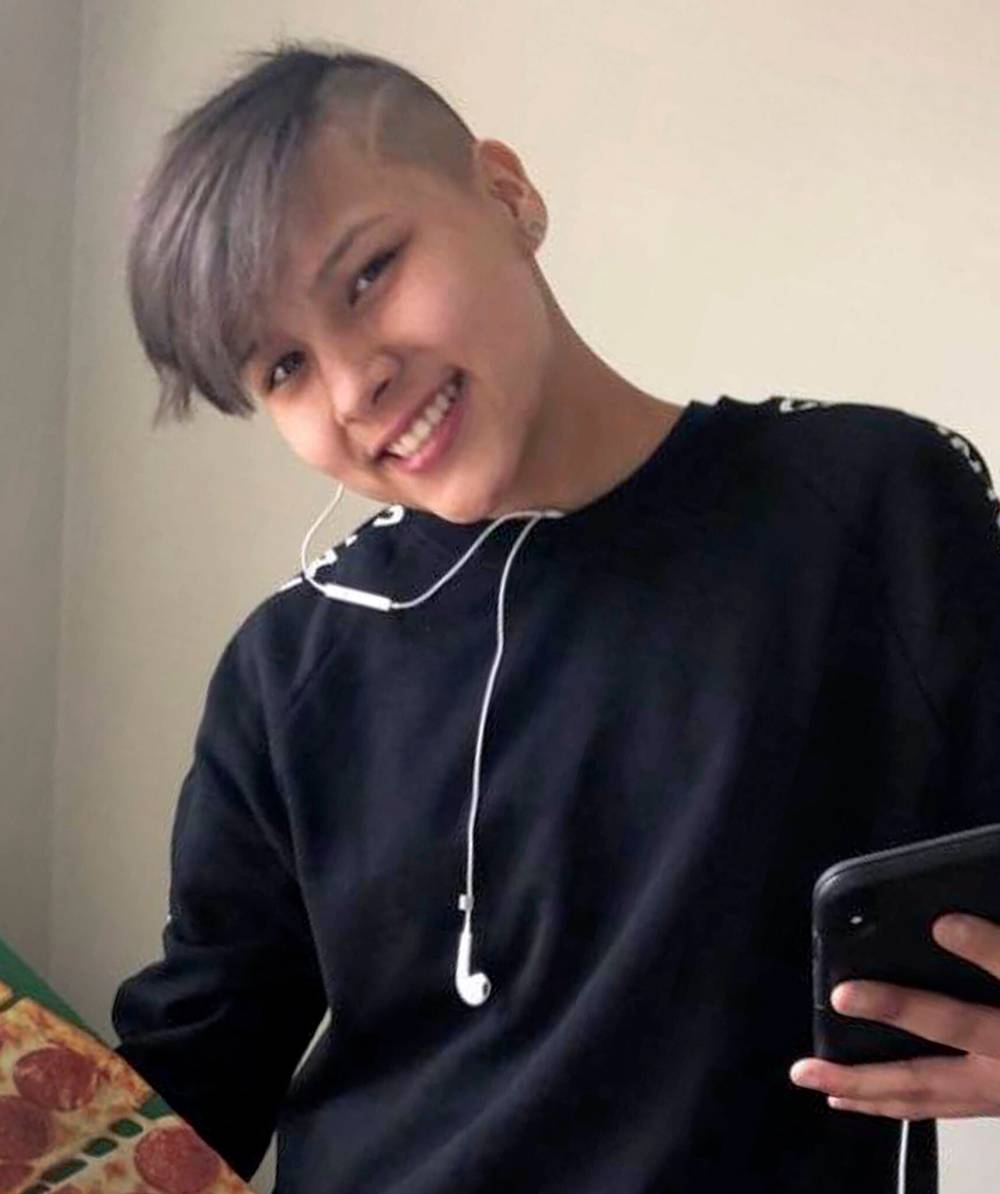
SUPPLIED
16-year-old Eishia Hudson died in April 2020 after leading police on a high-speed pursuit that ended with her crashing a stolen Jeep on Lagimodiere Boulevard.
Rampat said Const. Kyle Pradinuk, and other Winnipeg Police Service officers, made a mistake when they sprinted toward the vehicle immediately after the collision.
“This, to me, is not appropriate,” Rampat said. “Not in line with officer safety training. I would struggle to find a program anywhere that would endorse just running into a situation like that.”
Rampat walked the court through police training standards, including the principle of “time and distance,” which he said is a part of nearly all levels of threat response.
Where possible, officers should establish distance between themselves and threats, creating more time to assess situations and respond appropriately, he said.
By rushing toward the scene of the accident, Pradinuk and his partner, Const. Serge Sylvestre, placed themselves in harm’s way and limited their ability to respond with anything less than lethal force, Rampat said.
A bystander’s video of the incident, which has been played repeatedly in court, showed the Jeep began to reverse the moment Sylvestre reached the Jeep and gripped the driver’s-side door handle.
Pradinuk said he then fired one round at Hudson because he feared his partner was about to be run over. He fired a second round a moment later, saying it he believed the Jeep had “lurched forward.”
The video shows the Jeep’s reverse lights remained active, and Rampat argued it did not pose an imminent threat.
“I just don’t see how that was a reasonable action to take,” he said. “Both rounds were fired while the vehicle was moving in a rear direction away from the police officers.”
Pradinuk, Sylvestre and other officers have testified during the inquest they rushed the vehicle believing Hudson and the four other occupants would be disoriented after the crash and there was an opportunity to bring the chase to an end.
Rampat described that decision as “policing by luck.”
“This is not a good example of a window of opportunity, because there were so many red flags,” he said, emphasizing that police dispatchers had warned officers there could be weapons in the vehicle.
Rampat’s testimony directly contradicted that of Independent Investigation Unit of Manitoba investigator Chris Butler, who found Pradinuk followed proper protocol and training in the moments before the shooting.
“If there’s an immediate… need to respond, then waiting can carry very catastrophic consequences for the officer,” Butler told court previously.
The IIU, which reviews all serious incidents involving police, cleared Pradinuk of wrongdoing and declined to recommend criminal charges.
That decision was based, in part, on Butler’s opinion.
Rampat raised concerns with the report Butler prepared for the IIU, noting that it makes no reference to the video footage of the incident and instead relies largely on statements provided by police.
Butler previously told court he did not acknowledge the footage in his report because it had not been forensically reviewed and he was unsure about its reliability as evidence.

Rampat disagreed with that decision, saying Pradinuk’s accounting of the event was “inconsistent with what was on that video.”
The inquest must determine whether the use of force against Hudson was justified and whether systemic racism played a role in her death. Provincial court Judge Margaret Wiebe, who cannot assign blame, is expected to issue a final report.
Rampat will return to court Friday, when he will provide recommendations on how to prevent similar tragedies. He will also face cross-examination from lawyers representing the other parties in the inquest, including counsel for Hudson’s family and the WPS.
Once his testimony concludes, the inquest will break until June 16.
tyler.searle@freepress.mb.ca
Tyler Searle is a multimedia producer who writes for the Free Press’s city desk. A graduate of Red River College Polytechnic’s creative communications program, he wrote for the Stonewall Teulon Tribune, Selkirk Record and Express Weekly News before joining the paper in 2022. Read more about Tyler.
Every piece of reporting Tyler produces is reviewed by an editing team before it is posted online or published in print — part of the Free Press‘s tradition, since 1872, of producing reliable independent journalism. Read more about Free Press’s history and mandate, and learn how our newsroom operates.
Our newsroom depends on a growing audience of readers to power our journalism. If you are not a paid reader, please consider becoming a subscriber.
Our newsroom depends on its audience of readers to power our journalism. Thank you for your support.
Tyler Searle is a multimedia producer who writes for the Free Press’s city desk. A graduate of Red River College Polytechnic’s creative communications program, he wrote for the Stonewall Teulon Tribune, Selkirk Record and Express Weekly News before joining the paper in 2022. Read more about Tyler.
Every piece of reporting Tyler produces is reviewed by an editing team before it is posted online or published in print — part of the Free Press‘s tradition, since 1872, of producing reliable independent journalism. Read more about Free Press’s history and mandate, and learn how our newsroom operates.
Our newsroom depends on a growing audience of readers to power our journalism. If you are not a paid reader, please consider becoming a subscriber.
Our newsroom depends on its audience of readers to power our journalism. Thank you for your support.
Related Articles
Police lawyer questions testimony about racial stereotypes at inquest into teen’s fatal shooting



Advertisement Advertise With Us
Advertisement Advertise With Us