

Study probes experiences of Indigenous grads
Racialized high school students share unique challenges, barriers to post-secondary success

Advertisement
Read this article for free:
or
Already have an account? Log in here »
To continue reading, please subscribe:

Digital Subscription
One year of digital access for only $205*
- Enjoy unlimited reading on winnipegfreepress.com
- Read the E-Edition, our digital replica newspaper
- Access News Break, our award-winning app
- Play interactive puzzles
*First annual payment billed as $205.00 + GST for one year. This annual subscription will automatically renew at $233.00 + GST every 52 weeks (10% off the regular annual price of $259.35). Offer available to new and qualified returning subscribers only. Cancel any time.
To continue reading, please subscribe:
Add Free Press access to your Brandon Sun subscription for only an additional
$1 for the first 4 weeks*
- Enjoy unlimited reading on winnipegfreepress.com
- Read the E-Edition, our digital replica newspaper
- Access News Break, our award-winning app
- Play interactive puzzles
*Your next Brandon Sun subscription payment will increase by $1.00 and you will be charged $17.95 plus GST for four weeks. After four weeks, your payment will increase to $24.95 plus GST every four weeks.
Read unlimited articles for free today:
or
Already have an account? Log in here »
Brandon Murdock recalled thinking in 2020 that, despite his struggling academic performance, he had “a solid case” to remain enrolled at the University of Winnipeg.
Murdock was mistaken — it didn’t matter that he’d missed a voluntary course withdrawal date because he’d been overwhelmed with grief amid a wave of COVID-19-related deaths in Fisher River Cree Nation, the 31-year-old said.
There was little slack for a student who had already been suspended once before. His arts degree program, which he began in 2012, was initially put on hold in 2015 because his attendance, grades and motivation suffered during a family health crisis.
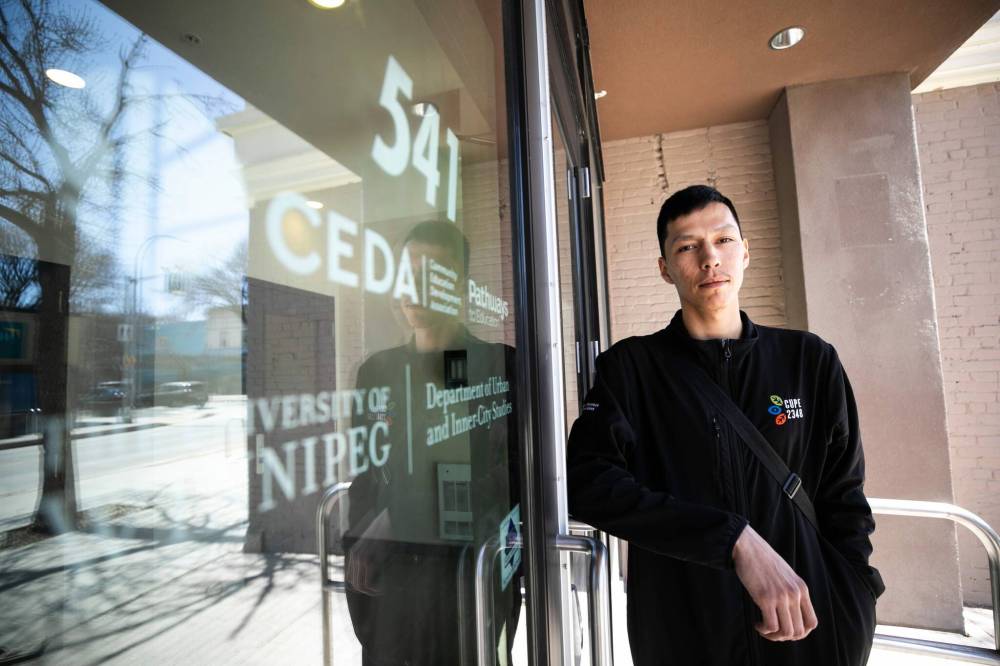
MIKAELA MACKENZIE / FREE PRESS
Brandon Murdock at CEDA on Friday. He is trying to finish a degree he started in 2012 in part to be a role model for his son.
Murdock shared those challenges, among others he’s faced as a first-generation university student who grew up in foster care, as part of a recent study about the experiences of Indigenous and racialized Grade 12 graduates in Winnipeg.
“Post-secondary institutions can be quite rigid with their rules and I think there needs to be an understanding — and some flexibility — that a linear path isn’t what’s going to work for everybody,” lead researcher Janet Nowatzki said.
The Canadian Centre for Policy Alternatives published her findings, as well as recommendations to better support students from under-represented populations to complete post-secondary programs, this week.
The think tank partnered with the Community Education Development Association — where Nowatzki is an in-house researcher — to investigate what influences post-secondary education access and completion.
All of the 27 research participants were alumni of CEDA’s flagship after-school program, which primarily serves Indigenous and newcomer students in North End and surrounding neighbourhoods. Pathways to Education provides free tutoring, mentoring and non-academic support to students in Grades 8 to 12.
Backed by U of W’s Research Ethics Board, Nowatzki’s research team conducted interviews and sharing circles between from 2022 to 2024.
The majority of participants identified as Indigenous. Seven of them were newcomers.
Nine respondents had no experience with post-secondary education before or during the three-year study. Each of them cited financial constraints.
Researchers found intergenerational trauma, mental-health challenges, caregiving responsibilities and institutional racism were other common barriers to enrolment and completion of higher education.
Asked about effective supports, students identified band funding and scholarships, encouragement from family members, Indigenous student spaces and assistance with academic navigation via CEDA, as well as post-secondary Access offices and other on-campus advisers.
The newly released report, co-authored by Nowatzki and researcher Fadi Ennab, includes four overarching calls to action based on participants’ input.
It calls for the creation of more bursaries for Indigenous and racialized students to cover tuition and housing-related expenses and ensure on-campus mental-health services are grounded in Indigenous world views and cultural practices.
Another recommendation specifically targets school leaders, urging them to hire more Indigenous faculty members, integrate Indigenous curriculum and take other steps to decolonize their campuses.
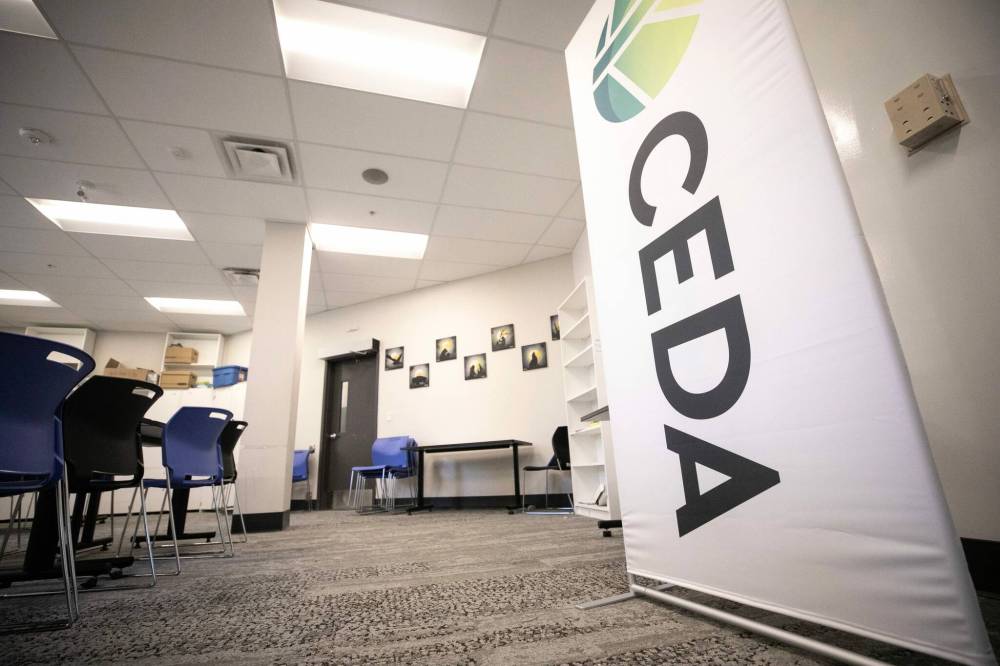
MIKAELA MACKENZIE / FREE PRESS
The Community Education Development Association (CEDA)’s flagship after-school program primarily serves Indigenous and newcomer students in the North End and surrounding neighbourhoods.
The final one calls for the extension of educational support beyond Grade 12 to assist incoming post-secondary students with “system navigation.”
“In high school there were all these wrap-around supports,” said Mars Ballantyne, who graduated from Children of the Earth High School in 2018. “Going to post-secondary, it was a new world.”
Ballantyne, 25, said she abandoned a certificate program at Red River College Polytechnic because she felt unsupported and “out of place” as an Anishinaabe and Cree woman. It was a stark contrast to the support she received at CEDA throughout high school, she said.
Three study participants — Ballantyne, Murdock and Daniyal Chaudhry, a 23-year-old who is studying computer science at the University of Manitoba — discussed their experiences at a report launch at CEDA’s offices Tuesday.
Chaudhry spoke about how low morale in the inner-city, owing to the prevalence of homelessness, crime and other social challenges, negatively affects student motivation.

The St. John’s High School grad described himself as “one of the luckier ones” because he secured a full-ride scholarship to pursue post-secondary education in 2020 via the Schroeder Foundation.
As for Murdock, who’s become a father since he last attended U of W, he remains determined to complete the degree program he began about 14 years ago.
The 31-year-old said he wants to be a role model for his son “to let him know he can set those goals (for himself) if he wants to go to university.”
He is in the process of proving to U of W administration that he’s prepared to resume his studies.
maggie.macintosh@freepress.mb.ca
Maggie Macintosh
Education reporter
Maggie Macintosh reports on education for the Free Press. Originally from Hamilton, Ont., she first reported for the Free Press in 2017. Read more about Maggie.
Funding for the Free Press education reporter comes from the Government of Canada through the Local Journalism Initiative.
Every piece of reporting Maggie produces is reviewed by an editing team before it is posted online or published in print — part of the Free Press‘s tradition, since 1872, of producing reliable independent journalism. Read more about Free Press’s history and mandate, and learn how our newsroom operates.
Our newsroom depends on a growing audience of readers to power our journalism. If you are not a paid reader, please consider becoming a subscriber.
Our newsroom depends on its audience of readers to power our journalism. Thank you for your support.
Maggie Macintosh
Education reporter
Maggie Macintosh reports on education for the Free Press. Originally from Hamilton, Ont., she first reported for the Free Press in 2017. Read more about Maggie.
Funding for the Free Press education reporter comes from the Government of Canada through the Local Journalism Initiative.
Every piece of reporting Maggie produces is reviewed by an editing team before it is posted online or published in print — part of the Free Press‘s tradition, since 1872, of producing reliable independent journalism. Read more about Free Press’s history and mandate, and learn how our newsroom operates.
Our newsroom depends on a growing audience of readers to power our journalism. If you are not a paid reader, please consider becoming a subscriber.
Our newsroom depends on its audience of readers to power our journalism. Thank you for your support.
Related Articles
Winnipeg-based Probe Research acquired by Abacus Data
Advertisement Advertise With Us
Advertisement Advertise With Us
History
Updated on Monday, May 4, 2026 1:28 PM CDT: Adds the the report is co-authored by Nowatzki and researcher Fadi Ennab