

Austria expels 3 Russian Embassy staff over suspected antenna spying in Vienna
Advertisement
Read this article for free:
or
Already have an account? Log in here »
To continue reading, please subscribe:

Digital Subscription
One year of digital access for only $205*
- Enjoy unlimited reading on winnipegfreepress.com
- Read the E-Edition, our digital replica newspaper
- Access News Break, our award-winning app
- Play interactive puzzles
*First annual payment billed as $205.00 + GST for one year. This annual subscription will automatically renew at $233.00 + GST every 52 weeks (10% off the regular annual price of $259.35). Offer available to new and qualified returning subscribers only. Cancel any time.
To continue reading, please subscribe:
Add Free Press access to your Brandon Sun subscription for only an additional
$1 for the first 4 weeks*
- Enjoy unlimited reading on winnipegfreepress.com
- Read the E-Edition, our digital replica newspaper
- Access News Break, our award-winning app
- Play interactive puzzles
*Your next Brandon Sun subscription payment will increase by $1.00 and you will be charged $17.95 plus GST for four weeks. After four weeks, your payment will increase to $24.95 plus GST every four weeks.
Read unlimited articles for free today:
or
Already have an account? Log in here »
VIENNA (AP) — Austria expelled three Russian Embassy employees who were suspected of espionage by using antennas on Russian diplomatic buildings, the Foreign Ministry said Monday.
The ministry confirmed a report aired Sunday by the Austrian public broadcaster ORF, which said Austrian authorities suspected the three diplomats of engaging in spying activities using antennas on the roofs of the Russian Embassy in Vienna and a diplomatic compound in the Donaustadt district.
The installations allowed Russia to intercept data transmitted by international organizations based in Vienna via satellite internet, ORF reported.
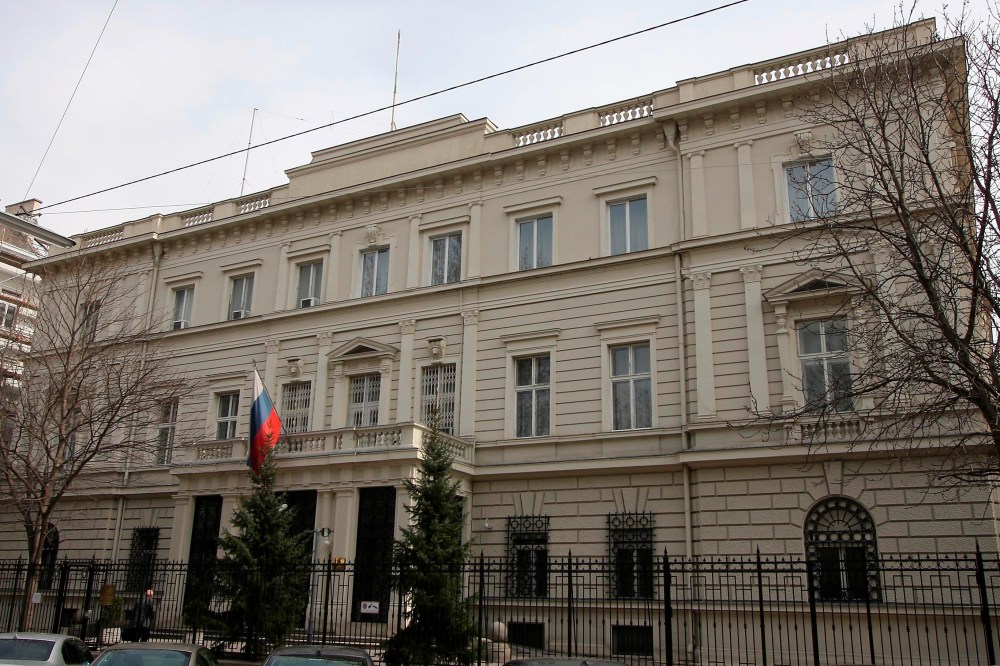
Austria hosts several U.N. agencies, including the International Atomic Energy Agency, as well as the Organization of the Petroleum Exporting Countries and the Organization for Security and Cooperation in Europe.
“Espionage is a security problem for Austria. In this government, we have changed course and are taking decisive action against it,” Austria’s Foreign Minister Beate Meinl-Reisinger said in a statement.
“We have made this unequivocally clear to the Russian side, also with regard to the array of antennas at the Russian embassy. One thing is clear: it is unacceptable for diplomatic immunity to be used to engage in espionage.”
Western European nations and Russia have expelled each others’ diplomats on several occasions since Moscow’s full-scale invasion of Ukraine in February 2022. Austria, a European Union member with a policy of military neutrality, was initially hesitant to take such action but has recently expelled more Russian diplomats.
According to ORF, the Russian ambassador was summoned to the Foreign Ministry in April over the diplomats’ activities. The Russian side was asked to lift their immunity in order to allow prosecutors to pursue an investigation, but it refused, leading to the expulsions, ORF reported. They have already left Austria, it said.
In her statement, the foreign minister said that Austria was currently tightening the espionage law to prevent such cases. The legislation now in place punishes espionage by foreign services only if it targets Austrian interests. According to the Austria Press Agency, changes proposed by the government would call for the similar protections when it comes to international organizations.
The Russian Embassy said in a statement on Monday that it had taken note of Austria’s “outrageous” decision concerning its employees.
Moscow will respond strongly, the statement said, adding, “Vienna bears full responsibility for the further deterioration of bilateral relations, which are already at a historical low.”