

Fani Willis vows to sue over new Georgia law that removes party labels in Atlanta-area elections
Advertisement
Read this article for free:
or
Already have an account? Log in here »
To continue reading, please subscribe:
Digital Subscription
One year of digital access for only $1.44 a week*
- Enjoy unlimited reading on winnipegfreepress.com
- Read the E-Edition, our digital replica newspaper
- Access News Break, our award-winning app
- Play interactive puzzles
*Billed as $5.77 plus GST every four weeks. After 52 weeks, price increases to the regular rate of $19.95 plus GST every four weeks. Offer available to new and qualified returning subscribers only. Cancel any time.
To continue reading, please subscribe:
Add Free Press access to your Brandon Sun subscription for only an additional
$1 for the first 4 weeks*
- Enjoy unlimited reading on winnipegfreepress.com
- Read the E-Edition, our digital replica newspaper
- Access News Break, our award-winning app
- Play interactive puzzles
*Your next Brandon Sun subscription payment will increase by $1.00 and you will be charged $17.95 plus GST for four weeks. After four weeks, your payment will increase to $24.95 plus GST every four weeks.
Read unlimited articles for free today:
or
Already have an account? Log in here »
ATLANTA (AP) — Georgia Gov. Brian Kemp signed a law requiring nonpartisan elections for most local officials in the five most populous counties in the Atlanta area, leading Fulton County District Attorney Fani Willis and another Democratic prosecutor to threaten to sue over the bill’s constitutionality.
Kemp signed the bill privately Tuesday, the final day after Georgia’s 2026 legislative session for the governor to sign or veto bills.
Republicans have repeatedly targeted Willis because of her prosecution of Republican President Donald Trump after he pushed to overturn Democrat Joe Biden’s win in Georgia in 2020.
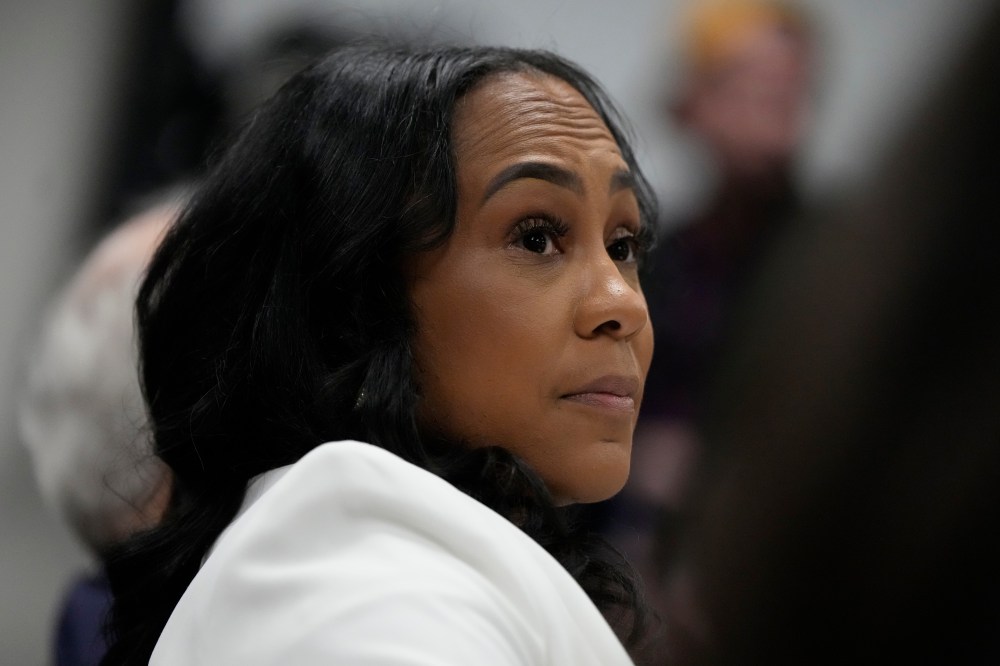
Willis and DeKalb County District Attorney Sherry Boston said the bill violates the Georgia Constitution and promised a lawsuit.
“This is a blatant attempt by Republicans to give their candidates an edge in Democratic counties by hiding their party affiliation from voters,” the two Democrats said in a statement Tuesday.
State Sen. John Albers, a Republican from the Atlanta suburb of Roswell who pushed the bill, said during the legislative session that he believed it will promote public safety. The counties’ elected sheriffs will continue to be elected under party labels when it goes into effect in 2028.
The move comes as Democrats have steadily been wiping out Republican officials in the core Atlanta counties of swing-state Georgia. It will move elections for all affected officials except district attorneys to May, when voters choose nonpartisan judges. That means a smaller electorate than in November, with turnout mostly driven by primaries for partisan offices that are held at the same time. If no candidate wins a majority, nonpartisan runoffs would be held in June.
The measure applies in Fulton County, which includes most of Atlanta, as well as the suburbs of Clayton, Cobb, DeKalb and Gwinnett counties. Fulton, DeKalb and Clayton counties are the three most important Democratic jurisdictions in the state. Cobb and Gwinnett, once the suburban heartlands of Georgia Republicans, have increasingly voted for Democrats since 2016.
Democrats have said Republicans are trying to make it so GOP members running without party labels have a better chance to win in Democratic jurisdictions. Critics say that if it’s such good policy for urban Atlanta then it should apply to all 159 of Georgia’s counties.
Willis and Boston suggested Republicans were also targeting the counties because each has elected a Black woman as district attorney.
Republicans have passed multiple bills in recent years targeting district attorneys, particularly Willis. The association representing district attorneys has argued the law can’t change the partisan status of district attorneys because they aren’t county officers, but instead state judicial branch officers.
The association argued that a state constitutional amendment is needed instead. Democrats could block such a change because it requires a two-thirds vote in the General Assembly to propose such a measure to go before Georgia voters.