

Dominican opposition criticizes deal with US to take third-country deportees
Advertisement
Read this article for free:
or
Already have an account? Log in here »
To continue reading, please subscribe:

Digital Subscription
One year of digital access for only $205*
- Enjoy unlimited reading on winnipegfreepress.com
- Read the E-Edition, our digital replica newspaper
- Access News Break, our award-winning app
- Play interactive puzzles
*First annual payment billed as $205.00 + GST for one year. This annual subscription will automatically renew at $233.00 + GST every 52 weeks (10% off the regular annual price of $259.35). Offer available to new and qualified returning subscribers only. Cancel any time.
To continue reading, please subscribe:
Add Free Press access to your Brandon Sun subscription for only an additional
$1 for the first 4 weeks*
- Enjoy unlimited reading on winnipegfreepress.com
- Read the E-Edition, our digital replica newspaper
- Access News Break, our award-winning app
- Play interactive puzzles
*Your next Brandon Sun subscription payment will increase by $1.00 and you will be charged $17.95 plus GST for four weeks. After four weeks, your payment will increase to $24.95 plus GST every four weeks.
Read unlimited articles for free today:
or
Already have an account? Log in here »
SANTO DOMINGO, Dominican Republic (AP) — Opposition figures in the Dominican Republic on Wednesday criticized an agreement signed with the United States to have the Caribbean nation receive third-country deportees, saying it lacks transparency and violates national sovereignty.
The non-binding memorandum of understanding, which was announced on Tuesday by the Dominican Foreign Ministry, said the country will accept the temporary entry of a limited number of third-country nationals without criminal records before they return to their home countries.
The deal is the latest such agreement between the Trump administration and some countries in Latin America and Africa that has come under fire. The third-country deportations, costing millions of dollars, are part of U.S. President Donald Trump’s immigration crackdown that includes deporting migrants to countries other than their own.
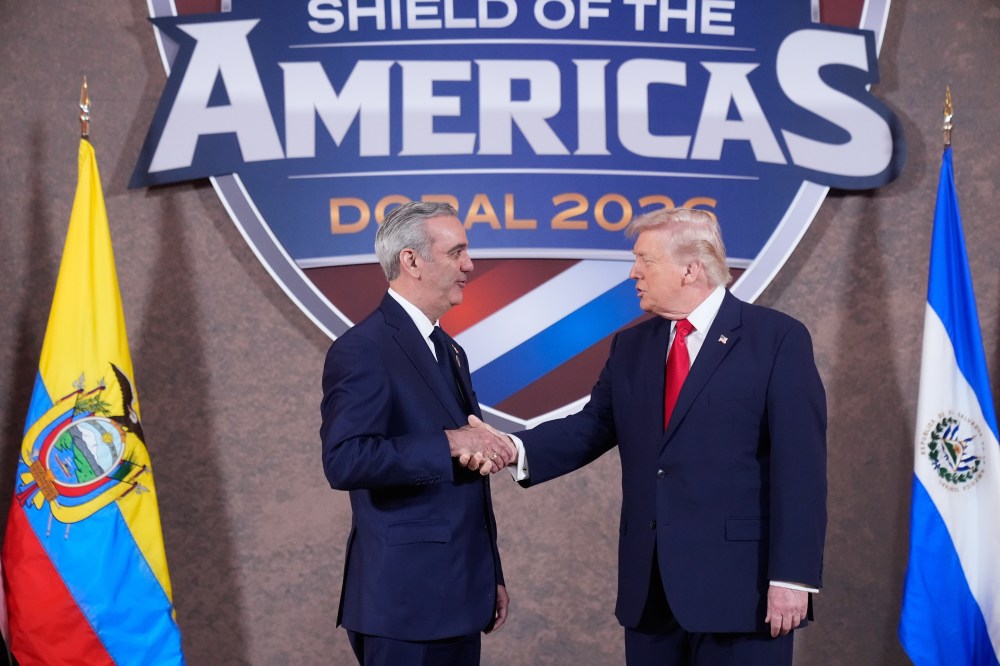
“This agreement represents a surrender of our national sovereignty,” Manolo Pichardo, from the opposition Fuerza del Pueblo party, told The Associated Press.
“It subordinates Dominican interests to the geopolitical priorities of major Western powers and their strategic allies,” Pichardo added.
Former Dominican Foreign Minister Andrés Navarro questioned the apparent lack of transparency surrounding the agreement and called on the government to publish the memorandum in its entirety so that the public can understand its full scope.
“What has been published says practically nothing,” Navarro said Tuesday.
Navarro said that while he supports maintaining and strengthening relations with the U.S., he wants to ensure the agreement does not violate Dominican sovereignty.
The Dominican Foreign Ministry insisted the agreement “will be carried out in accordance with national law and the country’s international obligations, without altering Dominican immigration policy or current border control and management procedures.”
The ministry underlined that the agreement does not apply to children or nationals from neighboring Haiti, which shares the Caribbean island of Hispaniola with the Dominican Republic.
The U.S. Ambassador to the Dominican Republic, Leah Campos, noted on Instagram that “this short-term memorandum of understanding allows the United States to remove and repatriate third-country nationals more quickly, while respecting Dominican law, the country’s sovereignty, and current border procedures.”
She emphasized that the U.S. is collaborating with the Dominican Republic to combat transnational crime and drug trafficking, fight terrorism, and promote stability and prosperity in the region.
___
Follow AP’s Latin America and the Caribbean coverage at https://apnews.com/hub/latin-america-and-caribbean