

People for Education explore convergence of public education and truth and reconciliation

Advertisement
Read this article for free:
or
Already have an account? Log in here »
To continue reading, please subscribe:

Digital Subscription
One year of digital access for only $205*
- Enjoy unlimited reading on winnipegfreepress.com
- Read the E-Edition, our digital replica newspaper
- Access News Break, our award-winning app
- Play interactive puzzles
*First annual payment billed as $205.00 + GST for one year. This annual subscription will automatically renew at $233.00 + GST every 52 weeks (10% off the regular annual price of $259.35). Offer available to new and qualified returning subscribers only. Cancel any time.
To continue reading, please subscribe:
Add Free Press access to your Brandon Sun subscription for only an additional
$1 for the first 4 weeks*
- Enjoy unlimited reading on winnipegfreepress.com
- Read the E-Edition, our digital replica newspaper
- Access News Break, our award-winning app
- Play interactive puzzles
*Your next Brandon Sun subscription payment will increase by $1.00 and you will be charged $17.95 plus GST for four weeks. After four weeks, your payment will increase to $24.95 plus GST every four weeks.
Read unlimited articles for free today:
or
Already have an account? Log in here »
A national charity is putting Manitoba’s school system under the microscope as it develops a plan to protect and bolster publicly funded classrooms across Canada.
“Winnipeg is a site of a lot of learning for the rest of the country on reconciliation in the school system and more broadly,” said Paris Semansky, co-executive director of People for Education.
“That doesn’t mean it’s perfect. That doesn’t mean it’s done, but there’s clear and demonstrable progress that — really critically — seems to cross partisan lines.”
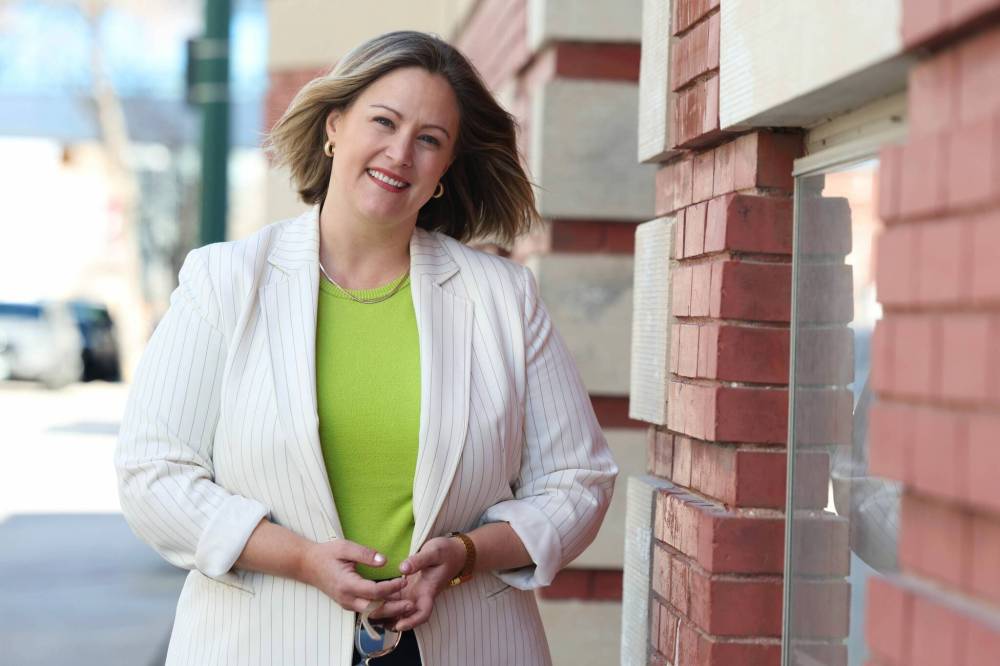
RUTH BONNEVILLE / FREE PRESS
People for Education co-executive director Paris Semansky says the rest of Canada has a lot to learn from Winnipeg about implementing the TRC’s calls to action.
People for Education, founded by a group of Toronto parents in 1996, has typically focused on research and policy-making initiatives in Ontario. The non-partisan organization’s latest project broadens its scope while acknowledging that education is under provincial jurisdiction.
Multiple Winnipeggers have been tapped to sit on a national advisory group for “The Education Promise.” As part of the project, the charity kicked off a cross-country listening tour this year to inform the development of a pan-Canadian education action plan. It is anticipated to be released during the 2026-27 school year.
Semansky said the document will propose evidence-backed policy changes that can be implemented locally to advance national interests, ranging from economic growth to strengthening democracy.
A former government policy adviser, she said something that sticks out to her about Manitoba is how cross-sectoral collaboration and advocacy have advanced treaty education in the kindergarten-to-Grade 12 system and society.
Her visit to Winnipeg last week marks the halfway point of People for Education’s education promise panel discussion series. The charity has organized events around timely topics, from building digital literacy (Fredericton) to supporting newcomer students (Vancouver), between January and June.
The local theme was the intersection of public education and truth and reconciliation.
“(This) gathering reminds of a teaching of two-eyed seeing — learning to see with one eye through the strength of Indigenous ways of knowing and with the other, through the strengths of western education and understanding,” Indigenous elder Viola Plett told a packed room at the downtown YMCA-YWCA in Winnipeg on May 12.
Combining the two approaches benefits all children, Plett said before the early morning panel discussion.
The panellists included: Y Winnipeg president Cordella Friesen; Jamie Wilson, a former Manitoba treaty commissioner who is now a senior administrator at Red River College Polytechnic; retired superintendent Reg Klassen; and Noah Wilson, a senior business development manager at Futurpreneur Canada who works with Indigenous entrepreneurs.
Attendees heard about local schools creating specific Indigenous education positions, delivering lessons in Indigenous languages and integrating Indigenous perspectives into collective bargaining processes.
Panellists also warned about tokenizing educators who are First Nations, Métis and Inuit, and offloading the work of truth and reconciliation onto them.
As the discussion came to a close, Semansky, the moderator, handed each of them a “policy wand.”
Asked what he’d change to forward reconciliation in the public education system with the flick of a sparkly plastic stick, Noah said he’d make Indigenous languages level with English and French.
“My dream is to someday come back to my community in Peguis and see youth in Anishinaabemowin or Inninew immersion (classrooms) where language is a legal requirement in this country to share and to learn,” he said.
Friesen said she’d ensure every child had access to safe, responsive and culturally appropriate child care. “We have a 19,000 wait list at just one location,” the Y Winnipeg president noted.
For Klassen, who previously oversaw the Frontier School Division, making Indigenous ways of knowing more prominent in schools and requiring land-based learning training would be a priority.

There would be fewer dysregulated children if all students had more opportunities to learn outside, he said.
“If I could change everything, I would make learning the constant and time the variable instead of the other way around,” said Jamie, RRC Polytech’s vice-president, Indigenous strategy, research and business development.
Semansky said many of the solutions to problems that exist in Canadian public education systems already exist.
They exist in other countries, provinces and territories, or in some cases, within them, she said, adding that People for Education’s mission is to signal-boost effective policymaking.
maggie.macintosh@freepress.mb.ca
Maggie Macintosh
Education reporter
Maggie Macintosh reports on education for the Free Press. Originally from Hamilton, Ont., she first reported for the Free Press in 2017. Read more about Maggie.
Funding for the Free Press education reporter comes from the Government of Canada through the Local Journalism Initiative.
Every piece of reporting Maggie produces is reviewed by an editing team before it is posted online or published in print — part of the Free Press‘s tradition, since 1872, of producing reliable independent journalism. Read more about Free Press’s history and mandate, and learn how our newsroom operates.
Our newsroom depends on a growing audience of readers to power our journalism. If you are not a paid reader, please consider becoming a subscriber.
Our newsroom depends on its audience of readers to power our journalism. Thank you for your support.
Maggie Macintosh
Education reporter
Maggie Macintosh reports on education for the Free Press. Originally from Hamilton, Ont., she first reported for the Free Press in 2017. Read more about Maggie.
Funding for the Free Press education reporter comes from the Government of Canada through the Local Journalism Initiative.
Every piece of reporting Maggie produces is reviewed by an editing team before it is posted online or published in print — part of the Free Press‘s tradition, since 1872, of producing reliable independent journalism. Read more about Free Press’s history and mandate, and learn how our newsroom operates.
Our newsroom depends on a growing audience of readers to power our journalism. If you are not a paid reader, please consider becoming a subscriber.
Our newsroom depends on its audience of readers to power our journalism. Thank you for your support.
Advertisement Advertise With Us
Advertisement Advertise With Us