How to mulch your garden beds without harming plants

Advertisement

Advertise with us

When you look at your garden beds and borders, do you see any bare soil? If so, mulch is in order.

Read this article for free:


or

Already have an account? Log in here »

To continue reading, please subscribe:

Subscribe and receive a limited-edition Free Press branded hat or tote.

Digital Subscription

One year of digital access for only $205*

  • Enjoy unlimited reading on winnipegfreepress.com
  • Read the E-Edition, our digital replica newspaper
  • Access News Break, our award-winning app
  • Play interactive puzzles

*First annual payment billed as $205.00 + GST for one year. This annual subscription will automatically renew at $233.00 + GST every 52 weeks (10% off the regular annual price of $259.35). Offer available to new and qualified returning subscribers only. Cancel any time.

To continue reading, please subscribe:

Add Free Press access to your Brandon Sun subscription for only an additional

$1 for the first 4 weeks*

  • Enjoy unlimited reading on winnipegfreepress.com
  • Read the E-Edition, our digital replica newspaper
  • Access News Break, our award-winning app
  • Play interactive puzzles
Start now

*Your next Brandon Sun subscription payment will increase by $1.00 and you will be charged $17.95 plus GST for four weeks. After four weeks, your payment will increase to $24.95 plus GST every four weeks.

When you look at your garden beds and borders, do you see any bare soil? If so, mulch is in order.

Mulch is defined as a protective layer applied over soil to retain moisture, suppress weeds and moderate soil temperature around plants, as well as in uncultivated areas. But if used incorrectly, mulch can cause more harm than good.

The right kind of mulch
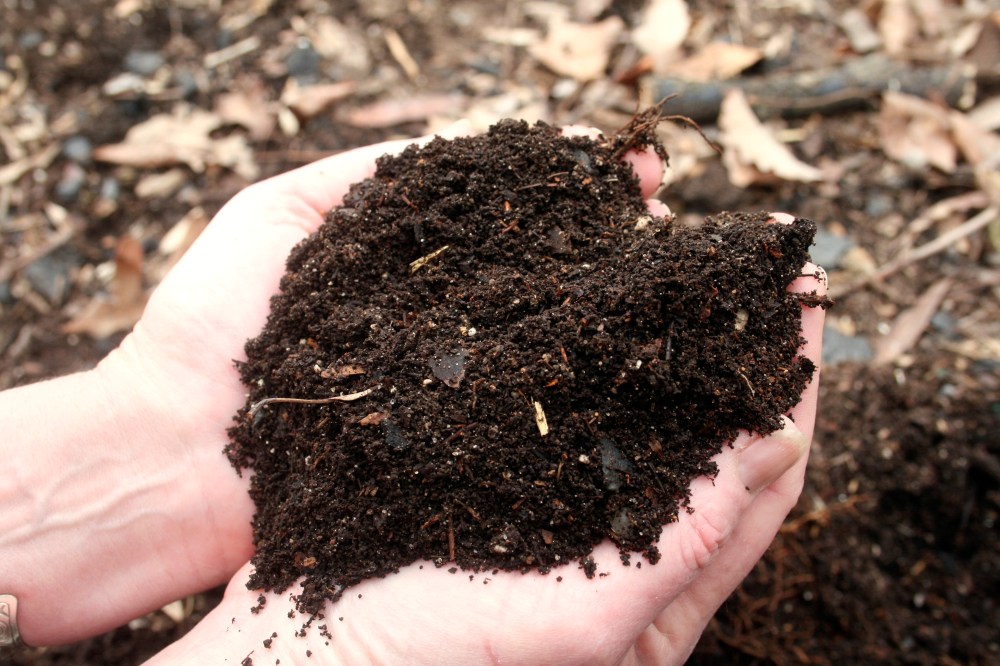
FILE - Compost made from decomposed green kitchen scraps, yard litter and garden waste, appears in New Market, Va., on March 8, 2009. (AP Photo/Dean Fosdick, File)

Folks use everything from gravel, plastic sheeting and shredded tires to organic materials like compost, pine needles, shredded bark, hay, straw and wood chips. Some are better than others, to say the least.

Gravel and stones reduce weeds and retain some moisture, but affect plants differently than organic mulch. Stone absorbs heat, which can scorch plants and roots. Removing gravel later can be a Sisyphean task.

Still, in fire zones, gravel is recommended to cover soil, since organic mulches are flammable.

Shredded tires? Please don’t. Crumb rubber can contain volatile organic compounds, lead and other heavy metals. And even if you remove it someday, the chemicals it leaves behind will remain in the soil for a very long time — maybe permanently — unless you’re willing to strip out and replace layers of soil. It’s hard to imagine that tradeoff being worth it.

Any benefits of plastic sheeting should be weighed against eventual disposal problems. Sooner or later, it will end up in a landfill, where it’s likely to outlive you, and break down into microplastics that will contaminate the soil and groundwater.

Natural materials like shredded bark, wood chips, straw and pine needles are always the better choice because they improve the soil as they decompose.

Arborist wood chips, made by pruning crews after cutting down trees or removing their limbs, make up my preferred mulch for a few good reasons. First, you can see what you’re getting. And as the chips decompose, they slowly turn into rich humus right on the soil surface, feeding plants as they break down. Since a large portion of wood chips comes from the inner wood of the tree, they also hold moisture longer and release it more evenly than other mulches do.

Wood chips are the National Park Service’s secret weapon for keeping the legendary Washington, D.C., cherry trees healthy.

Shredded bark mulch is my second choice. It handles most of the same jobs that wood chips do, though it doesn’t absorb and hold moisture quite as well. It’s also lighter, so a hard rain can wash it away, and my landscaper’s magical leaf blower orchestrates its unfortunate disappearing act every year.

Dyed mulches are best avoided altogether. The colorants used in the better-quality black, brown, or red mulches are usually considered nontoxic, but the bigger issue is the material underneath. Most dyed mulch is made from recycled wood of unknown origin rather than actual shredded bark. Sometimes that wood comes from construction debris or other questionable sources, and it may contain harmful substances like arsenic.

And the cheaper dyed mulches are often cheap for a reason. Some are made with toxic pigments, so they’re not really the bargain they may appear to be.

If you’re determined to use dyed mulch anyway, at least keep it away from food crops.

How to use mulch

In most cases, 3 to 4 inches is the ideal depth for mulching around plants. Keep it a few inches away from trunks and stems to allow for air circulation. When mulch sits directly against bark or stems, moisture gets trapped, and rot eventually follows.

I know you’ve seen professional landscapers pile mountains of mulch against tree trunks, but the practice — known as “volcano mulching” — is deadly to trees, slowly suffocating them as the buried portion of their trunks decay. When the trees die, sometimes years later, the homeowner is often perplexed, having forgotten the long-ago volcano.

A properly mulched tree leaves the flare at the base of the trunk exposed and fully visible.

The best time to mulch is after the danger of frost has passed but before weeds have emerged. Putting it down too early could trap cool temperatures in the soil and slow plant growth. Waiting too long risks soil erosion and weed proliferation, and facilitates moisture evaporation.

And there’s a cherry tomato on top: Mulch will make your garden look polished, too.

___

Jessica Damiano writes regular gardening columns for The Associated Press. She publishes the award-winning Weekly Dirt Newsletter. Sign up here for weekly gardening tips and advice.

___

For more AP gardening stories, go to https://apnews.com/hub/gardening.

Report Error Submit a Tip

More Stories

‘We belong… and we are giving back”: Sikh celebration enlivens downtown Winnipeg

Melissa Martin 3 minute read Preview

‘We belong… and we are giving back”: Sikh celebration enlivens downtown Winnipeg

Melissa Martin 3 minute read Updated: Yesterday at 5:59 PM CDT

Downtown Winnipeg came alive with vibrant sights, sounds, and scents on Sunday, as Manitoba’s Sikh community flocked to Memorial Park to celebrate its annual Nagar Kirtan procession and festival.

This year marked the 422nd anniversary of the completion of the Guru Granth Sahib, the holy scripture central to the Sikh faith. Shortly after 1 p.m., a palanquin bearing a copy of the scripture was led in parade through downtown Winnipeg, with musical accompaniment.

“This is a chance to tell the public and the whole community where we come from and who we are,” said volunteer Prabh Grewal shortly before the procession got underway. “In a community there are people from every race and every country, and our main objective is to have everybody live in peace and harmony together.”

Before, during, and after the procession, the park hummed with life. As many as 55,000 people converged on the site, with the majority dressed in festive traditional attire. Near the height of the day’s 30 C heat, families relaxed in patches of shade, enjoying plates of Punjabi cuisine dished out for free at dozens of tents sponsored by local businesses.

Read
Updated: Yesterday at 5:59 PM CDT

Today’s horoscope

Georgia Nicols 4 minute read 2:00 AM CDT

MOON ALERT: Avoid shopping (except food and gas) and important decisions from 8 a.m. until noon today. After that, the moon moves from Cancer into Leo.

ARIES (March 21-April 19)

Hang in there, because as this day progresses, it becomes more lighthearted and fun-loving. Admittedly, power struggles with a friend or member of a group might squelch things. Be patient with kids. Basically, this is a friendly and productive day.

TAURUS (April 20-May 20)

Smith’s pretzel logic confuses

Editorial 4 minute read Preview

Smith’s pretzel logic confuses

Editorial 4 minute read Saturday, Sep. 5, 2026

Alberta Premier Danielle Smith had both sides of her mouth working overtime on Aug. 30, when she spoke at an event in Calgary to commemorate Alberta Day, the annual celebration of the province’s entry into Confederation in 1905 (officially Sept. 1, it was celebrated on the weekend).

Smith’s comments — and the things she did not say — revealed a lot about the political tightrope the premier is trying to walk over the challenges currently faced by her province. At the top of that list of challenges is a persistent campaign to separate Alberta from the aforementioned Confederation. A campaign that Smith appears to both support and oppose, depending on which day of the week it is.

Her Alberta Day remarks were an excellent case in point.

Smith has decided that on Oct. 19, Albertans will vote on a series of non-binding propositions in a province referendum. One of those questions will ask Albertans whether they want to hold a referendum on separation, thus making this fall’s vote a “referendum on whether to hold a referendum,” as some observers have dubbed it.

Read
Saturday, Sep. 5, 2026

(Un)friendly competition

Ken Wiebe 6 minute read Preview

(Un)friendly competition

Ken Wiebe 6 minute read Saturday, Sep. 5, 2026

REGINA – Jermarcus Hardrick knows exactly what kind of battle he is in for on Sunday in the 61st edition of the Labour Day Classic.

The Saskatchewan Roughriders right tackle has ample experience lining up opposite Winnipeg Blue Bombers defensive end Willie Jefferson, both as teammates and opponents during the past decade and change.

In this pivotal matchup between Prairie rivals jockeying for position in the CFL West Division, this head-to-head battle in the trenches figures to be must-see TV.

“Willie is one of my best friends, one of the best players in the league. It’s amazing to see what he’s doing on film, what he’s always done on film,” said Hardrick, who spent eight seasons with the Blue Bombers before joining the Roughriders in 2024 as a free agent. “With the way that you know he plays and what he can do to a team with his energy and knowing that’s on the other side from you all game, that’s a big challenge that you look forward to.

Read
Saturday, Sep. 5, 2026

Dynacare labs quickly reach capacity ahead of strike

Nicole Buffie 5 minute read Preview

Dynacare labs quickly reach capacity ahead of strike

Nicole Buffie 5 minute read Saturday, Sep. 5, 2026

Patients were being turned away from several Dynacare locations Saturday morning as people packed the labs in hopes of getting their blood collection done before workers strike.

By 10:30 a.m. the lobby at the Dynacare at 1581 Regent Ave. was standing-room only and walk-up patients were being turned away as the wait time for those lucky enough to get in creeped past two hours.

One woman got in right before workers cut off walk-ins at 10 a.m. after travelling to two other locations.

“I was driving by at 7:15 this morning and there was already a line-up to the road, so I was like ‘nope, not going there’ so I went to the one on Sterling Lyon (Parkway) and it was closed, and then I went to the one at St. Vital Mall and there had a line zig-zagging all the way through the corridors so I gave up and came back,” said Joanna, who declined to give her last name.

Read
Saturday, Sep. 5, 2026

A life's story: translator, poet, radio host, actor loved life to the fullest

Tiago Resko 7 minute read Preview

A life's story: translator, poet, radio host, actor loved life to the fullest

Tiago Resko 7 minute read Saturday, Sep. 5, 2026

Born with an innate sense of curiosity, Charles Leblanc always wanted to understand the world around him. To him, words and theatre weren’t just pastimes. They were means of understanding the human experience and helping others see different perspectives.

The poet, translator, actor and radio host dedicated his life to this practice, founding the Winnipeg International Writers’ Festival, establishing French community radio station Envol — where he hosted a show for 25 years — and acting as a core member of the Association of Translators, Terminologists and Interpreters of Manitoba.

Leblanc’s contributions and dedication to Manitoba’s arts and literary scenes made an impact that continues to be felt by the community.

He died June 26 at the age of 75.

Read
Saturday, Sep. 5, 2026