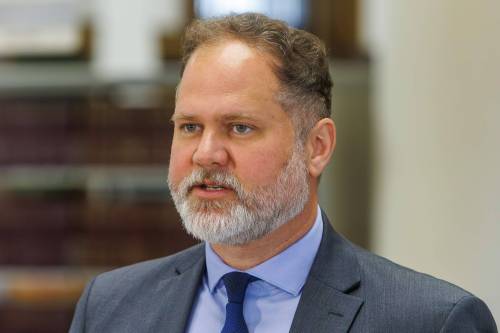
Man of many passions
Translator, poet, radio host, actor loved life to the fullest
Advertisement
Read this article for free:
or
Already have an account? Log in here »
To continue reading, please subscribe:

Digital Subscription
One year of digital access for only $205*
- Enjoy unlimited reading on winnipegfreepress.com
- Read the E-Edition, our digital replica newspaper
- Access News Break, our award-winning app
- Play interactive puzzles
*First annual payment billed as $205.00 + GST for one year. This annual subscription will automatically renew at $233.00 + GST every 52 weeks (10% off the regular annual price of $259.35). Offer available to new and qualified returning subscribers only. Cancel any time.
To continue reading, please subscribe:
Add Free Press access to your Brandon Sun subscription for only an additional
$1 for the first 4 weeks*
- Enjoy unlimited reading on winnipegfreepress.com
- Read the E-Edition, our digital replica newspaper
- Access News Break, our award-winning app
- Play interactive puzzles
*Your next Brandon Sun subscription payment will increase by $1.00 and you will be charged $17.95 plus GST for four weeks. After four weeks, your payment will increase to $24.95 plus GST every four weeks.
Read unlimited articles for free today:
or
Already have an account? Log in here »
Born with an innate sense of curiosity, Charles Leblanc always wanted to understand the world around him. To him, words and theatre weren’t just pastimes. They were means of understanding the human experience and helping others see different perspectives.
The poet, translator, actor and radio host dedicated his life to this practice, founding the Winnipeg International Writers’ Festival, establishing French community radio station Envol — where he hosted a show for 25 years — and acting as a core member of the Association of Translators, Terminologists and Interpreters of Manitoba.
Leblanc’s contributions and dedication to Manitoba’s arts and literary scenes made an impact that continues to be felt by the community.

SUPPLIED
Charles Leblanc is being remembered fondly for his theatrical bent.
He died June 26 at the age of 75.
“He was eccentric and very loving,” said his daughter, Liliane Jègues.
Leblanc moved to Winnipeg from Montreal after he split with his ex-wife when Jègues was seven. During the time they were apart, Leblanc would frequently send his daughter children’s books to stay connected.
When Jègues moved to be with her father at 15, it was just the two of them in Winnipeg, as all of Leblanc’s family was still in Montreal.
Jègues was supported by her father in everything. He’d be especially excited when she’d participate in events involving the francophone community, including the French improv league he started, Ligue d’ Improvisation du Manitoba.
Growing up, Jègues would frequently accompany her dad to the theatre and spend time backstage while he worked on productions.
He was always trying to expose her to new art and music, playing everything from the Rolling Stones to experimental rock act Mr. Bungle in the house. He supported new artists of any kind and collected roughly 600 CDs in his life.

SUPPLIED
Charles Leblanc was a man of many talents.
Leblanc was also a voracious reader, amassing a huge collection of novels.
“I have to figure out what to do with the literal 10,000 books that are in his house,” Jègues said.
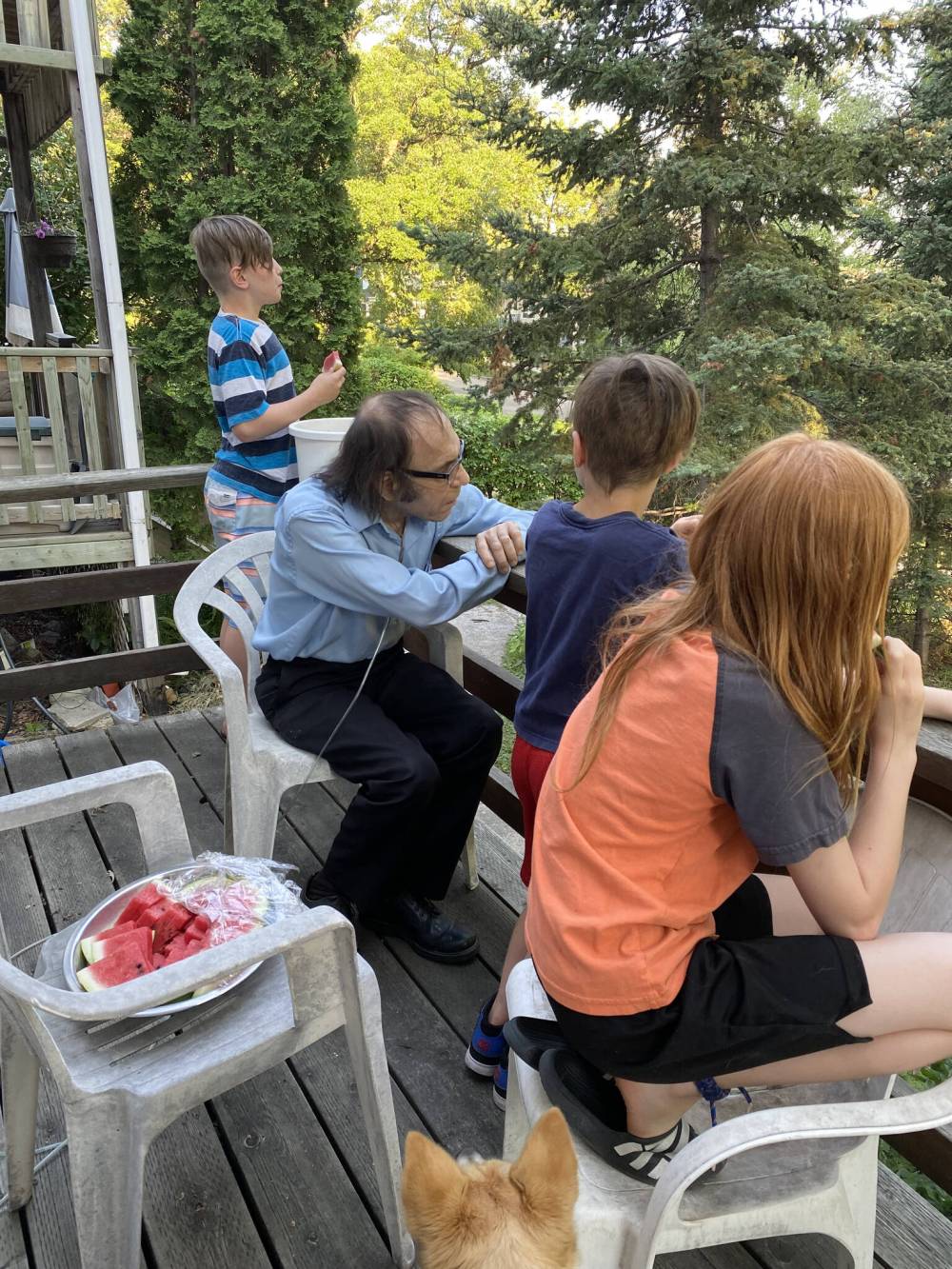
Leblanc pushed his grandkids to read and would take them to a bookstore every Christmas to pick a novel of their choice.
“He had a passion for words, which came from his mom,” said Jègues.
Leblanc’s mother had been a teacher in rural Quebec and taught him to read when he was four.
“He loved reading ever since then, and loved learning the origin of words,” his daughter said.

SUPPLIED
Charles Leblanc excellent at academics early on and had a curious mind.
Leblanc had a traditional French-Canadian upbringing and was the eldest of seven siblings.
His father was kicked out of school in Grade 7, so it was very important to him that Charles and his siblings got a good education.
Leblanc excelled in academics, skipping a grade and eventually getting a bachelor’s degree in economics. He even taught the subject for a couple of years, before pursuing his love of languages as a translator at the Université de Saint-Boniface.
During this time — the 1970s — he fell in love with Montreal’s counterculture theatre movement and met Catherine Graham, the mother of his daughter.
“He was curious about how the world was and very hopeful that the world could be better than it is,” Graham said. “That was, I think, one of his chief characteristics.”
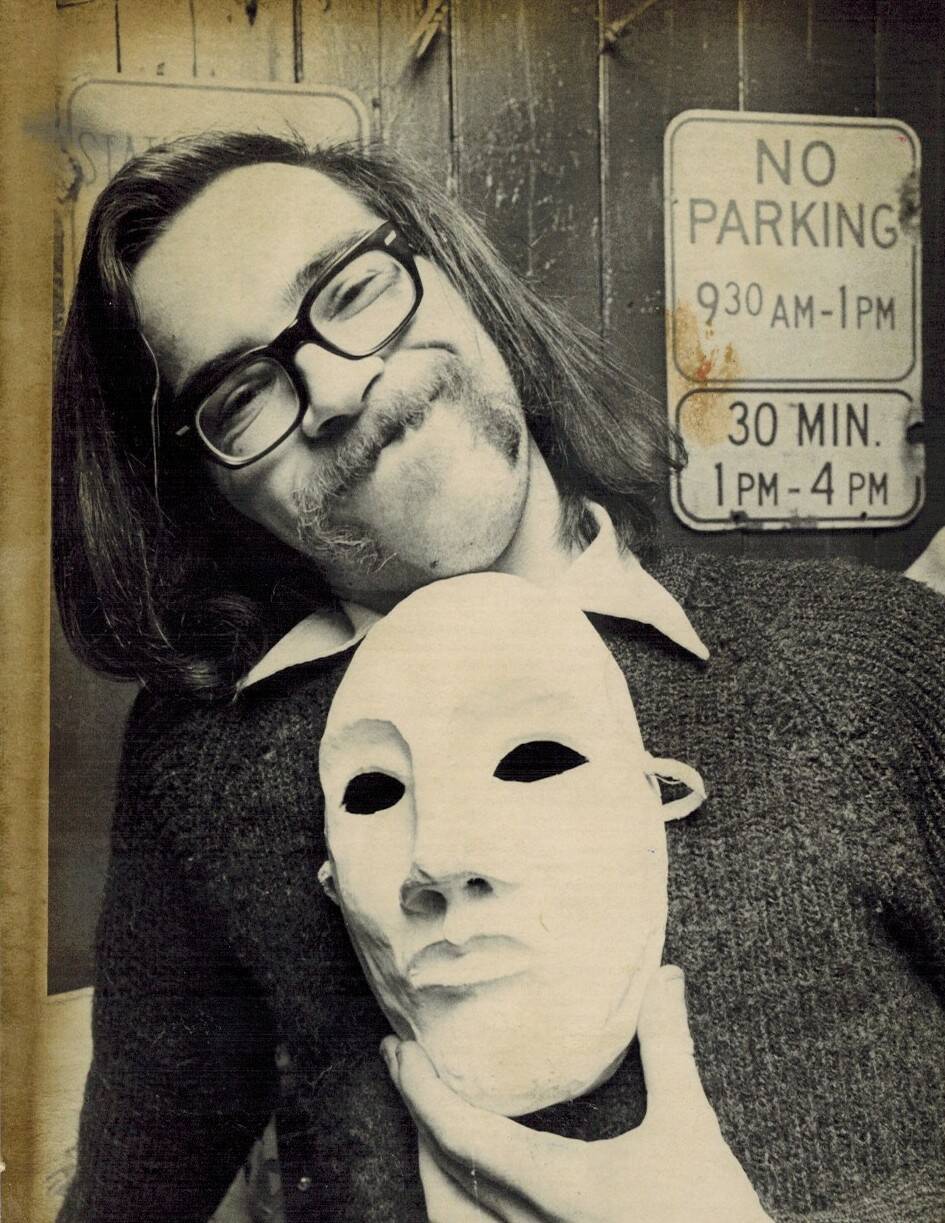
The two met through a theatre company they were both part of around 1976. Leblanc held many roles in the company, writing, acting and building sets for plays about social issues.
SUPPLIED
Charles Leblanc was deeply immersed in the Montreal theatre scene.
Graham said Leblanc always cared deeply about inequality and social change.
“That was something that I think preoccupied him throughout his life was seeing the world through different angles or encouraging people to see that the way things are isn’t necessarily the way things have to be,” she said.
Leblanc founded the Manitoba Popular Theatre Alliance. The organization occasionally put on festivals that would bring people from all over Canada — including former governor general Jeanne Sauvé.
“It was always a little odd. I mean, it was lovely that she was there, but given the kinds of plays we were talking about, the Vice-Regent was not really who they were aimed at,” Graham said with a laugh.
When they first met, Graham immediately saw that Leblanc “marched to a different drummer” and had a deep sense of how theatre worked.
Leblanc preformed in many of the productions and had “superb comedic timing,” Graham recalls. While she wasn’t as much into acting, she and Leblanc often wrote plays together and bonded over their shared love of theatre.
SUPPLIED
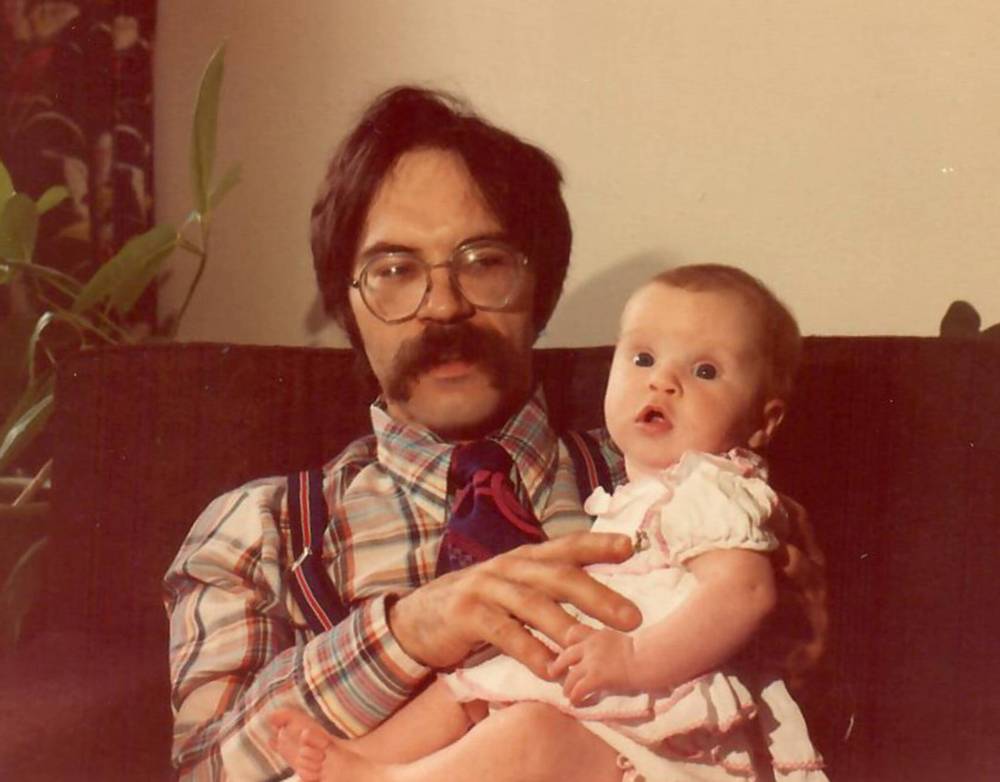
Charles and baby daughter Liliane.
Leblanc would also light up whenever they spent time with their daughter.
“I can remember (him) sitting and singing silly children’s songs, which was sometimes a bit surprising, because Charles was quite serious about the things he did. Put him around a small child and he started making faces and singing silly songs,” she said.
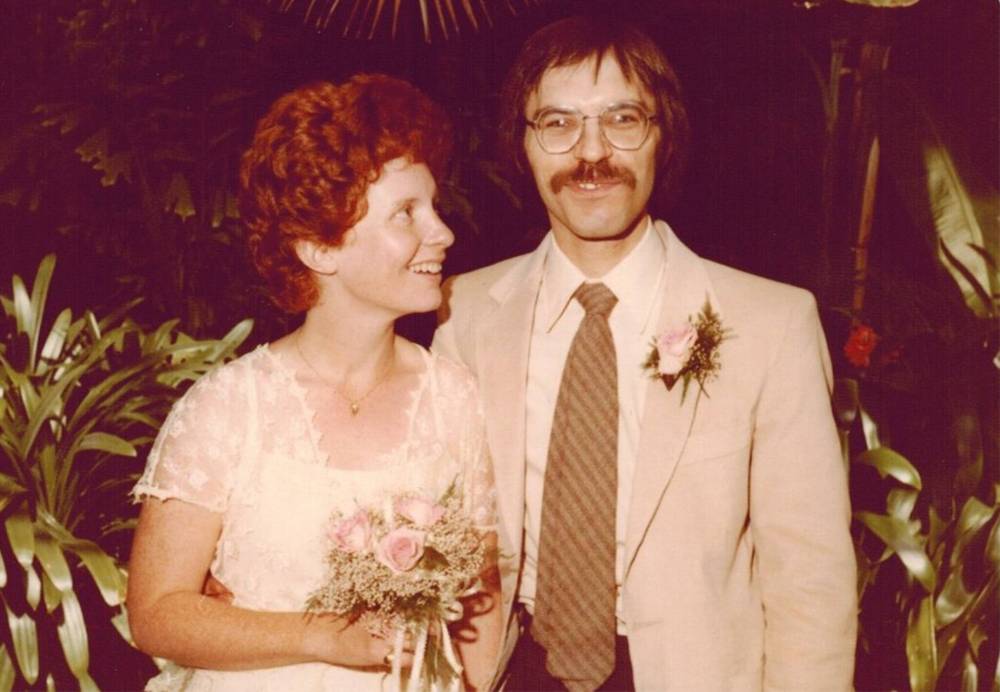
The two maintained a good friendship even after ending their 12-year marriage in 1988, continuing to visit each other and holding family dinners through the years.
Graham laughed as she attempted to recall their proposal, remembering nothing other than the thought that “we should probably do this.”
She said during their time together three main things occupied Leblanc: reading, writing and theatre.
He loved those things for the same reason that drove him to be so passionate in his work as a translator.

SUPPLIED
Daughter Liliane Jègues says her dad supported her in everything she did.
“He was just intrigued by how people saw the world and how you could translate that for people who didn’t see the world the same way,” Graham said.
Leblanc was dedicated to the translation industry, said Jean-Paul Gagné, a friend who worked closely with him in the Association of Translators, Terminologists and Interpreters of Manitoba.
Leblanc met Gagné in translation school at Université de Saint-Boniface, where they had classes together.
Gagné got closer to Leblanc while on the board of the association, which Leblanc served on for more than 30 years.
“I would say he kept that association afloat during all those years, because it’s a very small association — only about 80 to 85 members — and it was sometimes hard to find volunteers to fill the board positions, but he was always there when it counted,” Gagné said.
Leblanc rarely missed a meeting and kept the minutes with extreme precision.
SUPPLIED
Charles Leblanc lit up around children and loved being a grandfather.
Gagné clearly remembers one meeting that happened to coincide with the anniversary of the École Polytechnique massacre in Montreal on Dec. 6, 1989, where 14 women were killed.
“Before the meeting, he read out loud the names of all the victims, and there was a kind of silence that fell over the room. He was very theatrical in that sense,” he said.
Leblanc was also a poet who knew how to cut to the heart of the human experience, said Roger Léveillé, a longtime friend and editor of Leblanc’s who said his poetry was always in plain language and never tried to be overly metaphoric or vague.
“His poetry spoke a language the ordinary person could understand,” Léveillé said.

As literary director of Les Éditions du Blé from 1998 to 2015, Léveillé edited and published most of Leblanc’s 10 volumes of poetry. All but one were published in the Franco-publishing house’s literary series, Collection Rouge, which showcased experimental works.
Léveillé first met Leblanc in 1984 when they ran in the same theatre circles; they went on to produce multiple plays together.
SUPPLIED
Charles Leblanc and Catherine Graham on their wedding day.
“It was fun and it was organizational at the same time. We were always involved in a production or writing something,” he said.
Léveillé said everything Leblanc did was approached with the same dedication and care, and he will be greatly missed within the francophone community.
tiago.resko@freepress.mb.ca