

Firewood, the emerald ash borer and you
Advertisement
Read this article for free:
or
Already have an account? Log in here »
To continue reading, please subscribe:

Digital Subscription
One year of digital access for only $205*
- Enjoy unlimited reading on winnipegfreepress.com
- Read the E-Edition, our digital replica newspaper
- Access News Break, our award-winning app
- Play interactive puzzles
*First annual payment billed as $205.00 + GST for one year. This annual subscription will automatically renew at $233.00 + GST every 52 weeks (10% off the regular annual price of $259.35). Offer available to new and qualified returning subscribers only. Cancel any time.
To continue reading, please subscribe:
Add Free Press access to your Brandon Sun subscription for only an additional
$1 for the first 4 weeks*
- Enjoy unlimited reading on winnipegfreepress.com
- Read the E-Edition, our digital replica newspaper
- Access News Break, our award-winning app
- Play interactive puzzles
*Your next Brandon Sun subscription payment will increase by $1.00 and you will be charged $17.95 plus GST for four weeks. After four weeks, your payment will increase to $24.95 plus GST every four weeks.
Read unlimited articles for free today:
or
Already have an account? Log in here »
As the May long weekend marked the launch of cabin season, you may be a Winnipegger who forgot that Winnipeg is still under a firewood quarantine, and the firewood you were loading into your vehicle to take out to the cottage or the lake means you were about to commit a crime.
The threat from the deadly emerald ash borer (EAB) escalated this spring with the discovery of new infestations, and penalties for moving firewood from quarantine zones are harsh, including fines of up to $50,000 and prosecution.
Turning Winnipeg into a quarantine zone in 2018 with the first EAB discovery may well have helped protect the province’s ash trees from the spread of the borer.
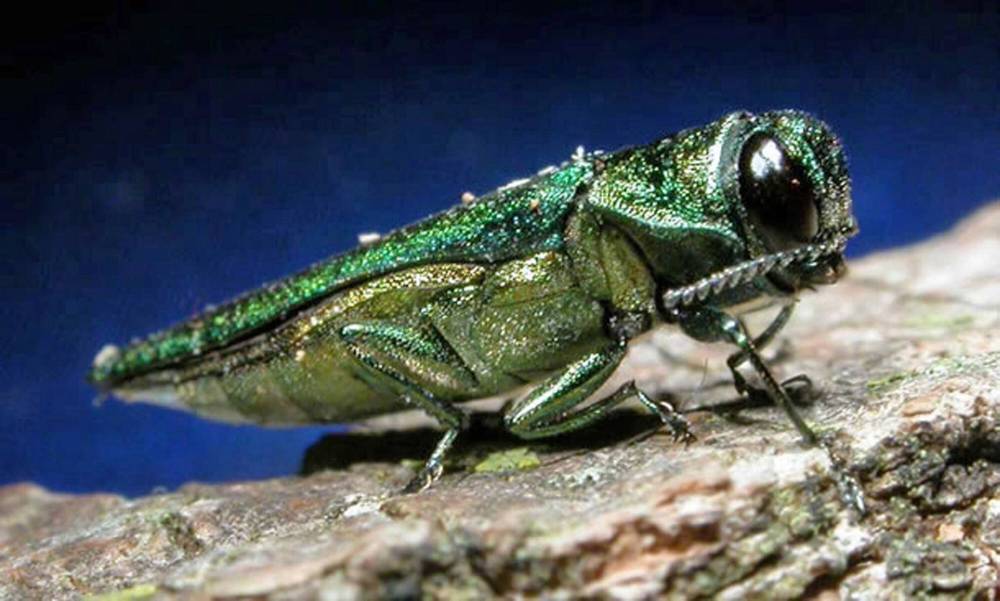
FILE
An adult emerald ash borer. The insects kill ash trees with alarming efficiency.
It’s been nine years since the first infestation was detected in St. Boniface, and city foresters say they’ve had to remove only 22 infected trees in that time. But new infestations were found this spring in north St. Vital and downtown.
Winnipeg is the most northerly point in Canada under an EAB quarantine, and there are some suggestions that Winnipeg’s bitterly cold winters may have proved to naturally hinder the flourishing of the destructive pest. However, if climate change proceeds as predicted, Winnipeg’s winters will become milder and that brake will no longer hold.
Ash is the only tree species that the EAB beetle kills, and it does so with alarming efficiency. All of Winnipeg’s 350,000 ashes were expected to be killed off by the EAB infestation within 10 years of the first infestation confirmation, excepting those that are treated with pesticides every two years.
The reprieve appears to be over, and the clock is once again ticking.
It is worth remembering that the spread of the borer is attributed primarily to moving firewood and wood trimmings from infected areas. And the ban on transporting firewood out of Winnipeg applies to all firewood, not just ash. Once wood has been cut and split, it becomes very difficult to distinguish ash wood from other kinds. And it is not just traditional, split firewood that is covered by this ban.
The Canadian Food Inspection Agency (CFIA) oversees EAB quarantines. It defines firewood as “any untreated, raw solid wood material that is suitable for burning and is used for heat production. It often has bark attached and can be cut in pieces, logs, twigs, or in similar forms or lengths.”
Firewood includes stumps, branches, and any wood material obtained from trimming, pruning or cutting down trees and shrubs if it will be used for heat production. None of it is permitted to leave the City of Winnipeg, unless it has been treated through CFIA approved processed.
The CFIA says there are no confirmations of EAB outside of Winnipeg, so there are no restrictions on bringing firewood into the city.
You can bring it in any time you like, but it can never leave.
The EAB infestation, and it’s deadly threat to the province’s ash trees, is not new anymore to Manitoba, but people may have forgotten the impact of moving firewood out of the City of Winnipeg.
Here’s an example. Confirmed EAB infestations in Winnipeg have been close to rivers. Rivers and streams are ideal vectors for spreading EAB, because that is where many ash trees grow. A fertile borer female can fly up to 20 kilometres a summer, so it might take a decade or two for EAB to spread naturally along the Assiniboine River valley to Brandon.
Or it could arrive there in about two hours by hitchhiking on firewood in a Winnipegger’s vehicle.
To make it easier for Winnipeggers to understand what they can and cannot do with firewood, the Woodlot Association of Manitoba worked with CFIA, Manitoba Sustainable Development (Forestry) and the City of Winnipeg forester in 2018 to create comprehensive FAQ pages that are readily accessible to the public. Just go to woodlotmanitoba.com and “click on the green bug.”

The ban on moving firewood outside the City of Winnipeg will not, unfortunately, contain the EAB beetle forever.
All the ash trees in towns and villages, or in shelterbelts and windbreaks in rural areas are at risk.
Winnipeg has been fortunate that protection measures and “Winterpeg” winters stalled the spread of EAB. Initially in 2018, it was predicted that 30 per cent of the city’s tree canopy would have been killed off by now. But that good fortune may be over, and respecting the moving firewood ban means Winnipeggers can do their part to slow down the spread to the countryside.
Let’s make sure that we can all enjoy our ash trees a little longer.
Bob Austman is a director of the Canadian Forest Owners and former president of the Woodlot Association of Manitoba.