How Congo is battling an Ebola outbreak complicated by aid cuts, armed rebels and anger
Advertisement
Read this article for free:
or
Already have an account? Log in here »
To continue reading, please subscribe:

Digital Subscription
One year of digital access for only $205*
- Enjoy unlimited reading on winnipegfreepress.com
- Read the E-Edition, our digital replica newspaper
- Access News Break, our award-winning app
- Play interactive puzzles
*First annual payment billed as $205.00 + GST for one year. This annual subscription will automatically renew at $233.00 + GST every 52 weeks (10% off the regular annual price of $259.35). Offer available to new and qualified returning subscribers only. Cancel any time.
To continue reading, please subscribe:
Add Free Press access to your Brandon Sun subscription for only an additional
$1 for the first 4 weeks*
- Enjoy unlimited reading on winnipegfreepress.com
- Read the E-Edition, our digital replica newspaper
- Access News Break, our award-winning app
- Play interactive puzzles
*Your next Brandon Sun subscription payment will increase by $1.00 and you will be charged $17.95 plus GST for four weeks. After four weeks, your payment will increase to $24.95 plus GST every four weeks.
Read unlimited articles for free today:
or
Already have an account? Log in here »
KINSHASA, Congo (AP) — Attacks on Ebola treatment centers in eastern Congo underscore the serious challenges authorities face — including a backlash in local communities — as they try to stem an outbreak of the infectious disease that has been declared a global health emergency.
On Sunday, Congolese authorities said suspected cases have now passed 900 in the east of the country, mainly in Ituri Province, where the ongoing outbreak is centered. Later Sunday night, angry young men stormed a hospital treating Ebola patients in the town of Mongbwalu in Ituri, the hospital’s director said.
The attackers demanded that two bodies of their kin be handed over to them, Dr. Richard Lokudu said. Medical staff scrambled to evacuate the patients as gunfire rang out in the area; it was not immediately known if anyone was hurt in the melee.
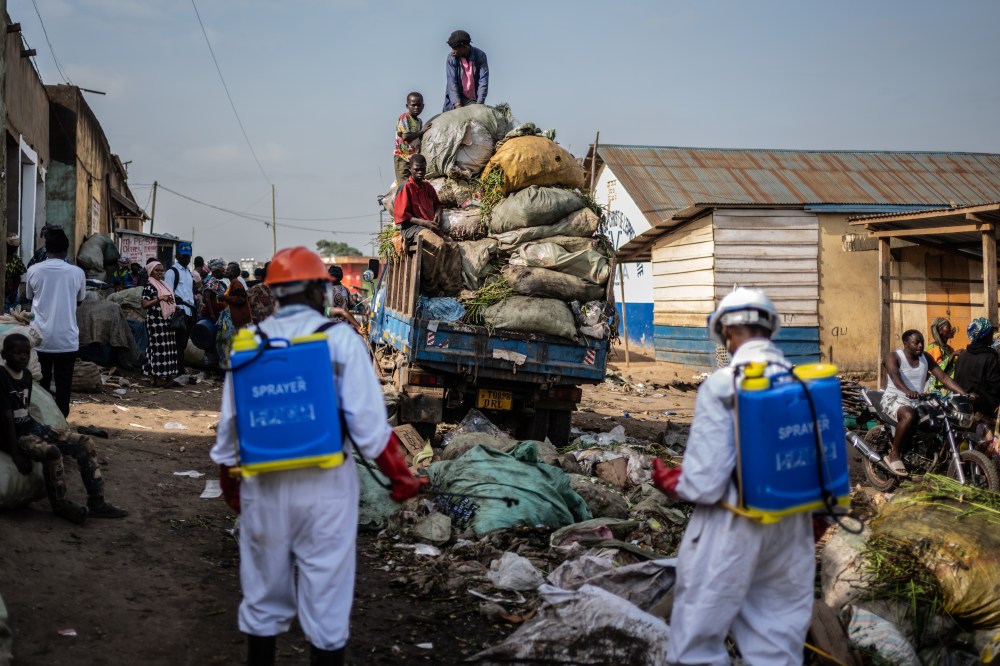
The hospital attack and the arson at two health centers last week at he heart of the outbreak exposed the anger in a region beset by violence linked to armed rebel groups, the displacement of a large number of people, the failure of local government and international aid cuts that experts say have stripped health facilities in vulnerable communities.
“A devastating set of emergencies are converging,” said the Physicians for Human Rights nonprofit.
Here’s a look at the longstanding crises in eastern Congo that have made it home to one of the world’s worst humanitarian disasters, and how they are now affecting the response to a rare type of Ebola:
The region is constantly threatened by violence
Eastern Congo has for years seen attacks by dozens of separate rebel and militant groups, some of them with links to foreign countries or the extremist Islamic State group.
The Rwanda-backed M23 rebels are in control of parts of the region. While the Congolese government still largely controls the northeastern Ituri Province, the epicenter of the Ebola outbreak, that control is tenuous. The Allied Democratic Forces, a Ugandan Islamist group linked to IS, is one of the dominant rebel groups there and responsible for violent attacks against civilian targets.
Before the outbreak, Doctors Without Borders said in an assessment that the insecurity in Ituri had worsened recently, causing doctors and nurses to flee and leaving overwhelmed health facilities and in some parts, “catastrophic conditions.”
Ebola cases soar in Ituri, where nearly a million people are displaced
The U.N. humanitarian office says almost a million people have been displaced from their homes by conflict in Ituri.
That means this Ebola outbreak is “unfolding in communities already facing insecurity, displacement and fragile health care systems,” said Gabriela Arenas, a regional coordinator at the International Federation of Red Cross and Red Crescent Societies.
There are concerns the disease might spread to the large displacement camps near the city of Bunia, where the first cases were reported.
The Congolese Ministry of Communication said on X on Sunday that there were 904 suspected cases of Ebola, mostly in Ituri — a significant jump from the previously announced more than 700 suspected Ebola cases.
The ministry also said the total suspected Ebola deaths stood at 119, but the numbers it released separately for each region added up to 220. Officials could not immediately be reached to explain the discrepancy.
Cases have also been reported in two other eastern provinces, North Kivu and South Kivu, where the M23 rebels are in control, and also in the neighboring country of Uganda.
As a result, the outbreak in Congo is being managed by the government and in part by rebel authorities, with an array of aid agencies also helping.
Aid cuts were devastating for eastern Congo
Health experts say international aid cuts last year by the United States and other rich nations were devastating for eastern Congo because of its multiple problems.
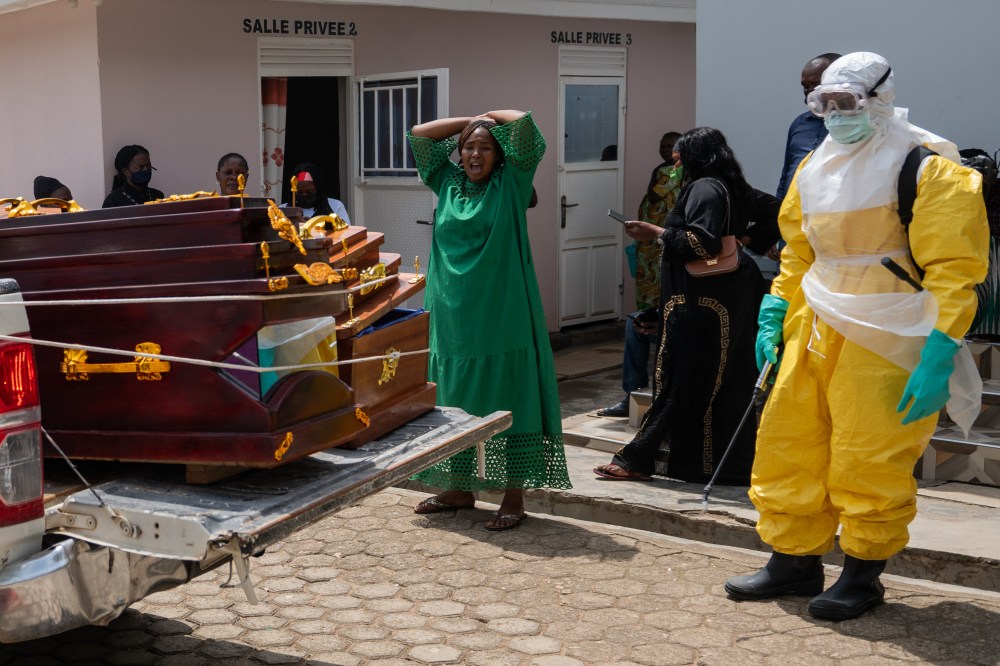
The cuts “reduced the capacity to detect and respond to infectious disease outbreaks,” said Thomas McHale, public health director at Physicians for Human Rights. Congo has had more than a dozen previous Ebola outbreaks.
Aid groups fighting this outbreak on the ground say they don’t have the equipment they need, such as face shields and suits to protect health workers from infection, testing kits, and body bags and other materials needed to safely bury the bodies of victims, which can be highly contagious.
“We have made requests to different partners, but we have not yet really received anything,” said Julienne Lusenge, president of Women’s Solidarity for Inclusive Peace and Development, an aid group operating a small hospital near Bunia.
“We only have hand sanitizer and a few masks for the nurses,” she said.
The Bundibugyo type of Ebola virus responsible for the outbreak has no approved vaccine or treatment.
Health and aid workers also face anger from local communities
Colin Thomas-Jensen, director of impact at the Aurora Humanitarian Initiative, said the attacks on health facilities treating Ebola may reflect the “built-in skepticism and anger” of people in eastern Congo over how the region has been treated, with years of violence from foreign-linked rebel groups and a failure of the government and international peacekeepers to protect them.
Another source of anger has been the strict protocols around the burial of suspected victims of Ebola, which authorities are taking charge of wherever they can to prevent further spread of the disease in traditional burials — when families prepare the bodies and people gather for a funeral.
Authorities in northeastern Congo have now banned funeral wakes and gatherings of more than 50 people, and armed soldiers and police are guarding some burials carried out by aid workers.
___
Imray reported from Cape Town, South Africa. Associated Press writers Mark Banchereau and Wilson McMakin in Dakar, Senegal, contributed to this report.
___
More AP coverage of the Ebola outbreak: https://apnews.com/hub/ebola-virus