US Supreme Court settles long-running water dispute over dwindling Rio Grande

Advertisement

Advertise with us

ALBUQUERQUE, N.M. (AP) — The U.S. Supreme Court has approved a settlement package designed to rein in groundwater pumping along one of North America’s longest rivers and ensure enough water reliably makes it from New Mexico to Texas, ending a long-running dispute over management of the Rio Grande.

Read this article for free:


By clicking the button above, an account will be created and you will begin to receive some of our recommended newsletters. You may opt out of any newsletter by visiting your Email and Communication Preferences page or by clicking "unsubscribe" at the bottom of any email.

or

Already have an account? Log in here »

To continue reading, please subscribe:

Digital Subscription

One year of digital access for only $1.44 a week*

  • Enjoy unlimited reading on winnipegfreepress.com
  • Read the E-Edition, our digital replica newspaper
  • Access News Break, our award-winning app
  • Play interactive puzzles

*Billed as $5.77 plus GST every four weeks. After 52 weeks, price increases to the regular rate of $19.95 plus GST every four weeks. Offer available to new and qualified returning subscribers only. Cancel any time.

To continue reading, please subscribe:

Add Free Press access to your Brandon Sun subscription for only an additional

$1 for the first 4 weeks*

  • Enjoy unlimited reading on winnipegfreepress.com
  • Read the E-Edition, our digital replica newspaper
  • Access News Break, our award-winning app
  • Play interactive puzzles
Start now

*Your next Brandon Sun subscription payment will increase by $1.00 and you will be charged $17.95 plus GST for four weeks. After four weeks, your payment will increase to $24.95 plus GST every four weeks.

ALBUQUERQUE, N.M. (AP) — The U.S. Supreme Court has approved a settlement package designed to rein in groundwater pumping along one of North America’s longest rivers and ensure enough water reliably makes it from New Mexico to Texas, ending a long-running dispute over management of the Rio Grande.

In a brief order Tuesday, the court accepted the recommendation of a special master to move forward with agreements first proposed last year by New Mexico, Texas and Colorado.

The settlement calls for reducing groundwater pumping along the dwindling river and retiring water rights from irrigated farmland in southern New Mexico. The states held up the proposal as a promise to restore order to an elaborate system of storing and sharing water between two vast irrigation districts in southern New Mexico and western Texas.
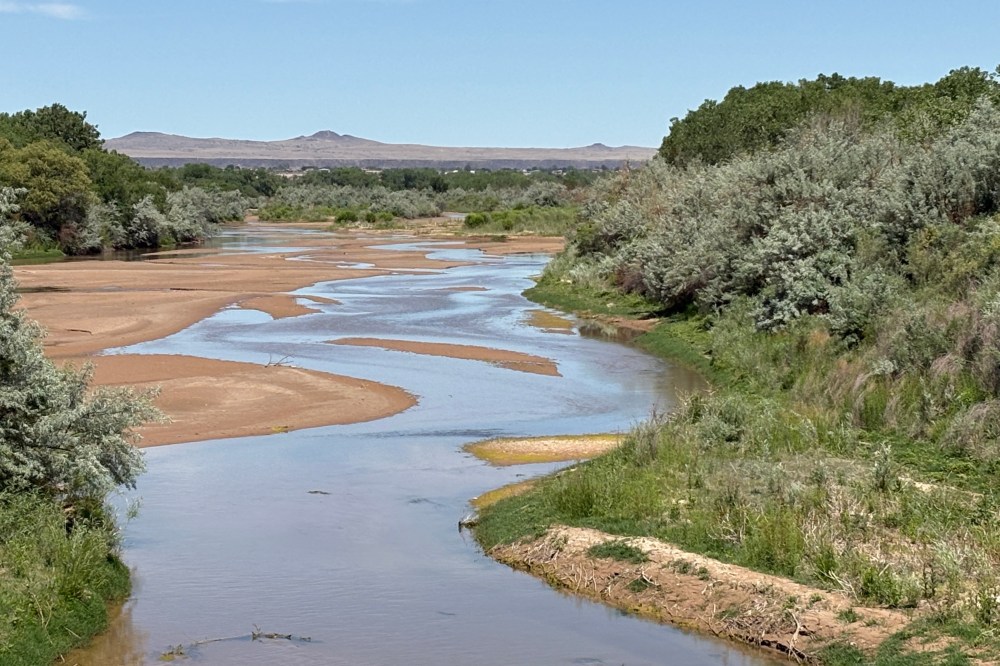
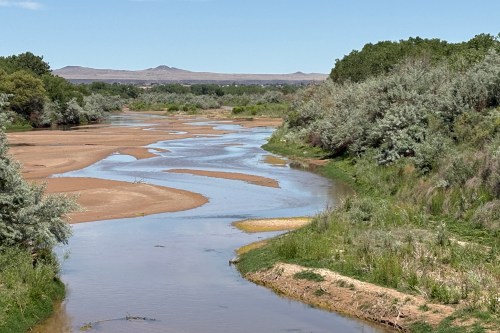
Sand bars develop along the Rio Grande as stretches of the river begin to dry in Albuquerque, N.M., on May 14, 2026. (AP Photo/Susan Montoya Bryan)

“We’re very excited to be redirecting resources from costly and lengthy litigation to solutions on the ground,” Hanna Riseley-White, director of the Interstate Stream Commission, said Wednesday.

Those solutions will include everything from long-term fallowing programs and more efficient irrigation infrastructure to developing new sources of water, like tapping brackish supplies or importing water, and improving stormwater management so more runoff can be captured and stored.

Researchers have warned that unsustainable use of the Rio Grande — which originates in Colorado and stretches south into Mexico — threatens water security for millions of people who rely on the binational river basin.

Farmers in southern New Mexico increasingly have turned to groundwater to irrigate pecan orchards and chile crops as hotter, drier conditions have reduced river flows and storage over recent decades. That pumping is what prompted Texas to sue in 2013, claiming the practice was cutting into water deliveries.

While the Colorado River gets all the headlines, experts say the situation along the Rio Grande is just as dire. Stretches of the river as far north as Albuquerque are expected to go dry again this year, marking the third time in five years.

The settlement package provides for a detailed accounting system for sharing water with Texas. New Mexico could rely on credits and debits from year to year to navigate through drought and wet periods, though it could be responsible for additional water-sharing obligations if deliveries are deferred too long.

Under the settlement, New Mexico must reduce annual groundwater depletions by 18,200 acre-feet, or about 5.9 billion gallons (22.3 billion liters) within the next 10 years. The commitment includes completing half of that within the next five years.

Riseley-White said that represents about 5% to 7% of current groundwater use in the lower Rio Grande. The settlement doesn’t dictate what sector the water savings comes from, so she said industry and municipalities could also partner with the state to meet the mandates.

Still, officials expect to achieve most of the necessary reductions from buying water rights from the agricultural industry, meaning more farmland would be retired.

Riseley-White said listening sessions are underway this week and the first acquisitions are expected to begin later this year. New Mexico has secured more than $40 million in federal funding to support the effort, she said.

Report Error Submit a Tip

More Stories

US Supreme Court settles long-running water dispute over dwindling Rio Grande

Susan Montoya Bryan, The Associated Press 3 minute read Preview

US Supreme Court settles long-running water dispute over dwindling Rio Grande

Susan Montoya Bryan, The Associated Press 3 minute read Wednesday, May. 27, 2026

ALBUQUERQUE, N.M. (AP) — The U.S. Supreme Court has approved a settlement package designed to rein in groundwater pumping along one of North America’s longest rivers and ensure enough water reliably makes it from New Mexico to Texas, ending a long-running dispute over management of the Rio Grande.

In a brief order Tuesday, the court accepted the recommendation of a special master to move forward with agreements first proposed last year by New Mexico, Texas and Colorado.

The settlement calls for reducing groundwater pumping along the dwindling river and retiring water rights from irrigated farmland in southern New Mexico. The states held up the proposal as a promise to restore order to an elaborate system of storing and sharing water between two vast irrigation districts in southern New Mexico and western Texas.

“We're very excited to be redirecting resources from costly and lengthy litigation to solutions on the ground,” Hanna Riseley-White, director of the Interstate Stream Commission, said Wednesday.

Read
Wednesday, May. 27, 2026

Empty desks: Advocates talk chronic school absenteeism

Maggie Macintosh 5 minute read Preview

Empty desks: Advocates talk chronic school absenteeism

Maggie Macintosh 5 minute read Updated: Yesterday at 3:16 PM CDT

Concerned that school and government leaders are downplaying the state of student absenteeism, community organizers are strategizing to create urgency around who’s regularly missing class — and why — in Winnipeg.

The inaugural Youth at Risk in Winnipeg Symposium, held over the weekend at the Canadian Mennonite University, drew roughly 100 people to discuss barriers to attendance and brainstorm ways to remove them.

Nearly 20 years after he began calling attention to the issue, first as a volunteer with the Point Douglas Residents Committee, Sel Burrows gave an impassioned speech about the lack of political will to take meaningful action to help students from “dysfunctional homes.”

“I’ve dealt with nine cabinet ministers, Conservative and NDP, and five deputy ministers, and the issue has not gotten any better,” Burrows told teachers, reseachers and community support workers gathered Saturday on CMU’s Shaftesbury campus.

Read
Updated: Yesterday at 3:16 PM CDT

New blood in St. Vital

Joyanne Pursaga 5 minute read Preview

New blood in St. Vital

Joyanne Pursaga 5 minute read Updated: Yesterday at 5:02 PM CDT

Candidates to fill the wide-open St. Vital city council seat are sharing their plans to ease traffic, tighten up development rules, protect trees and improve Winnipeg Transit.

Coun. Brian Mayes led the ward since 2011 but is not running for re-election, guaranteeing a new city councillor will be chosen.

Chris Sigurdson, a Louis Riel School Division trustee and criminal defence lawyer, is competing for the job with Mayes’ endorsement.

Sigurdson said his trustee work over the last 16 years provided a valuable education in local government that he could apply at city hall.

Read
Updated: Yesterday at 5:02 PM CDT

Katz ‘violated public trust,’ Sheegl lacked ‘moral compass,’ police HQ inquiry commissioner concludes

Joyanne Pursaga 8 minute read Preview

Katz ‘violated public trust,’ Sheegl lacked ‘moral compass,’ police HQ inquiry commissioner concludes

Joyanne Pursaga 8 minute read Monday, Oct. 19, 2026

The final report from the public inquiry into the scandal-plagued Winnipeg Police Service headquarters construction project concludes that former mayor Sam Katz and former city CAO Phil Sheegl broke public trust and engaged in unethical conduct.

And the report, released Monday by inquiry commissioner Garth Smorang, says the cost of the project — transforming a downtown Canada Post office tower and warehouse into the police HQ — soared, in part, because main contractor Caspian Projects overcharged the city by more than $40 million in expenses.

The project’s initial $135-million initial price tag rose to about $209 million in the end. The city purchased the complex in 2009; construction was completed in 2016.

Smorang’s report concludes Katz “violated the public trust” and council code of conduct, and Sheegl suffered from a “complete lack of a moral compass.”

Read
Monday, Oct. 19, 2026

Winnipeg soldiers help search and rescue efforts in Wainwright

Kelly-Anne Riess 4 minute read Preview

Winnipeg soldiers help search and rescue efforts in Wainwright

Kelly-Anne Riess 4 minute read Updated: Yesterday at 6:39 PM CDT

Eleven military search and rescue technicians from Winnipeg were deployed to Wainwright, Alta., following the fire that killed four soldiers and injured 39 others during a live-fire training exercise Saturday.

It was the largest mobilization of SAR techs, elite primary-care paramedics in the Royal Canadian Air Force, in recent memory, a military spokesperson told the Free Press.

Every SAR tech available from 435 Transport and Rescue Squadron, located at 17 Wing Winnipeg — even those off duty — were sent to CFB Wainwright.

The technicians, who are trained to jump from aircraft into extreme environments, parachuted onto the scene from a CC-130H Hercules airplane to provide care for those injured in the fast-moving grass fire that had engulfed a training area.

Read
Updated: Yesterday at 6:39 PM CDT

You’re facing double trouble with infatuation

Maureen Scurfield 4 minute read 2:00 AM CDT

DEAR MISS LONELYHEARTS: I started enjoying the company of women in my running group so much that I ran more and more, and dropped 35 pounds over the summer and early fall. And in the summer I became attracted to a bisexual woman in the group.

At first, we claimed we were “doing OK” with the men we married. But now, feelings of all kinds are accelerating between us.

I must say I’ve suspected my husband has had another woman in recent years, but now it doesn’t bother me the same way. I finally understand wanting two people at one time. I tell myself I’m not “cheating” on anybody — because I’m not cheating on my husband with another man. But that’s not even fooling me, anymore. I’m feeling a lot more emotion for my female love interest.

So now what? I don’t want to disrupt my whole family, so should I keep it a secret for everyone’s sake? I must say the female object of my affection isn’t thinking of leaving her husband and family. I could be wrong, but I suspect she’s just having a fun time experimenting.