
WFPS stretched to limit by city’s around-the-clock drug OD crisis, retiring chief says
Read this article for free:
or
Already have an account? Log in here »
To continue reading, please subscribe:
Digital Subscription
One year of digital access for only $1.44 a week*
- Enjoy unlimited reading on winnipegfreepress.com
- Read the E-Edition, our digital replica newspaper
- Access News Break, our award-winning app
- Play interactive puzzles
*Billed as $5.77 plus GST every four weeks. After 52 weeks, price increases to the regular rate of $19.95 plus GST every four weeks. Offer available to new and qualified returning subscribers only. Cancel any time.
To continue reading, please subscribe:
Add Free Press access to your Brandon Sun subscription for only an additional
$1 for the first 4 weeks*
- Enjoy unlimited reading on winnipegfreepress.com
- Read the E-Edition, our digital replica newspaper
- Access News Break, our award-winning app
- Play interactive puzzles
*Your next Brandon Sun subscription payment will increase by $1.00 and you will be charged $17.95 plus GST for four weeks. After four weeks, your payment will increase to $24.95 plus GST every four weeks.
Read unlimited articles for free today:
or
Already have an account? Log in here »
The chief of the Winnipeg Fire Paramedic Service says first responders attend more than one overdose call every hour, as the city’s drug toxicity crisis intensifies.
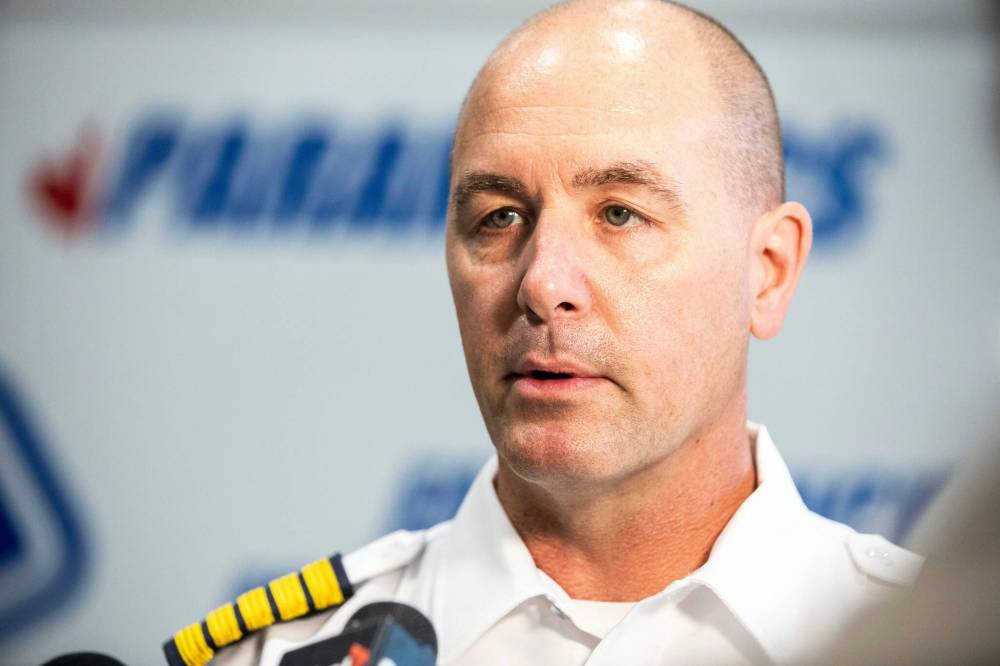
“On average, we’re responding to 27 overdose calls in a 24-hour period and that’s quite significant,” Christian Schmidt said Wednesday during a wide-ranging interview prior to his July retirement.
“A lot of these calls are quite complex, a lot of them involve aspects of danger, as well, for our crews, but also the patients.”
MIKAELA MACKENZIE / FREE PRESS
Winnipeg Fire Paramedic Service Chief Christian Schmidt says crews respond to an average of 27 overdose incidents daily.Schmidt said the growing number of drug-related emergencies has increased pressure on emergency services, driven up call volumes and reduced the availability of fire and paramedic units across Winnipeg.
Firefighter paramedics are increasingly dispatched to ODs and other medical emergencies, leaving fewer crews available to respond to fires and other calls.
The service says the surge in medical incidents has contributed to longer response times because the nearest unit is often already committed to another emergency.
Schmidt added that several “hot spots” in the city — including shelters downtown — place additional strain on resources.
“A lot of these folks are struggling with addictions to alcohol and drugs,” he said. “As a result, we’re responding out to a number of these shelters on a daily basis, numerous times and, in some cases, we’re seeing the same patient more than once or twice in a shift.”
Schmidt said Winnipeg’s drug crisis is behind the increase in calls for service. Outreach organizations estimate the crisis kills an average of 30 people every month.
Adam Smithson, treasurer for the United Fire Fighters of Winnipeg, said Wednesday the growing number of opioid overdoses has become a serious health issue that city hall can no longer ignore.
“The way we’re currently going is not sustainable,” Smithson said. “What was once an occasional medical emergency has now become a constant reality for front-line crews across the city. Opioid overdoses are now an everyday reality for Winnipeg firefighters.”
“The way we’re currently going is not sustainable.”
He said fire crews often finish up at one overdose call only to be called to the next, adding that such calls have more than doubled in the past five years and are approximately 13 times higher than they were a decade ago.
“We’ve needed additional resources for a long time,” Smithson said.
Mayor Scott Gillingham said he’s well aware of the situation.
“Our emergency services staff are under incredible pressure,” he said in an emailed statement. “They’ve told me first-hand about treating the same person with naloxone (opioid-reversing medication) multiple times in a single shift.
“We need more paramedics on the street, and we need more treatment beds to get people out of this cycle. I’ve already asked the province to approve more paramedic positions, and I will keep advocating for the recovery services needed to stop these calls before they happen.”
Main Street Project executive director Jamil Mahmood says the number of overdose calls reported by the WFPS likely represents only a fraction of the reality on the street.
“I would even say they’re only getting half of the calls,” Mahmood said.
“We need more paramedics on the street, and we need more treatment beds to get people out of this cycle.”
He said many overdoses are reversed before emergency crews are needed, often through naloxone administered by peers or outreach workers.
Mahmood said MSP routinely calls 911 as part of its overdose response protocol, which includes administering naloxone, but those calls are sometimes cancelled if the person recovers before paramedics have arrived.
Mahmood, who has repeatedly called on the province to declare a public health emergency, said the last two months have been among the most difficult during his time with the organization.
“I think that’s echoed by the number the WFPS is seeing,” he said. “It’s really hard on everyone.”
Health officials and outreach workers have raised concerns about “down,” a street-drug mixture containing opioids such as fentanyl, carfentanil and often heroin, that is increasingly found mixed with medetomidine, a veterinary sedative linked to a rise in overdose deaths.
While naloxone can reverse an opioid overdose, it does not counteract medetomidine.

On Tuesday, Street Connections issued a drug alert after testing a pink, chunky powder believed to be fentanyl. The sample was found to contain medetomidine, carfentanil, fentanyl, para-fluorofentanyl (a synthetic fentanyl analogue) and caffeine.
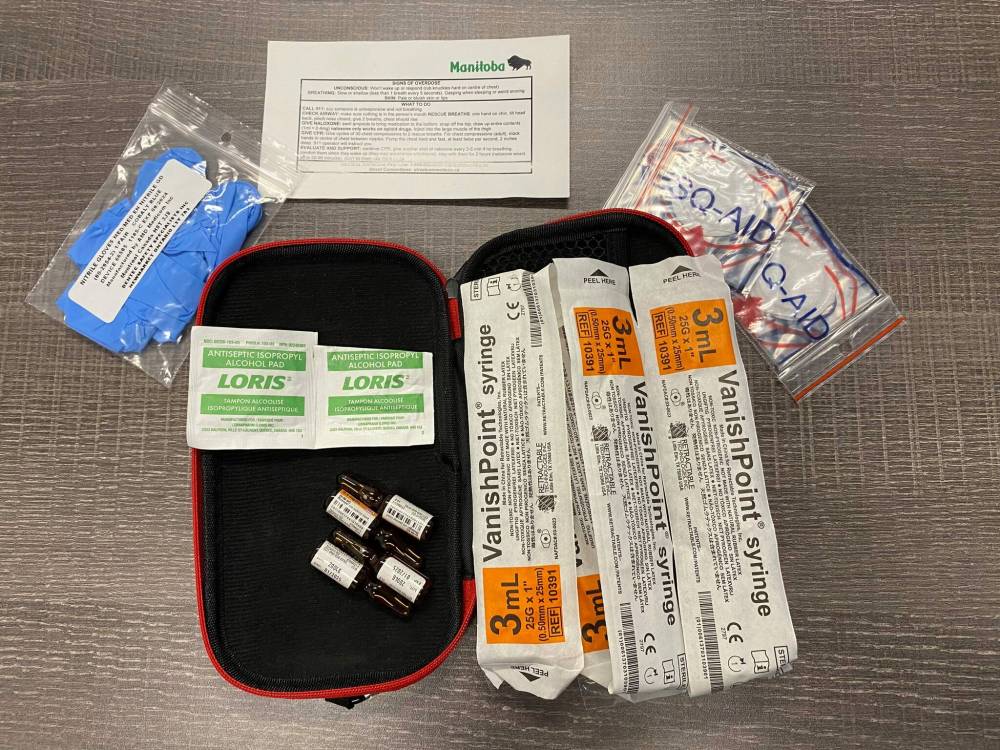
Outreach groups have urged the province to declare a public health emergency in response to the crisis.
Premier Wab Kinew last week said the province’s first supervised consumption site at 366 Henry Ave. is slated to open next month. Officials tasked with running the site say it will help relieve some of the pressure on first responders.
— With files from Joyanne Pursaga
scott.billeck@freepress.mb.ca

Scott Billeck is a general assignment reporter for the Free Press. A Creative Communications graduate from Red River College, Scott has more than a decade’s worth of experience covering hockey, football and global pandemics. He joined the Free Press in 2024. Read more about Scott.
Every piece of reporting Scott produces is reviewed by an editing team before it is posted online or published in print — part of the Free Press‘s tradition, since 1872, of producing reliable independent journalism. Read more about Free Press’s history and mandate, and learn how our newsroom operates.
Our newsroom depends on a growing audience of readers to power our journalism. If you are not a paid reader, please consider becoming a subscriber.
Our newsroom depends on its audience of readers to power our journalism. Thank you for your support.
Related Articles
Winnipeg families deserve real solutions for drug crisis City needs more fire-paramedic stations as population grows: outgoing WFPS boss






History
Updated on Wednesday, May 27, 2026 6:18 PM CDT: Adds quotes.