Artsy avenues
Winnipeg’s cultural connoisseurs tend to cluster on certain streets

Advertisement
Read this article for free:
or
Already have an account? Log in here »
To continue reading, please subscribe:
Digital Subscription
One year of digital access for only $1.44 a week*
- Enjoy unlimited reading on winnipegfreepress.com
- Read the E-Edition, our digital replica newspaper
- Access News Break, our award-winning app
- Play interactive puzzles
*Billed as $5.77 plus GST every four weeks. After 52 weeks, price increases to the regular rate of $19.95 plus GST every four weeks. Offer available to new and qualified returning subscribers only. Cancel any time.
To continue reading, please subscribe:
Add Free Press access to your Brandon Sun subscription for only an additional
$1 for the first 4 weeks*
- Enjoy unlimited reading on winnipegfreepress.com
- Read the E-Edition, our digital replica newspaper
- Access News Break, our award-winning app
- Play interactive puzzles
*Your next Brandon Sun subscription payment will increase by $1.00 and you will be charged $17.95 plus GST for four weeks. After four weeks, your payment will increase to $24.95 plus GST every four weeks.
Read unlimited articles for free today:
or
Already have an account? Log in here »
It’s been joked that if your local bars start pushing beer that tastes like pennies and orange peels, you know your rent’s about to go up.
Apparently, gentrification can be measured in International Bitterness Units and the number of breweries run by bushy beards in your neighbourhood.
The scenester, the hipster, the boho — or whatever other names are given to the artsy farts and creative entrepreneurs newly arrived to urban from suburban life — and the culture they bring will continue to attract jabs and ambivalence as people argue over how neighbourhoods evolve healthily.
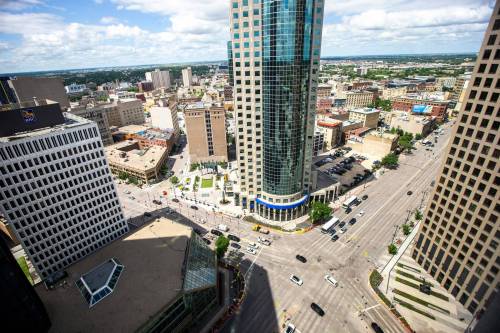
Nevertheless, our city’s pockets of nightlife, live music and local art are precious, complex, proudly touted by Winnipeggers — and animated by young creatives. These pockets are key among the reasons Winnipeg punches above its weight culturally; without them, the city would be a much duller place.
As summer approaches, let’s look at a few streets in, or close to, the urban core where Winnipeggers gather for festivals, plays, beer and song — often in the company of neighbourhood artsy farts and hipsters.
Sherbrook Street
Sherbrook is the nexus of old West Broadway and new; a corridor of restaurants, apartments and used clothing stores whose polarized price ranges perhaps say something about the growing diversity of the neighbourhood itself.
As one historical resident and shopkeeper, commenting on the area’s gentrification over the past decade or so, remarks: “There’s fewer addicts now, which is nice. But the kids have gotten so politically correct!”
Good Neighbour Brewing Co. is part of a rejuvenation of Sherbrook Street which has seen many new businesses open.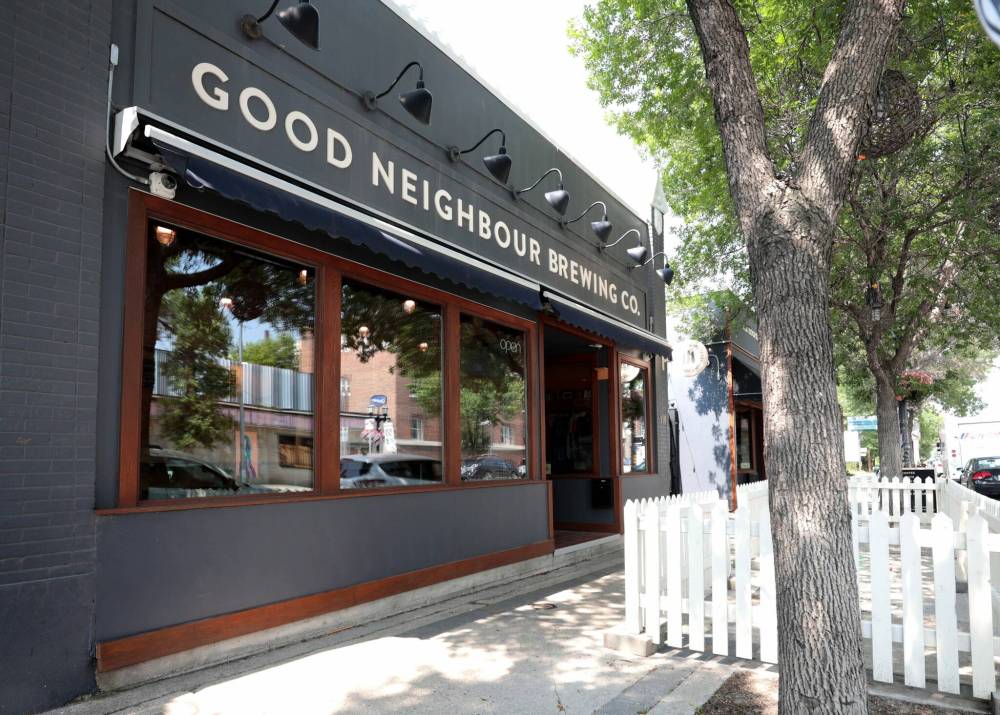
If you like your beer from the can and your music loud, you might start at the punky Handsome Daughter. If you’re feeling a little more genteel, try Good Neighbour, which gets its exotically named and flavoured stouts, ales and lagers from the eponymous Next Door, next door.
Many a night ends at the hotel-bar-vendor formerly known as the Sherbrook Inn, which, after a recent facelift and name change to Kyoto Kat Club, is still affectionately called the Sherbie no matter who you ask. Like a constitutional monarchy, the Sherbie is the neighbourhood’s historical throughline — unifying local residents in common thirst and chit-chat as they wait in its vendor’s line for cheap beer, still on sale all the way up to 2:29 a.m.
While there’s no info yet on whether there’s a Sherbrook Street Festival this year, the Handsome Daughter and the Kyoto Kat Club promise dozens of entertaining concerts over the summer, with the former leaning more toward punk and the latter toward country.
Osborne Street
In the 1980s, landlords in Osborne Village started making room for renters in their large homes, and artists and students flooded in for the cheap rent and proximity to downtown and the University of Winnipeg. A punk, goth and DIY scene emerged, and with it record shops, arty video stores like Movie Village and venues like Die Maschine/Collective Cabaret and The Zoo.
Street performer Eric the Great plays in
Osborne Village on his 70th birthday.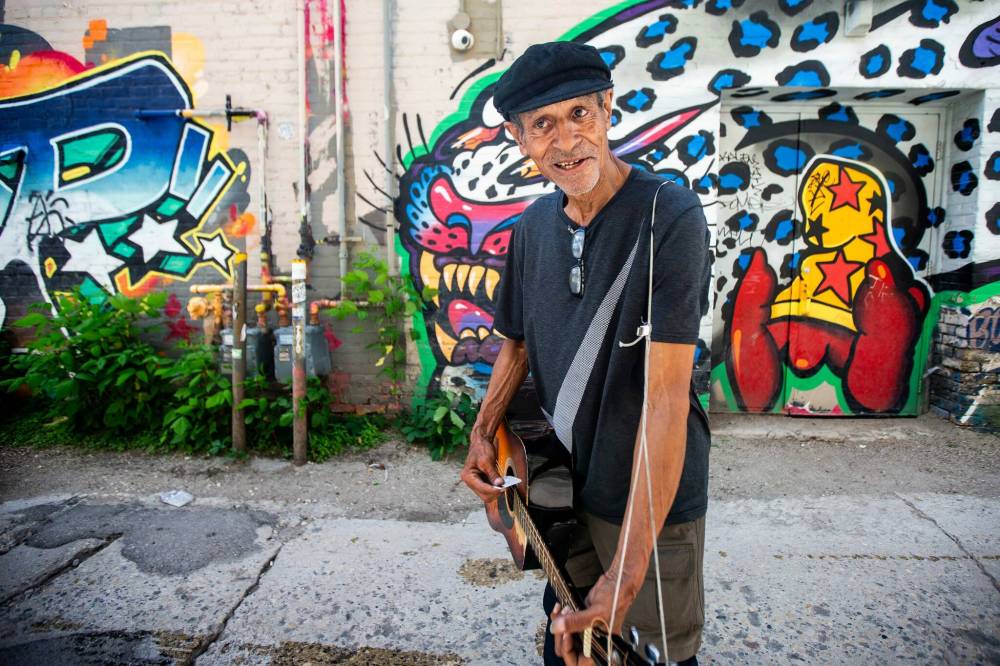
Voted Canada’s greatest neighbourhood by the Canadian Institute of Planners in 2012, Osborne Village today can seem to be moving rapidly in opposite directions simultaneously: condominiums keep going up along with the rent, while a meth crisis ravages the streets below.
It’s not that surprising that much of its nightlife has moved further south down Osborne, near Riverview, where a cluster of newer venues including the Park Theatre, Park Alleys and Sidestage bustle with bands, bon vivants and, yes, bowlers.
But Osborne Village proper still remains an essential summertime “crawl,” boasting some of the city’s best restaurants and unpretentious venues like the Toad in Hole and The Taproom.
Over the summer, it hosts the Village Music Fest (June 27-28), whose lineup this year includes Zrada, the Haileys, Super Duty Tough Work, Prado Monroe, Dill the Giant, Amarula and more. It also absorbs some of the the Winnipeg Fringe Theatre Festival (July 15-26), with the neighbourhood’s flagship theatre, Gas Station Arts Centre — in the midst of ambitious multi-year redevelopments — serving as one of the fest’s preferred venues.
Corydon Avenue
Winnipeg tourists could confuse Corydon Village for an extension of Osborne Village, with the two streets meeting to form the city’s densest corridor of shops, bars and restaurants.
But closer inspection shows that Corydon Village — with mainstays such as Colosseo, Nucci’s, Luce, Santa Lucia and Bar Italia — at its heart is still Little Italy, despite its eclectic multicultural offerings.
Maria Pepe (right) and her husband Michael Pepe run Nucci's Gelati, a mainstay of the Corydon strip.
The last of that list — Bar I, as it’s colloquially known — is one of Winnipeg’s most iconic bars. Its nighttime reputation isn’t exactly squeaky clean, but bars that stay open until 2 a.m. in Winnipeg, being comparatively few, become magnets for just about anyone looking to squeeze out and swallow the night’s last drops.
Most the time, that yields a wholesome mosaic of good-timers who just wanna bump around to Daft Punk and Lil Jon. And by morning, Bar I is back to its roots, with its revolving cast of retirees and habitués gathering to socialize and sip cappuccinos.
Summer is also an extra energetic time for Corydon, because that’s when its Corydon Avenue BIZ Concert Series features frequent concerts scattered through the neighbourhood from June 26 to August 29. Performers this year include Ben Notes, Sam Singer Band and many others.
Bannatyne Avenue
Twenty years ago or so, the Exchange District was teeming with DIY venues and galleries whose legality were questionable but their vitality not.
The building at 91 Albert St. hosted an anarchist book store and restaurant known as Mondragon, while down the road, the Royal Albert Arms was known across North America as a premier stop for touring punk and hardcore bands.
The Cube in Old Market Square, on Bannatyne Avenue, is a summer festival hub.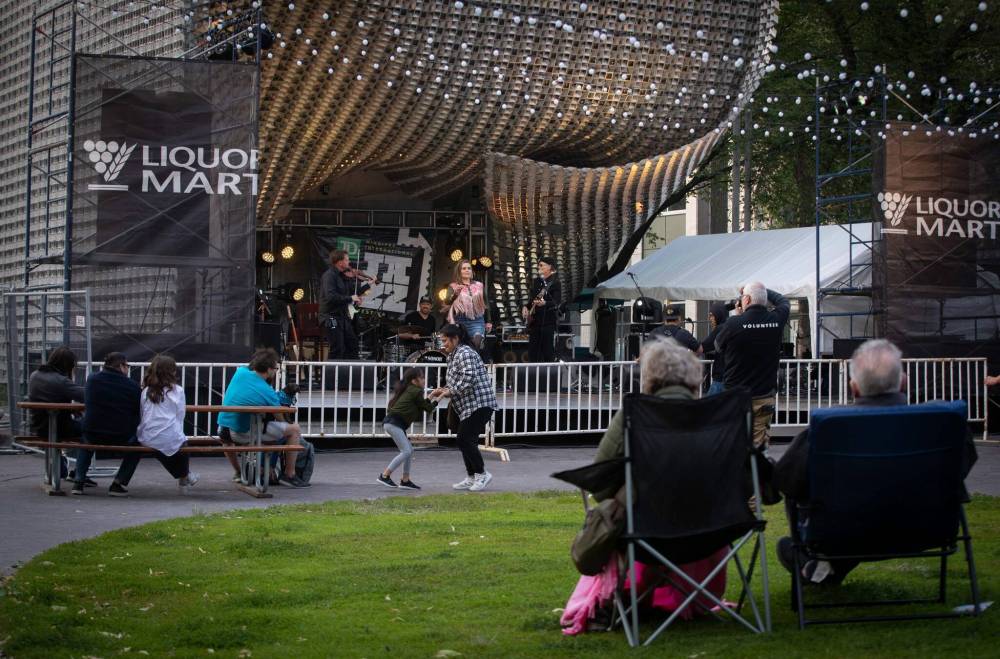
Perhaps a certain grubby authenticity has been lost as more condos have gone up, and impresarios of underground shows have retreated elsewhere. But, more than ever, the Exchange District remains the city’s primary administrative hub for arts and cultural organizations.
And while there’s no shortage of chic cocktail bars and restaurants — Deer + Almond, Clementine, Amsterdam Tea Room and so on — it’s really during the summer that the Exchange comes to life day and night with live culture, offering one festival after another.
Old Market Square, on Bannatyne, is a centre of gravity for many of them, including the Winnipeg International Jazz Festival (June 16-21), Winnipeg Fringe Theatre Festival (July 15-26), the Winnipeg Soca Reggae Festival (generally mid-summer) and Nuit Blanche (Sept. 26).
Provencher Boulevard, Selkirk Avenue and more
The streets listed above are hardly the only ones in or near the urban centre that light up over the summer with concerts, plays and festivals — and a city’s street culture isn’t just what’s programmed and curated but what emerges from the everyday life of its neighbourhoods.
If you missed this year’s Jane’s Walks — which explored the histories, architecture and personalities associated with neighbourhoods including the North End, the Exchange District and St. Norbert — that doesn’t necessarily make a stroll down Salter Street or Rue St Pierre any less worthwhile.
There are also plenty of official offerings to take in on streets like Provencher Boulevard, arguably franco-Winnipeg’s civic heart, which pulses in the summer with nightlife, craft sales, Folklorama and the fringe; Selkirk Avenue, a hub of North End cultural life whose farmers market runs Fridays from late June; and The Forks, whose riverside boardwalks, museums, outdoor patios and Canada Day celebrations will attract tens of thousands before fall sets in.
winnipegfreepress.com/conradsweatman

Conrad Sweatman is an arts reporter and feature writer. Before joining the Free Press full-time in 2024, he worked in the U.K. and Canadian cultural sectors and freelanced for outlets including The Walrus, VICE and Prairie Fire. Read more about Conrad.
Our newsroom depends on a growing audience of readers to power our journalism. If you are not a paid reader, please consider becoming a subscriber.
Our newsroom depends on its audience of readers to power our journalism. Thank you for your support.
TAKE 5
In a regular series, the Free Press explores five great things
Conrad Sweatman is an arts reporter and feature writer. Before joining the Free Press full-time in 2024, he worked in the U.K. and Canadian cultural sectors and freelanced for outlets including The Walrus, VICE and Prairie Fire. Read more about Conrad.
Our newsroom depends on a growing audience of readers to power our journalism. If you are not a paid reader, please consider becoming a subscriber.
Our newsroom depends on its audience of readers to power our journalism. Thank you for your support.

Advertisement Advertise With Us
Advertisement Advertise With Us