Pigeons may be navigating with their liver, study suggests

Advertisement

Advertise with us

NEW YORK (AP) — A surprising gut feeling may help pigeons find their way home.

Read this article for free:


or

Already have an account? Log in here »

To continue reading, please subscribe:

Subscribe and receive a limited-edition Free Press branded hat or tote.

Digital Subscription

One year of digital access for only $205*

  • Enjoy unlimited reading on winnipegfreepress.com
  • Read the E-Edition, our digital replica newspaper
  • Access News Break, our award-winning app
  • Play interactive puzzles

*First annual payment billed as $205.00 + GST for one year. This annual subscription will automatically renew at $233.00 + GST every 52 weeks (10% off the regular annual price of $259.35). Offer available to new and qualified returning subscribers only. Cancel any time.

To continue reading, please subscribe:

Add Free Press access to your Brandon Sun subscription for only an additional

$1 for the first 4 weeks*

  • Enjoy unlimited reading on winnipegfreepress.com
  • Read the E-Edition, our digital replica newspaper
  • Access News Break, our award-winning app
  • Play interactive puzzles
Start now

*Your next Brandon Sun subscription payment will increase by $1.00 and you will be charged $17.95 plus GST for four weeks. After four weeks, your payment will increase to $24.95 plus GST every four weeks.

NEW YORK (AP) — A surprising gut feeling may help pigeons find their way home.

Animals use various techniques to navigate including following the stars and remembering key landmarks. Birds, fish and turtles orient themselves using Earth’s magnetic field as a compass. But it’s not yet clear how exactly they do this.

Pigeons are a well-known group of frequent flyers that can traverse hundreds of miles (hundreds of kilometers) in a single day. For thousands of years, humans have used them to carry news, notes and military messages.

This image provided by the Max Planck Institute of Animal Behavior shows a pigeon wearing a tag used to track its movement in May, 2026, in Konstanz, Germany. (Christian Ziegler/Max Planck Institute of Animal Behavior via AP)

Scientists have long tried to untangle how pigeons travel without getting lost. Some think the birds detect magnetic cues using light-sensitive molecules in their eyes, while others suggest it happens in the beak or inner ear.

“The magnetic sense has been this mystery for almost 100 years,” said Martin Wikelski with the Max Planck Institute of Animal Behavior in Germany.

In a new study, Wikelski and other researchers decided to draw back the curtain on pigeons’ navigational secrets. They searched for magnetic clues in the birds’ organs and found a strong signal in an unexpected place: the liver.

Specialized immune cells in the pigeon’s liver break down red blood cells and store iron. When scientists temporarily stripped pigeons of those immune cells and let them fly, the birds “just couldn’t find their way,” said Christian Kurts with the University of Bonn in Germany. That suggested the iron-rich liver cells might play a role in their sense of direction.

The birds’ magnetic compasses only got scrambled on overcast days. That’s because they also use the sun as a navigational guide.

Scientists have previously wondered whether immune cells could be involved in magnetic sensing, but the new study published Thursday in the journal Science is the first to present a full-fledged theory.

“I would never have guessed it, but once it was explained to me, it makes sense,” said behavioral ecologist Albert Kao with the University of Massachusetts Boston, who had no role in the study.

The immune cells are located near nerve fibers in the liver. That might be how they transmit their “magnetic sense” to the brain “and help the pigeons to navigate,” said study co-author Clivia Lisowski with the University of Bonn.

The researchers think other birds and animals like mice could operate using a similar magnetic GPS. But outside experts say more work is needed to verify the pigeons navigate this way and to firm up how these signals get to the brain. While the researchers found the strongest magnetic signal in the pigeons’ livers, such immune cells have also been spotted in other areas including the beak and spleen.

It’s possible this magnetic puzzle doesn’t have a single answer, wrote veterinary pathologist Simon Spiro and biologist Hal Drakesmith in an accompanying editorial. The birds could use different techniques to sense magnetic fields depending on the task, be it traveling long distances or finding a specific destination.

“Indeed, it could be prudent to have more than one way of getting home in the dark,” they wrote.

—-

The Associated Press Health and Science Department receives support from the Howard Hughes Medical Institute’s Department of Science Education and the Robert Wood Johnson Foundation. The AP is solely responsible for all content.
Report Error Submit a Tip

More Stories

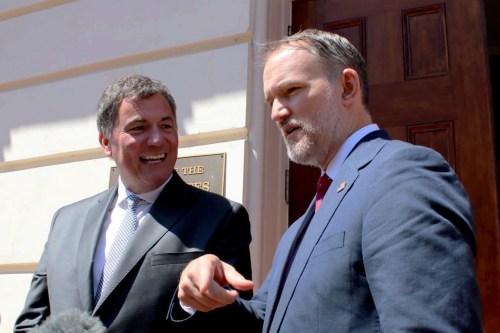
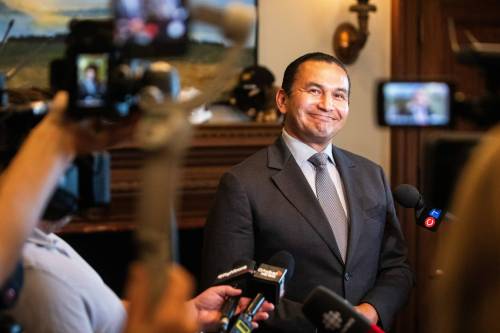
Don’t buy U.S. booze if, when it’s back on Liquor Mart shelves: Kinew

Chris Kitching 6 minute read Preview

Don’t buy U.S. booze if, when it’s back on Liquor Mart shelves: Kinew

Chris Kitching 6 minute read Updated: Yesterday at 10:25 AM CDT

Manitoba hasn’t agreed to put American liquor back on shelves despite Prime Minister Mark Carney’s request while his government finalizes a trade deal with the U.S. to avoid new tariffs.

Read
Updated: Yesterday at 10:25 AM CDT

Silver linings at Canadian Lawn Bowling Championships

Grace Penner 1 minute read Preview

Silver linings at Canadian Lawn Bowling Championships

Grace Penner 1 minute read 2:01 AM CDT

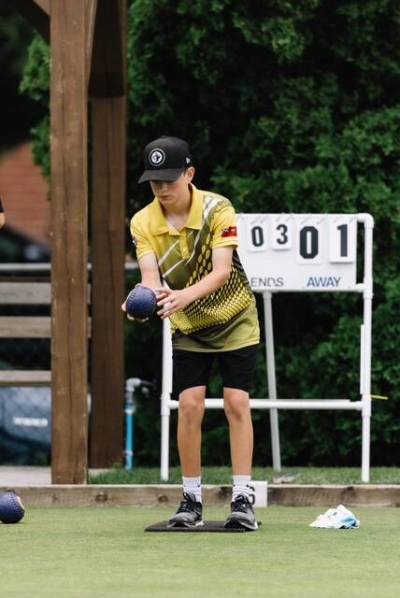
There were multiple Manitoban bowls players in the 2026 Canadian Lawn Bowling Championships last week.

Sam Forrest placed silver in the U18 boys’ Canadian Youth and Junior Championships in Hanover, Ont., that was held from Aug. 10-14.

And in the North Vancouver, B.C., leg of the championships that was held Aug. 16-23, the 13-year-old competed with his grandfather, John Bjornson, as well as Rod Rose and Wayne Trindall in the men’s fours. Forrest was honoured with the Spirit Award.

Women’s pairs Shirley Fitzpatrick-Wong and her mother Clarice Fitzpatrick won silver falling short to the B.C. duo they faced.

Read
2:01 AM CDT

Zoo caring for orphaned polar bear cub

Tiago Resko 2 minute read Preview

Zoo caring for orphaned polar bear cub

Tiago Resko 2 minute read Yesterday at 1:57 PM CDT

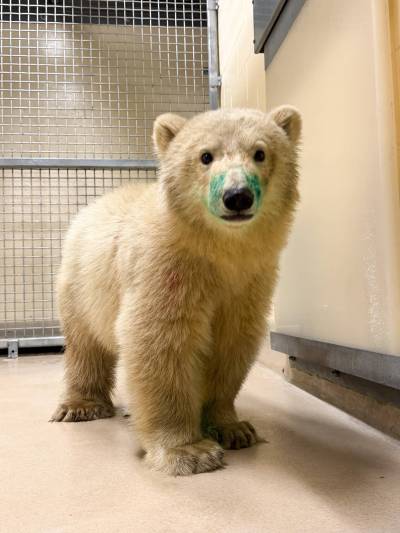
The Assiniboine Park Zoo is caring for an orphaned polar bear cub that arrived from Churchill Thursday after conservation officers determined it was incapable of surviving on its own.

The officers found the bear’s dead mother.

Orphaned cubs have a high mortality rate, and a medical team was quickly sent to Churchill to support the cub’s initial needs, the zoo said in a media release.

The team arrived in Winnipeg late Thursday night.

Read
Yesterday at 1:57 PM CDT

Canada vows dollar-for-dollar tariff retaliation, suspends trade talks with U.S.

Catherine Morrison, The Canadian Press 7 minute read Preview

Canada vows dollar-for-dollar tariff retaliation, suspends trade talks with U.S.

Catherine Morrison, The Canadian Press 7 minute read Updated: 8:27 AM CDT

OTTAWA - A last-ditch effort to reach a new trade deal before a midnight tariff deadline failed Friday, as Prime Minister Mark Carney suspended talks with the United States and summoned his negotiators back to Ottawa.

The decision meant new 50 per cent tariffs on billions of dollars in Canadian exports to the U.S. took effect at 12:01 a.m., and Carney vowed Canada would retaliate with equal measures of its own.

"In recent weeks, we made important progress toward improving Canada's position as having the best deal in the world with the U.S.," Carney said in a statement just before Trump's tariff deadline.

"However, that progress has not been enough to meet our objectives for Canadians."

Read
Updated: 8:27 AM CDT

Wait times for MRIs getting worse in Brandon, Dauphin

Rylee Gerrard 4 minute read 2:01 AM CDT

BRANDON — Wait times for MRI scans have surged in the Prairie Mountain Health region during the last two years.

Despite a campaign promise by the NDP in September 2023 to increase the number of allied health professionals capable of administering diagnostic imaging in northern and rural areas, wait times for MRIs have increased dramatically in Brandon and Dauphin.

Median imaging wait times tripled at Dauphin Regional Health Centre between 2024 and 2026, increasing from eight to 24 weeks, according to the province’s wait time dashboard.

The Brandon Regional Health Centre median wait times for MRI scans more than doubled during the same period, from nine to 23 weeks.

Executive exodus continues at Shared Health with three recent departures

Chris Kitching 5 minute read Preview

Executive exodus continues at Shared Health with three recent departures

Chris Kitching 5 minute read Updated: Yesterday at 4:18 PM CDT

Manitoba’s provincial health authority is looking for its fourth chief financial officer since 2023 and additional replacements after the recent departures of three executives.

Read
Updated: Yesterday at 4:18 PM CDT