

Wilderness committee draws up plan to restore Nopiming after 2025 wildfire
Moratorium on industrial permits, end to military training among recommendations

Advertisement
Read this article for free:
or
Already have an account? Log in here »
To continue reading, please subscribe:

Digital Subscription
One year of digital access for only $205*
- Enjoy unlimited reading on winnipegfreepress.com
- Read the E-Edition, our digital replica newspaper
- Access News Break, our award-winning app
- Play interactive puzzles
*First annual payment billed as $205.00 + GST for one year. This annual subscription will automatically renew at $233.00 + GST every 52 weeks (10% off the regular annual price of $259.35). Offer available to new and qualified returning subscribers only. Cancel any time.
To continue reading, please subscribe:
Add Free Press access to your Brandon Sun subscription for only an additional
$1 for the first 4 weeks*
- Enjoy unlimited reading on winnipegfreepress.com
- Read the E-Edition, our digital replica newspaper
- Access News Break, our award-winning app
- Play interactive puzzles
*Your next Brandon Sun subscription payment will increase by $1.00 and you will be charged $17.95 plus GST for four weeks. After four weeks, your payment will increase to $24.95 plus GST every four weeks.
Read unlimited articles for free today:
or
Already have an account? Log in here »
One year ago, wildfires severely damaged cottage communities, backcountry campgrounds and popular canoe routes in Nopiming Provincial Park in eastern Manitoba.
Manitoba Wilderness Committee campaigner Eric Reder says as the park and its boreal ecosystem recover, which will take decades, the province should embrace the opportunity to curtail industrial activity in the park and establish more robust protection for its natural and recreational assets.
“The Nopiming Provincial Park that existed prior to 2025 is gone,” a Wilderness Committee report released Thursday said. “Only an all-of-society recovery solution can bring back what we’ve lost.”
MANITOBA GOVERNMENT
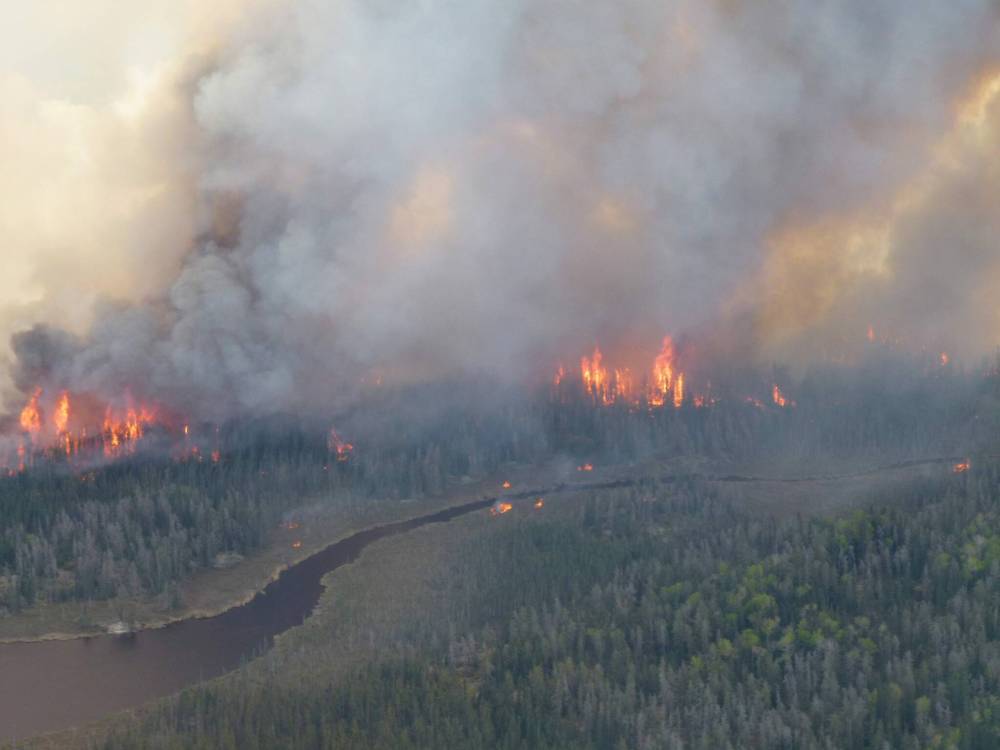
Nopiming Park residents were evacuated for several weeks owing to wildfires last spring.
The wilderness committee says that solution involves a moratorium on new industrial activity, a commitment to conserve habitat for caribou herds, increased engagement with First Nations whose land overlaps with the park and investment in recreational infrastructure, including backcountry trails and canoe routes.
“Doing so will allow the park to serve both nature and people,” the report said. “Manitoba’s outdoor way of life is at stake.”
The province said Thursday it is “currently focused on immediate wildfire recovery needs such as restoring access and services, and on prioritizing initiatives like FireSmart with park users.” Restoration activities in the park are ongoing, a provincial spokesperson said in an emailed statement, and the province is “actively listening to input from many sources, including park users, residents, cottagers and environmental groups.”
Nopiming Park’s 1,400 square kilometres of Canadian Shield are part of the world’s largest intact boreal forest and home to the province’s southernmost boreal caribou herd.
It boasts a handful of campgrounds and backcountry trails, as well as several cottage subdivisions with a mix of permanent and seasonal residents.
Nopiming Park hosts hundreds of mineral claims staked by companies seeking gold and lithium, and is home to the Canadian Forces School of Survival and Aeromedical Training.
Much of that infrastructure has been damaged.
A lightning strike near the Bird River sparked the first fire on May 12, 2025. Over more than 200 days it grew to more than 3,500 square kilometres — almost eight times the size of Winnipeg — and engulfed the vast majority of the park.
Park residents were evacuated for several weeks, some were unable to return until late July. The provincial spokesperson said 21 cottages and the campground office near Black Lake were destroyed, several canoe routes were affected, trailhead facilities were destroyed and many remote campsites lost infrastructure such as bear boxes, picnic tables and fire pits.
The military training site was evacuated, too, and several of its “administrative and storage structures … were subsequently damaged or destroyed,” says a brief prepared for the minister of National Defence in May 2025.
While some campgrounds and trails reopened this month, several backcountry campsites, trails and water routes remain closed.
“Visitors can expect a mix of reopenings and closures through the summer season as recovery work continues,” the provincial spokesperson said.
After visiting Nopiming Park late last summer, Reder said he was struck by the extent of the damage to his familiar canoe routes and picnic spots.
“The thing that really struck me was that the fire was more comprehensive than we’re used to seeing,” he said.
Few pockets of forest were unscathed, especially in what Reder calls “the wild heart” of the forest, which has been a critical habitat for the caribou herd. The threatened species relies on dense, treed areas for shelter and protection.
Reder said his biggest concern is protecting the habitat that remains.
“A park needs time to recover,” he said. “Stop the mineral exploration, get the military out of there… a couple of these recommendations are pretty straightforward ways to give peace to the park.”
The committee recommends a moratorium on new industrial activity permits, and a permanent end to military training exercises. It also recommends limiting motorized activity such as all-terrain vehicles and outboard motors until caribou habitat use is better understood.
Reder said the park can be restored in a way that prioritizes its recreational potential.

The committee recommends more integration with Indigenous communities, including signage and programs that discuss the land’s traditional uses and history. It also recommends the province invest in “people-powered” recreational infrastructure, including trails, canoe routes and wayside stops.
“The idea that Nopiming … should have a backcountry route, probably should get into people’s heads right now,” Reder said, adding the increased visibility following the fire has made it easier to plan possible trails.
For cottages, the report recommends investing in Fire Smart programs and limiting the size of human infrastructure to reduce potential losses from fire.
The provincial spokesperson said all recommendations will be considered.
Julia-Simone Rutgers is a reporter covering environmental issues in Manitoba. Her position is part of a partnership between The Narwhal and the Winnipeg Free Press.
Julia-Simone Rutgers is an investigative reporter who joined the Free Press in 2020. Read more about Julia-Simone.
Every piece of reporting Julia-Simone produces is reviewed by an editing team before it is posted online or published in print — part of the Free Press‘s tradition, since 1872, of producing reliable independent journalism. Read more about Free Press’s history and mandate, and learn how our newsroom operates.
Our newsroom depends on a growing audience of readers to power our journalism. If you are not a paid reader, please consider becoming a subscriber.
Our newsroom depends on its audience of readers to power our journalism. Thank you for your support.
Julia-Simone Rutgers is an investigative reporter who joined the Free Press in 2020. Read more about Julia-Simone.
Every piece of reporting Julia-Simone produces is reviewed by an editing team before it is posted online or published in print — part of the Free Press‘s tradition, since 1872, of producing reliable independent journalism. Read more about Free Press’s history and mandate, and learn how our newsroom operates.
Our newsroom depends on a growing audience of readers to power our journalism. If you are not a paid reader, please consider becoming a subscriber.
Our newsroom depends on its audience of readers to power our journalism. Thank you for your support.
Related Articles
Extreme heat, dry conditions fan fears of another explosive wildfire season
Advertisement Advertise With Us
Advertisement Advertise With Us