Woman of strength
Even residential school couldn’t erase who she was

Advertisement
Read this article for free:
or
Already have an account? Log in here »
To continue reading, please subscribe:

Digital Subscription
One year of digital access for only $205*
- Enjoy unlimited reading on winnipegfreepress.com
- Read the E-Edition, our digital replica newspaper
- Access News Break, our award-winning app
- Play interactive puzzles
*First annual payment billed as $205.00 + GST for one year. This annual subscription will automatically renew at $233.00 + GST every 52 weeks (10% off the regular annual price of $259.35). Offer available to new and qualified returning subscribers only. Cancel any time.
To continue reading, please subscribe:
Add Free Press access to your Brandon Sun subscription for only an additional
$1 for the first 4 weeks*
- Enjoy unlimited reading on winnipegfreepress.com
- Read the E-Edition, our digital replica newspaper
- Access News Break, our award-winning app
- Play interactive puzzles
*Your next Brandon Sun subscription payment will increase by $1.00 and you will be charged $17.95 plus GST for four weeks. After four weeks, your payment will increase to $24.95 plus GST every four weeks.
Read unlimited articles for free today:
or
Already have an account? Log in here »
Over her life, Christina Gladys Henderson was known by a few names.
She was born Aug. 6, 1948, as Teenie Cook, to Adam Cook and Violet Quill, and lived her early years in Sapotaweyak Cree Nation, on the shore of Lake Winnipegosis, about 600 kilometres northwest of Winnipeg.
She would later adopt the name Tina, which most people called her, and later, Christina. In marriage, she would trade the surname Cook for Henderson.
Supplied
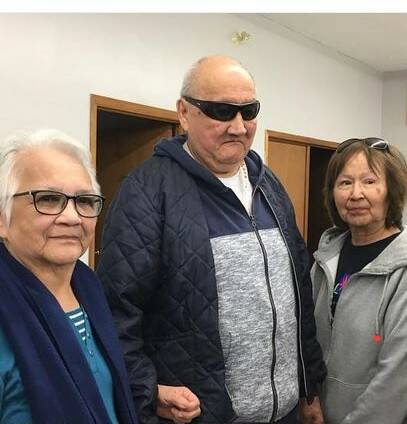
Christina Henderson (right), with siblings Daniel and Elizabeth in Sapotaweyak Cree Nation for the funeral of their sister Agnes.
Over her 77 years, however, one part of her identity did not change: Henderson would hold fast to her first language, Swampy Cree, despite more than a decade spent in residential schools — institutions that routinely punished and humiliated First Nations children for speaking their own languages.
“I know one of the biggest highlights for her was when APTN aired a hockey game in Cree,” said Henderson’s niece, Crystal Laborero.
“I don’t even know who was playing, but to be honest, I don’t think she cared either.”
Henderson loved watching hockey (especially the Jets); listening to music (the Beatles, classic country tunes and Cher ranked highly for her); and reading (Laborero remembered her aunt reading The Prophet, the 1923 book of poetic fables by Kahlil Gibran, as well as Hotel California, about the ’60s music scene in California).
“She’d always be looking at my bookshelves and wanted to know what I was reading,” said Laborero, a Winnipeg-based consultant, primarily for Indigenous organizations.
Henderson spent her adult life in Winnipeg, where she met her husband (the pair would later divorce), and became a homemaker.
Supplied
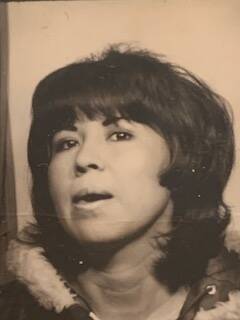
Christina Henderson loved hockey, music and reading.
She had two sons: first Chris and then, 16 years later, Kelly. For a brief time, she worked as a home-care aide, and at one point, went to school to become an esthetician, though she didn’t take up the work professionally.
Later in life, she found pleasure in being a grandmother to Chris’s daughter, Sienna.
Henderson died on Oct. 26, 2025, from complications of pneumonia, after living for several years with worsening memory loss and dementia.
“She was a breast cancer survivor, as well as being a residential school survivor, but she was very humble and simple; she really liked the simple things,” said Chris Henderson, who is the executive director of the Treaty Land Entitlement Committee of Manitoba.
Earlier in his career, when Chris travelled frequently for conferences, his mom never wanted an elaborate gift — just a T-shirt from the territory where he’d been.
Supplied
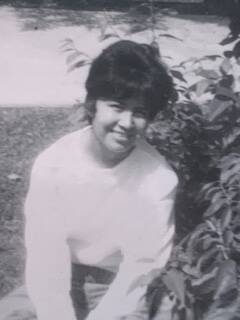
Christina Henderson spent her early years on Sapotaweyak Cree Nation, on the shore of Lake Winnipegosis.
When Chris was young, his family settled in the Wolseley neighbourhood, on Clifton Street. His mom stayed rooted in this house for decades, until her health began to decline.
When the weather was nice, Chris said, one of his mom’s favourite things to do was walk to Polo Park and get lunch at the now-defunct Zellers restaurant, before grabbing a few things at Safeway and heading home.
As a small child, Henderson attended the Roman Catholic-run Pine Creek Residential School in Camperville, and as a teenager, the Assiniboia Residential School in Winnipeg.
A 1965-66 yearbook from Assiniboia, available in the National Centre for Truth and Reconciliation’s archives, shows a 17-year-old Henderson, who is described as “the quietest girl in the class.”
Henderson, as well as her sister Elizabeth and brother Daniel, were brought to residential school after their mother died of cancer in her early 30s. (Henderson was the second youngest of nine children.)
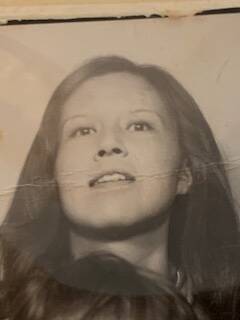
Supplied
Henderson was just four years old and Elizabeth six when they entered Pine Creek, said Laborero, who is Elizabeth’s daughter.
“They always had to have my aunt near my mom because she would cry a lot, because they were taken quite young,” Laborero said.
“When they were taken to residential school, obviously, they didn’t even know: they went to bed, in their bed, and woke up in residential school.”
The sisters, Christina and Elizabeth, continued to speak Cree as adults, and talked on the phone almost every day.
To Laborero, they were fluent, though she added, “they wouldn’t call it fluent, because they would say there’s lots of words they’ve lost and can’t say because of being in residential school.”
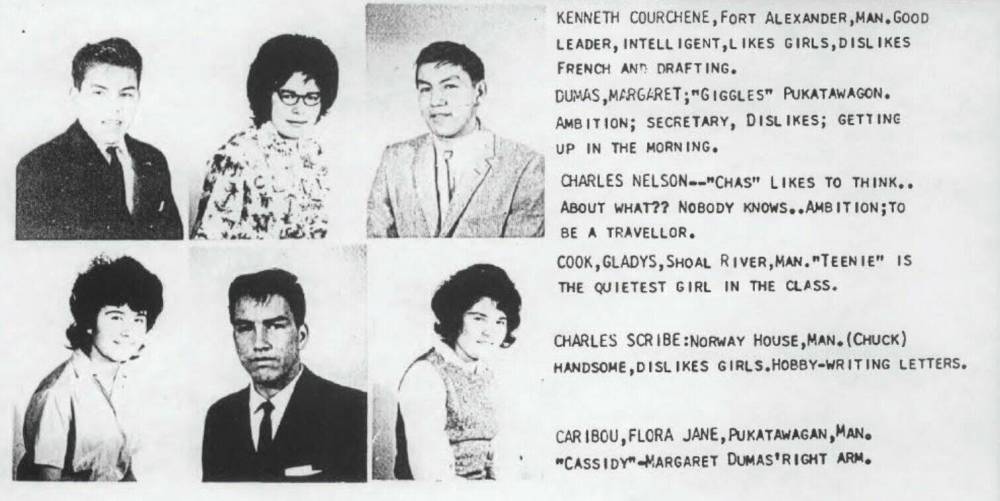
National Centre for Truth and Reconciliation
Christina Henderson (bottom left), listed as Gladys Cook, is shown in a 1965-66 yearbook photo from the Assiniboia Residential School, at age 17.
“I’m sure because they were together (at residential school), they would probably speak Cree when they were alone,” she added.
In its final report, published in 2015, the Truth and Reconciliation Commission described residential schools as a “systematic, government-sponsored attempt to destroy Aboriginal cultures and languages,” citing often severe punishment for children who spoke their own languages.
The report contains a passage written by the Métis survivor Raphael Ironstand, who, like Henderson and her sister, attended Pine Creek in the 1950s, where he recalled seeing girls with their heads shaved: “Even though they wore scarves and toques to hide their heads, the tears were streaming down their faces. They were so embarrassed, they kept their heads bowed and eyes looking at the floor. It turned out that their crime had been speaking their native dialect to each other.”
Despite being forced into contact with Christianity through residential school, Henderson attended church as an adult.
Chris remembers going to evening mass during Christmastime at the St. Kateri Tekakwitha Indigenous Church, a Catholic parish named for a 17th century Mohawk-Algonquin saint, when it was located on Ellice Avenue.
To Laborero, Henderson was her “young, cool aunt,” taking her on trips to Polo Park, letting her try her nice-smelling creams, doing her makeup and bringing her to get her ears pierced as a pre-teen.
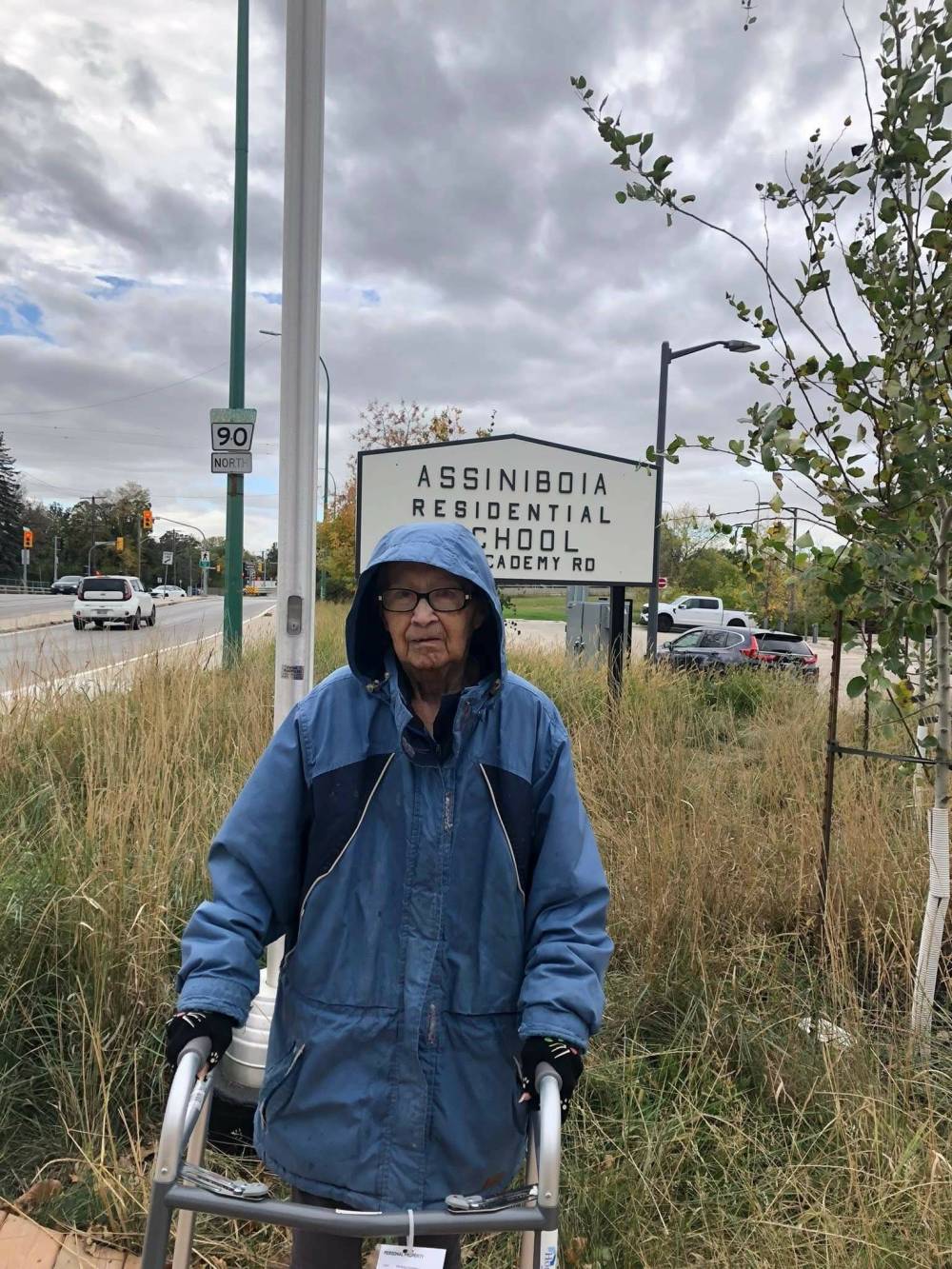
Supplied
Christina Henderson, then 76, stands in front of the sign of the former Assiniboia Residential School, off Academy Road, Sept. 30, 2024.
“She always wore jeans, so I wouldn’t say (she was) a ‘fashionista,’ but when you’re a little Indigenous kid who’s poor, to me, she was glamorous, right? She was beautiful,” Laborero said. “I just always looked up to her.”
Henderson was shy and introverted, Laborero said, but also “caring and compassionate.” She listened without judgement, didn’t gossip and treasured her family.
Henderson and her sister Elizabeth’s families were incredibly close: Laborero remembers spending every holiday together or just hanging out together and making popcorn.
And Henderson was the “family historian,” Laborero added, always taking pictures, even letting the kids hold her camera and snap photos themselves.
In 2021, when news surfaced of 215 possible unmarked graves at the former Kamloops Indian Residential School in British Columbia, igniting a national reckoning, Henderson would change the channel or turn off the TV, Laborero recalled.
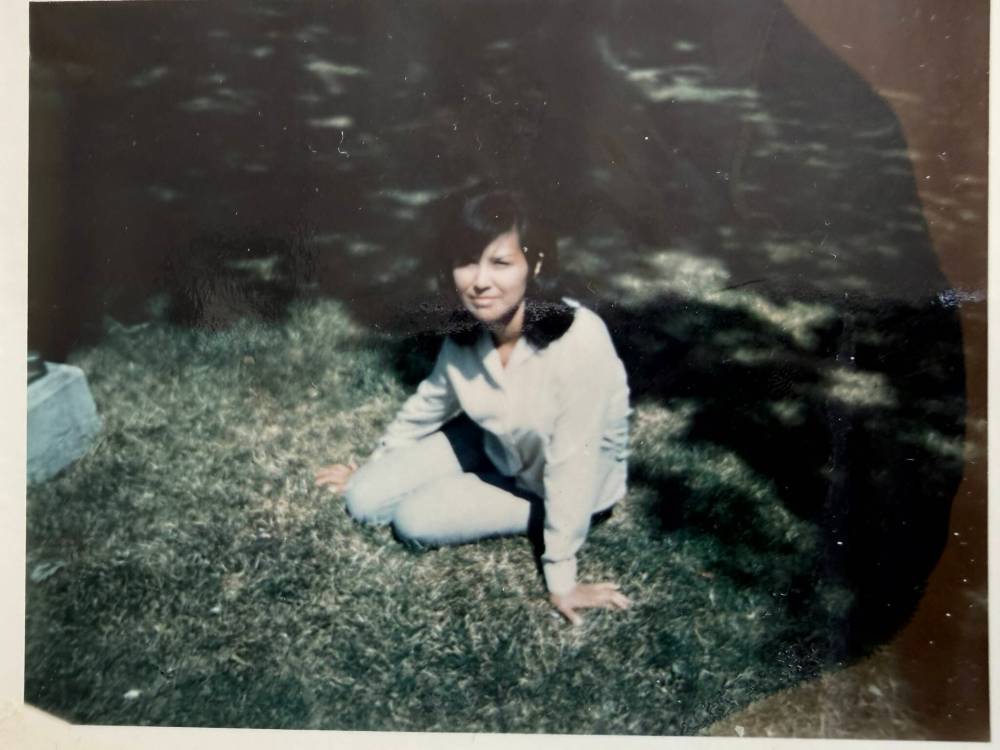
Supplied
Christina Henderson was a well-loved sister, mom, auntie, and grandmother.
“She, out of everybody, never talked about residential school and their childhood,” she said.
On Sept. 30, 2024, on the National Day for Truth and Reconciliation, Chris took his mom to the former site of the Assiniboia Residential School, which is just off Academy Road in Winnipeg’s River Heights neighbourhood.

Her memory was failing at the time and Henderson couldn’t recall why they were there, so Chris reminded her.
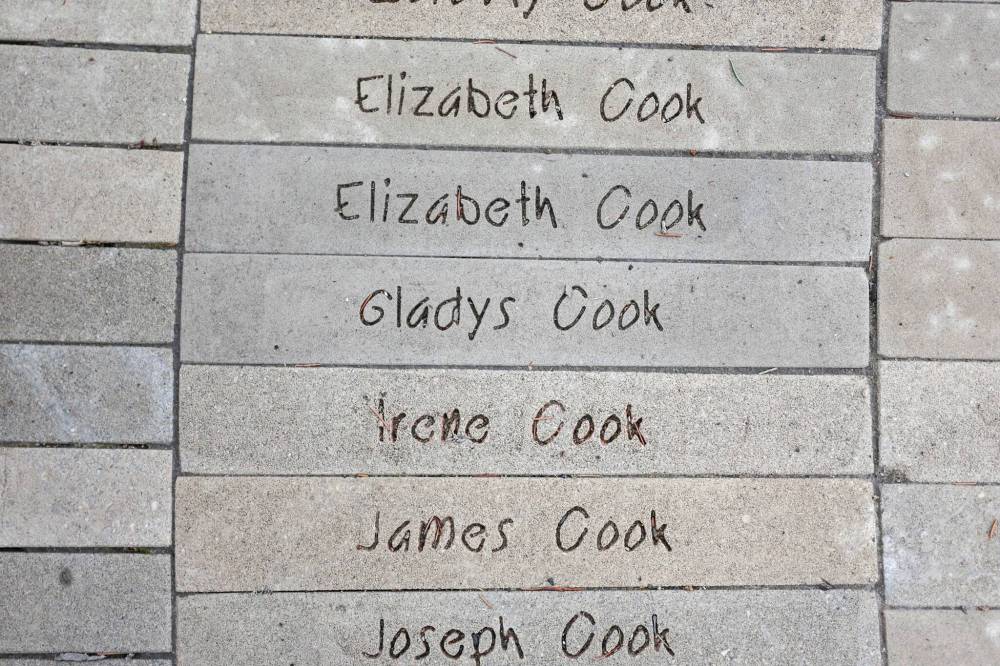
At the site, the Assiniboia Residential School Legacy Group has erected a monument to the more than 1,000 children who attended the institution.
Their names are etched into concentric rings of limestone blocks surrounding a ceremonial fire.
Ruth Bonneville / Free Press
The name Gladys Cook — who later became Christina Gladys Henderson — can be found with others on the Assiniboine Residential School monument on Academy Road.
Henderson’s brick doesn’t include her first name, reading only “Gladys Cook.”
Despite the different ways her name had been recorded, Henderson had, however, always picked her own.
Marsha McLeod
Investigative reporter
Signal
Marsha McLeod is an investigative reporter at the Free Press. She joined the Free Press in 2023. Read more about Marsha.
Every piece of reporting Marsha produces is reviewed by an editing team before it is posted online or published in print — part of the Free Press‘s tradition, since 1872, of producing reliable independent journalism. Read more about Free Press’s history and mandate, and learn how our newsroom operates.
Our newsroom depends on a growing audience of readers to power our journalism. If you are not a paid reader, please consider becoming a subscriber.
Our newsroom depends on its audience of readers to power our journalism. Thank you for your support.
Marsha McLeod
Investigative reporter
Signal
Marsha McLeod is an investigative reporter at the Free Press. She joined the Free Press in 2023. Read more about Marsha.
Every piece of reporting Marsha produces is reviewed by an editing team before it is posted online or published in print — part of the Free Press‘s tradition, since 1872, of producing reliable independent journalism. Read more about Free Press’s history and mandate, and learn how our newsroom operates.
Our newsroom depends on a growing audience of readers to power our journalism. If you are not a paid reader, please consider becoming a subscriber.
Our newsroom depends on its audience of readers to power our journalism. Thank you for your support.
Advertisement Advertise With Us
Advertisement Advertise With Us