

City mulls future of its ‘rainy day’ fund

Advertisement
Read this article for free:
or
Already have an account? Log in here »
To continue reading, please subscribe:

Digital Subscription
One year of digital access for only $205*
- Enjoy unlimited reading on winnipegfreepress.com
- Read the E-Edition, our digital replica newspaper
- Access News Break, our award-winning app
- Play interactive puzzles
*First annual payment billed as $205.00 + GST for one year. This annual subscription will automatically renew at $233.00 + GST every 52 weeks (10% off the regular annual price of $259.35). Offer available to new and qualified returning subscribers only. Cancel any time.
To continue reading, please subscribe:
Add Free Press access to your Brandon Sun subscription for only an additional
$1 for the first 4 weeks*
- Enjoy unlimited reading on winnipegfreepress.com
- Read the E-Edition, our digital replica newspaper
- Access News Break, our award-winning app
- Play interactive puzzles
*Your next Brandon Sun subscription payment will increase by $1.00 and you will be charged $17.95 plus GST for four weeks. After four weeks, your payment will increase to $24.95 plus GST every four weeks.
Read unlimited articles for free today:
or
Already have an account? Log in here »
The City of Winnipeg could soon set less cash aside to cover a rainy day.
For years, a city council-imposed target has required a minimum balance for the financial stabilization reserve, also known as the rainy day fund. That threshold is equal to six per cent of the city’s tax-supported operating expenses each year. The amount was set at $85 million in 2025.
Following the economic blows of the COVID-19 pandemic, however, the fund has fallen far below the target in each of the last four years, triggering steps to replenish it.
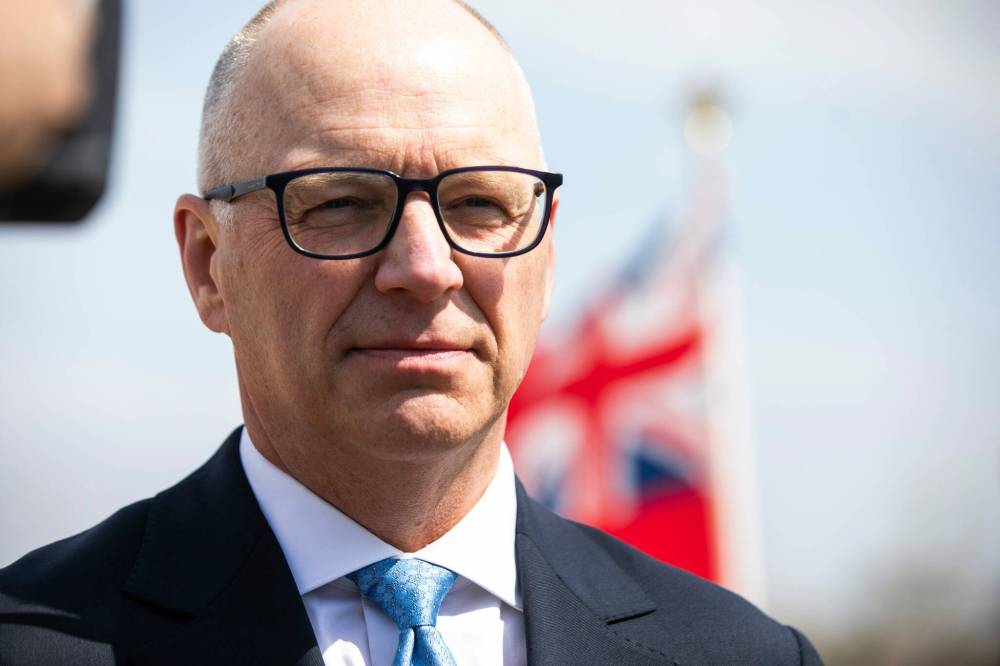
MIKAELA MACKENZIE / FREE PRESS FILES
Mayor Scott Gillingham is open to exploring a reduction in contributions to the rainy day fund.
At a recent executive policy committee meeting, city finance officials said staffers are examining whether the minimum balance should be reduced.
“As part of the budget process, we want to look at what is the right … target. It’s been a while since we’ve looked at that,” said Tracy Graham, the city’s chief financial officer. “Six per cent might not be the right number for the city.”
Mayor Scott Gillingham said he’s open to considering a change but city council must closely scrutinize any proposal to reduce the amount.
“It’s certainly too soon for me to say that I support lowering the threshold,” said Gillingham.
The mayor said the rainy day fund played a critical role in helping the city cover its pandemic losses, after revenue from parking, transit, hotel taxes and other departments plummeted.
“It was devastating in so many ways. And our rainy day fund went from over a $100-million balance almost to … completely depleted,” said Gillingham. “A strong rainy day fund enabled the city to withstand the attack of COVID-19.”
However, the city continues to cope with a tight budget, partly due to high inflation, and should consider whether current targets for the fund should be maintained, he said.
“One of the advantages I could see (of reducing the minimum target) is that it would take some of the pressure off the City of Winnipeg to make sure we have a balance of over $85 million to $90 million in a … ‘just in case’ fund. It would free up some of those funds … (for) enhancing service delivery,” said Gillingham.
The mayor spoke on the topic Thursday, the same day city council approved a plan to boost the fund. The city will divert $15 million from the accelerated regional street renewal program and $3.4 million from a Southwest Rapid Transitway reserve to top it up.
The mayor said the roads budget transfer won’t eliminate any street repairs.
“There’s no loss of funds for roads. All roads that were contemplated in the … accelerated roads plan (will be) completed,” said Gillingham.
The mayor said part of the $28-million settlement headed to the city for fraud and construction deficiency lawsuits related to the police headquarters project may be used to boost the rainy day fund.

While $22.5 million of the settlement is earmarked to balance past budget gaps, $5.5 million is still available.
Gillingham said city finance officials will provide recommendations on how best to spend the remaining money.
The financial stabilization reserve had a balance of about $26 million at the end of 2025, despite that year’s $85-million target. After the new transfers, the fund is expected to reach $44.2 million by the end of this year.
joyanne.pursaga@freepress.mb.ca
X: @joyanne_pursaga
Joyanne is city hall reporter for the Winnipeg Free Press. A reporter since 2004, she began covering politics exclusively in 2012, writing on city hall and the Manitoba Legislature for the Winnipeg Sun before joining the Free Press in early 2020. Read more about Joyanne.
Every piece of reporting Joyanne produces is reviewed by an editing team before it is posted online or published in print — part of the Free Press‘s tradition, since 1872, of producing reliable independent journalism. Read more about Free Press’s history and mandate, and learn how our newsroom operates.
Our newsroom depends on a growing audience of readers to power our journalism. If you are not a paid reader, please consider becoming a subscriber.
Our newsroom depends on its audience of readers to power our journalism. Thank you for your support.
Joyanne is city hall reporter for the Winnipeg Free Press. A reporter since 2004, she began covering politics exclusively in 2012, writing on city hall and the Manitoba Legislature for the Winnipeg Sun before joining the Free Press in early 2020. Read more about Joyanne.
Every piece of reporting Joyanne produces is reviewed by an editing team before it is posted online or published in print — part of the Free Press‘s tradition, since 1872, of producing reliable independent journalism. Read more about Free Press’s history and mandate, and learn how our newsroom operates.
Our newsroom depends on a growing audience of readers to power our journalism. If you are not a paid reader, please consider becoming a subscriber.
Our newsroom depends on its audience of readers to power our journalism. Thank you for your support.
Advertisement Advertise With Us
Advertisement Advertise With Us