Corb Lund’s Alberta anti-coal petition enters homestretch amid separatism

Advertisement

Advertise with us

EDMONTON - Corb Lund is exhausted and would rather just play music.

Read this article for free:


or

Already have an account? Log in here »

To continue reading, please subscribe:

Subscribe and receive a limited-edition Free Press branded hat or tote.

Digital Subscription

One year of digital access for only $205*

  • Enjoy unlimited reading on winnipegfreepress.com
  • Read the E-Edition, our digital replica newspaper
  • Access News Break, our award-winning app
  • Play interactive puzzles

*First annual payment billed as $205.00 + GST for one year. This annual subscription will automatically renew at $233.00 + GST every 52 weeks (10% off the regular annual price of $259.35). Offer available to new and qualified returning subscribers only. Cancel any time.

To continue reading, please subscribe:

Add Free Press access to your Brandon Sun subscription for only an additional

$1 for the first 4 weeks*

  • Enjoy unlimited reading on winnipegfreepress.com
  • Read the E-Edition, our digital replica newspaper
  • Access News Break, our award-winning app
  • Play interactive puzzles
Start now

*Your next Brandon Sun subscription payment will increase by $1.00 and you will be charged $17.95 plus GST for four weeks. After four weeks, your payment will increase to $24.95 plus GST every four weeks.

EDMONTON – Corb Lund is exhausted and would rather just play music.

It’s been almost four months of collecting signatures in his fight to force a referendum to stop coal development in the Rockies. 

The deadline for signatures is looming – June 10 – and Lund says even if he gets the names required, it’s a dice throw on whether Premier Daneille Smith’s government will act on it.
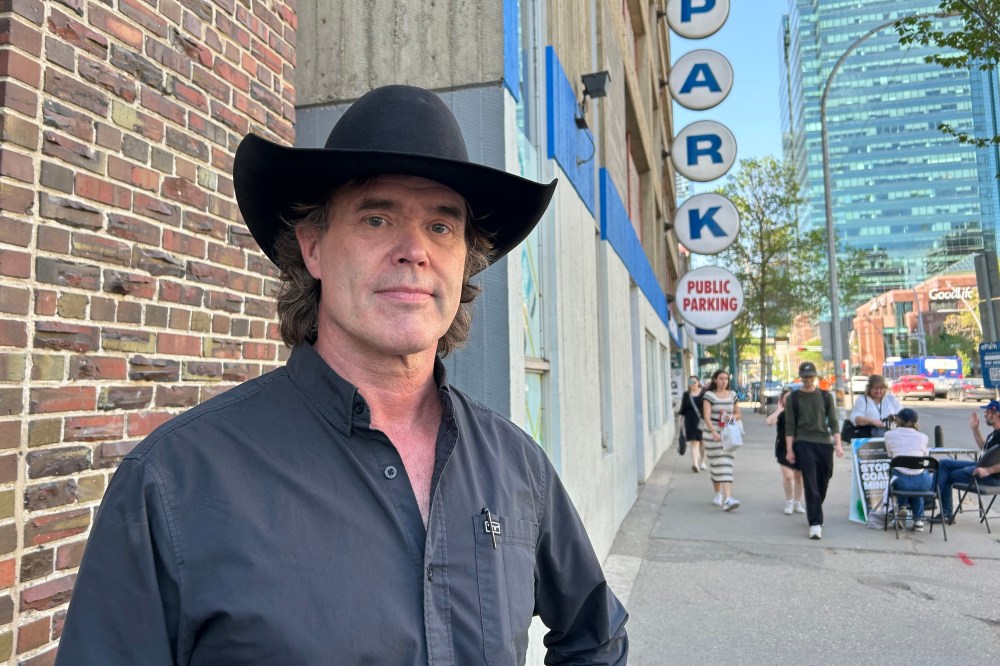
Country singer Corb Lund, who is petitioning the Alberta government to stop new coal mining in the Rocky Mountains, poses for a photo in Edmonton, on Thursday, May 28, 2026. THE CANADIAN PRESS/Lisa Johnson

“I don’t trust governments to do anything, but all we can do is follow the rules, and do it openly,” Lund, wearing a black cowboy hat, said in an interview prior to performing at a sold-out show at a downtown Edmonton nightclub.

It’s double duty: He takes photos with fans on the sidewalk. Then he chats with passers-by signing his petition.

It’s too soon to say whether it may be successful, he says, and he’s putting on the pressure for Albertans to sign before it’s too late. He needs about 178,000 signatures.

“Until we get the sheets in, we’re all just having strokes and heart attacks,” Lund says.

His application to Elections Alberta, the body in charge of administering citizen-initiative petitions, proposes “legislation prohibiting any new coal mining activity in the Eastern Slopes of Alberta’s Rocky Mountains.”

Lund estimates he has over 3,000 volunteers.

He wouldn’t say if he feels like they’ll have enough names but says they’ll keep pushing.

A successful petition would force Smith’s government to consider passing a law banning coal mining, or send it to a provincewide vote.

When asked if he trusted the process, Lund said “everything seems to just be chaos.”

“I would rather have them do the right thing, but I’m under no illusion that if we get our number of signatures, the government’s all of a sudden gonna say, ‘We’re sorry, we’ll fix it.'”

He’s met with the government. The two sides agree to disagree. The province says the mining will be done with strict environmental safeguards while providing jobs and delivering a critical resource.

The issue has been bubbling for years.

Concerns about coal mining peaked in 2020, when the province announced it would remove decades-old rules that had protected the eastern slopes of the Rockies from open-pit coal mining. The province began issuing leases.

After a deluge of public pushback, the United Conservative Party government reinstated the protections and stopped selling exploration leases.

It has since announced a plan to ban mountain top removal and new open pit mines, but new regulations are still being finalized and advanced projects could still proceed through the approval process.

Last year, Lund’s first petition application was approved.

Then it was cancelled when Smith’s government changed the rules for citizen-led petitions in December.

Lund filed the paperwork again, got approved, and began gathering signatures Feb. 11.

“We’ve been flip-flopped on and nickeled and dimed and loopholed so many times on this that we’re asking for firm, robust legislation prohibiting coal mining on the eastern slopes,” he said.

Smith has said she supports direct democracy, and has invoked Lund’s petition as an example of her government giving voice to Albertans — akin to her decision to send to referendum in October a vote on whether the province should stay in Canada or kickstart a second referendum on whether to leave.

“I’ll be waiting to see whether or not (Lund and supporters) have the required signatures,” Smith said earlier this week. 

She has said Lund’s question could be on a ballot as soon as the fall, when Albertans will also be asked to vote on putting a separation referendum to a binding ballot.

Late last year, Smith was asked about Lund’s petition application. At the time, Smith said of Lund, “I’m glad I’m able to be his muse.

“Maybe he’ll write a song about me,” she said, adding that metallurgical coal is important to industries such as solar energy.

Lund said he doesn’t like the flippancy. “This is the drinking water for potentially millions of people, and it’s the soul of the province,” he said.

“Nobody wants this.”

This report by The Canadian Press was first published May 29, 2026.
Report Error Submit a Tip

More Stories

A quick look at where provinces and territories stand on time changes

The Canadian Press 2 minute read Preview

A quick look at where provinces and territories stand on time changes

The Canadian Press 2 minute read Updated: Yesterday at 6:28 AM CDT

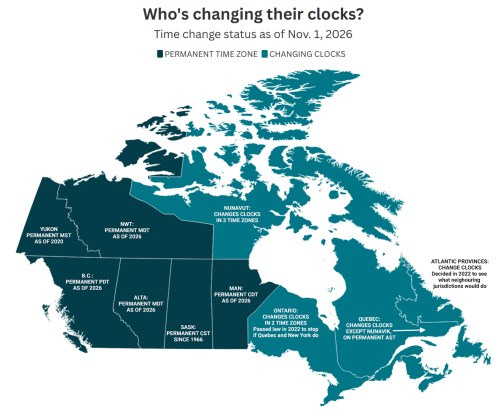
WINNIPEG - Manitoba's government said Thursday the province will be sticking with daylight time year-round, making it the latest jurisdiction to move away from twice-annual time changes. Here's a look at where things stand across Canada:

British Columbia said in March that it was moving to permanent Pacific daylight time. The change also means that parts of northeastern B.C., which have been on mountain standard time year round, are now in alignment with the rest of the province.

Alberta also switched to permanent daylight time this year in what it calls Alberta time. The change means it now has the same time as Saskatchewan year round.

Saskatchewan has been on permanent central standard time since 1966.

Read
Updated: Yesterday at 6:28 AM CDT

Steinbach Credit Union member warns others after scammer steals $10K

Scott Billeck 5 minute read Preview

Steinbach Credit Union member warns others after scammer steals $10K

Scott Billeck 5 minute read Yesterday at 5:19 PM CDT

A Winnipeg single mother whose bank account was drained of nearly $10,000 says Steinbach Credit Union needs to warn its members about what she believes is a broader security problem.

The woman, who is not being named to protect her identity, said a scammer gained access to her account earlier this week after calling SCU’s contact centre, claiming to be her and successfully completing the credit union’s authentication process.

She said she knows of at least six others who have experienced similar incidents in which callers impersonate SCU account holders and pass the authentication checks.

The woman discovered something was wrong when her minor son asked why money had been transferred out of an account they jointly hold.

Read
Yesterday at 5:19 PM CDT

United Way, other charities fight for dollars as donor base shrinks

Scott Billeck 7 minute read Preview

United Way, other charities fight for dollars as donor base shrinks

Scott Billeck 7 minute read Yesterday at 2:00 AM CDT

Winnipeg’s charitable sector is being squeezed from both sides: demand for help is growing while the pool of donors to meet that need is shrinking.

The imbalance is increasingly being carried by a relatively small group of deep-pocketed donors. Last year, 600 people — about three per cent of United Way Winnipeg’s individual donors — accounted for roughly $8 million, or 55 per cent of individual donations.

The fundraising pitch isn’t getting any easier.

Homelessness and public drug use have become increasingly visible, household budgets remain strained and the problems charities are trying to address can seem so entrenched that donors may reasonably wonder what difference another contribution can make.

Read
Yesterday at 2:00 AM CDT

Grieving child builds backyard rocket ship

Harriet Zaidman 4 minute read 2:01 AM CDT

I Built a Rocket Ship (Kids Can Press, 32 pages, hardcover, $22) by Winnipegger Anna Lazowski is a tender story for children ages 4-8 about a little girl trying to make sense of her mother’s death. The child engages in conversation with her late mom, agreeing and disagreeing about things said as she carries objects (and of course, the cat) to the backyard. There, she is building a rocket ship she will pilot into the skies to find her mom again.

Jennica Lounsbury’s varied perspectives show the range of emotions the little girl experiences.

● ● ●

Northwoods Lullaby by Mary Casanova (University of Minnesota Press, 32 pages, hardover, $25) is a bedtime book for readers up to age eight, perfect to bring a busy, happy day to a close. Just like children who are listening to adults reading the book, all the animal babies are being tucked into their nests and burrows by loving parents: “Thump and scamper,/nimble clover./ Soon it’s time to rest. Baby loon/ nestles in/as Papa floats along.”

Near-future U.S. the setting for surreal dual-world storyline

Reviewed by Morley Walker 4 minute read Preview

Near-future U.S. the setting for surreal dual-world storyline

Reviewed by Morley Walker 4 minute read 2:01 AM CDT

It’s not every day you encounter a seriously intended literary novel that attempts to dramatize a mind-bending physics theory like quantum entanglement.

But then the B.C.-born-and-raised Emily St. John Mandel is not your everyday Canadian literary writer.

In her late 40s, she has lived in the U.S. for her entire writing career. She is best known for her 2014 dystopian novel Station Eleven, about a Shakespearean acting troupe navigating a pandemic-ravaged America.

Her new outing, her seventh, Exit Party, shares DNA with detective and sci-fi genres more than with conventional literary fiction.

Read
2:01 AM CDT

Desperate Poilievre wants Canadians to believe the sky is falling when it’s just cloudy outside

Tom Brodbeck 5 minute read Preview

Desperate Poilievre wants Canadians to believe the sky is falling when it’s just cloudy outside

Tom Brodbeck 5 minute read Yesterday at 12:47 PM CDT

Pierre Poilievre has a problem.

Canadians just don’t seem to be paying much attention to him anymore.

So, naturally, the Conservative Opposition leader has decided to turn up the volume.

At a recent party caucus retreat in Penticton, B.C., Poilievre delivered the familiar message: Canada is in trouble, Canadians are hurting and the Liberal government is making everything worse.

Read
Yesterday at 12:47 PM CDT