California air regulators update a key climate program, sparking pushback from environmentalists
Advertisement
Read this article for free:
or
Already have an account? Log in here »
To continue reading, please subscribe:

Digital Subscription
One year of digital access for only $205*
- Enjoy unlimited reading on winnipegfreepress.com
- Read the E-Edition, our digital replica newspaper
- Access News Break, our award-winning app
- Play interactive puzzles
*First annual payment billed as $205.00 + GST for one year. This annual subscription will automatically renew at $233.00 + GST every 52 weeks (10% off the regular annual price of $259.35). Offer available to new and qualified returning subscribers only. Cancel any time.
To continue reading, please subscribe:
Add Free Press access to your Brandon Sun subscription for only an additional
$1 for the first 4 weeks*
- Enjoy unlimited reading on winnipegfreepress.com
- Read the E-Edition, our digital replica newspaper
- Access News Break, our award-winning app
- Play interactive puzzles
*Your next Brandon Sun subscription payment will increase by $1.00 and you will be charged $17.95 plus GST for four weeks. After four weeks, your payment will increase to $24.95 plus GST every four weeks.
Read unlimited articles for free today:
or
Already have an account? Log in here »
SACRAMENTO, Calif. (AP) — California air regulators updated the rules of a key climate program on Friday in a move widely protested by environmental groups who said the changes would weaken the program and undercut efforts to curb planet-warming emissions.
The oil industry, meanwhile, said the program will still hinder efforts to bring down energy costs in the notoriously expensive state.
Democratic Gov. Gavin Newsom and the Legislature last year reauthorized the state’s cap-and-trade program through 2045. The program sets a declining limit, or “cap,” on total greenhouse gas emissions in the state from major polluters. Companies must reduce their pollution, buy allowances from the state or other businesses, or fund projects aimed at offsetting their emissions. Similar programs exist across Europe and Asia, and California’s system is linked with others in Quebec, Canada and Washington state.
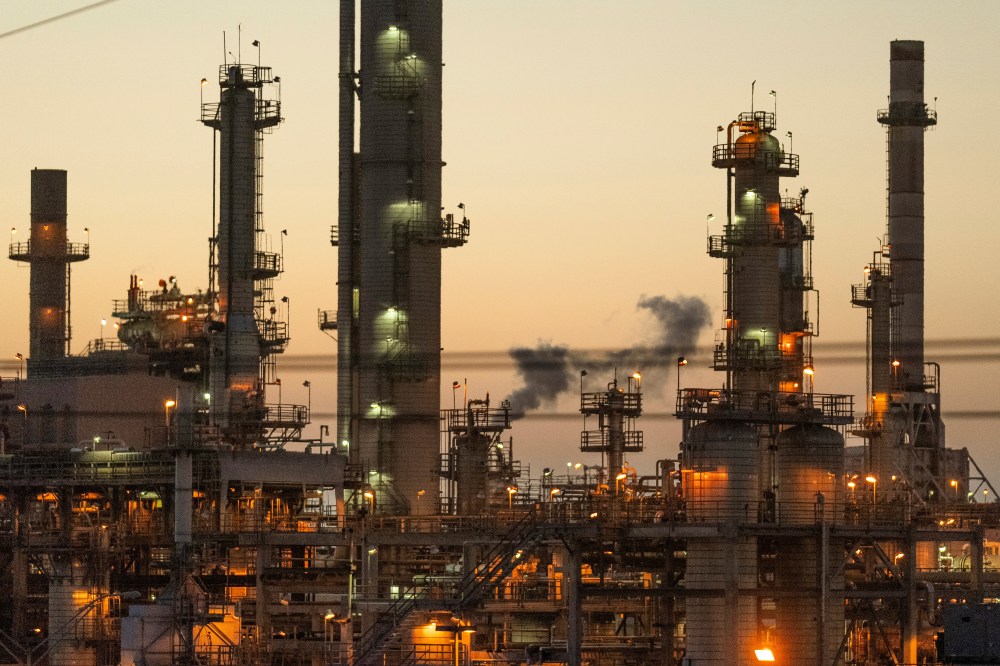
Under the changes approved Friday, the state will now give away up to roughly $3.5 billion worth of allowances to companies — mostly manufacturers and oil refiners — for free if they build projects that help them reduce their emissions. State regulators said it is designed to ensure major businesses don’t leave the state, but environmentalists say it runs counter to the purpose of the program, which is aimed at incentivizing companies to reduce pollution so they can spend less on allowances. They also say it will mean there is less money to put toward programs designed to mitigate or reduce the impact of climate change.
California Air Resources Board Chair Lauren Sanchez, formerly Newsom’s chief climate adviser, says the changes will allow the state to remain a climate leader.
“Moving forward shows that we can be responsive to affordability concerns, new legislative direction, while also setting a clear signal for Californians, other states and global partners that we remain committed to driving long-term investments in clean energy jobs and reducing pollution in communities,” she said.
Changes to the program
California law requires the state to reduce its planet-warming emissions 40% and 85% below 1990 levels by 2030 and 2045, respectively. Supporters of cap and trade say it will help the state reach those goals.
Newsom signed laws aimed at better aligning the declining cap on emissions with the state’s climate targets; setting aside money generated by the program for various climate, housing and transit initiatives; and potentially boosting carbon-removal projects. The legislation also changed the name to “cap and invest” to emphasize its funding of climate programs.
But how to achieve those goals has been the subject of months of discussion by the air board and intense lobbying campaigns by both environmental groups and the oil industry. An initial proposal largely focused on aligning the program with the laws passed last year, but it was changed to focus more on trying to reduce the program’s costs.
California leaders have faced increased pressure to center affordability when shaping climate policies after two oil refineries announced their plans to close in the last couple of years. The Democratic-led state has also grappled with federal challenges to its climate agenda, including a measure Republican President Donald Trump signed last year blocking a first-in-the-nation rule banning the sale of new gas-powered cars by 2035.
The newly approved updates also increase funding from allowance sales by $2 billion from 2027 through 2030 for a program providing utility bill credits to Californians and set aside about $800 million to help businesses participating in cap and trade limit the program’s costs on Californians.
Before the changes, about $4 billion the state received annually from allowance sales helped pay for climate-change mitigation, affordable housing and transportation projects through a pot of money called the Greenhouse Gas Reduction Fund.
Newsom and state lawmakers decide which programs receive money from the fund, and last year they agreed to allocate $1 billion annually for the state’s long-delayed high-speed rail project.
The updates will likely halve annual revenues for the fund, according to the nonpartisan Legislative Analyst’s Office. That is largely because of the new incentive program for manufacturers and refiners, said Danny Cullenward, a climate economist who is critical of the changes, though board staff disagrees with that.
Intense debate over the updates
This week’s deliberations by air regulators stretched into a second day after hours of public comment in which climate advocates, legal experts and fossil fuel industry leaders debated the rules’ impacts on pollution and people’s pocketbooks, with many urging the board to delay its vote to bring the regulations more in line with state priorities.
Environmentalists, Democratic lawmakers and other critics of the changes say they hinder the state’s efforts to reduce planet-warming emissions. Cullenward said the new incentive program for manufacturers and refiners is untested and lacks sufficient guardrails to ensure it is not abused.
“The state is not on track for its climate goals,” he said at a media briefing Wednesday. “Cutting our climate funding does not help address consumer cost concerns, and it doesn’t accelerate emission reductions.”
The board agreed Friday to hold off on issuing allowances from the new incentive program until the agency’s executive officer takes a closer look at the program and reports back to the board with any proposed amendments.
The Greenhouse Gas Reduction Fund cuts will deal a huge blow to wide-ranging programs benefiting communities across the state, said Michelle Pariset, director of legislative affairs for social justice law firm Public Advocates.
“These are investments that determine whether a student can afford to take transit to school, whether a senior can get to a doctor’s appointment, whether a family can live near reliable transportation instead of enduring long commutes and higher costs,” Pariset said at the Wednesday briefing.
Jodie Muller, president and CEO of the Western States Petroleum Association, meanwhile said the updates move the state in the right direction but fail to adequately address energy affordability concerns for the future.
“California refineries need long-term certainty to make the investments that keep energy reliable and affordable for consumers –- and right now, that certainty stops at 2030,” she said in a statement.
The changes will increase California’s reliance on oil imports to meet its energy needs, said Rock Zierman, CEO of the California Independent Petroleum Association.
“That means high GHG emissions, fewer jobs, more expensive gasoline, and lower tax revenue for schools, police, fire, and parks,” Zierman said in a statement, using an acronym for greenhouse gas.