Heart and soul
Moving graphic memoir explores issues around addictions, organ procurement, family and more
Advertisement
Read this article for free:
or
Already have an account? Log in here »
To continue reading, please subscribe:

Digital Subscription
One year of digital access for only $205*
- Enjoy unlimited reading on winnipegfreepress.com
- Read the E-Edition, our digital replica newspaper
- Access News Break, our award-winning app
- Play interactive puzzles
*First annual payment billed as $205.00 + GST for one year. This annual subscription will automatically renew at $233.00 + GST every 52 weeks (10% off the regular annual price of $259.35). Offer available to new and qualified returning subscribers only. Cancel any time.
To continue reading, please subscribe:
Add Free Press access to your Brandon Sun subscription for only an additional
$1 for the first 4 weeks*
- Enjoy unlimited reading on winnipegfreepress.com
- Read the E-Edition, our digital replica newspaper
- Access News Break, our award-winning app
- Play interactive puzzles
*Your next Brandon Sun subscription payment will increase by $1.00 and you will be charged $17.95 plus GST for four weeks. After four weeks, your payment will increase to $24.95 plus GST every four weeks.
Read unlimited articles for free today:
or
Already have an account? Log in here »
At the heart of Mary Shelley’s 1818 classic Frankenstein and its many pop culture adaptations is the scene in the mad scientist’s lab where Victor Frankenstein, helped by a bolt of lightning, animates the grotesque figure made out of human and animal parts lying on his anatomy table.
As much as Shelley’s novel is a philosophical investigation into the desire of modern science to create new life, it is also a gruesome window into the clandestine European trade in graveyard and battlefield body snatching that fuelled early 19th-century anatomy research, medical training and public dissection theatres.
Whose bodies ended up on the slab to advance medical knowledge? As Montreal-based artist Arizona O’Neill explains in her captivating first graphic narrative, it was inevitably poor, racialized and criminalized bodies that were deemed appropriate for the indignities of public display and dissection in earlier periods.

Julie Artacho photo
Arizona O’Neill
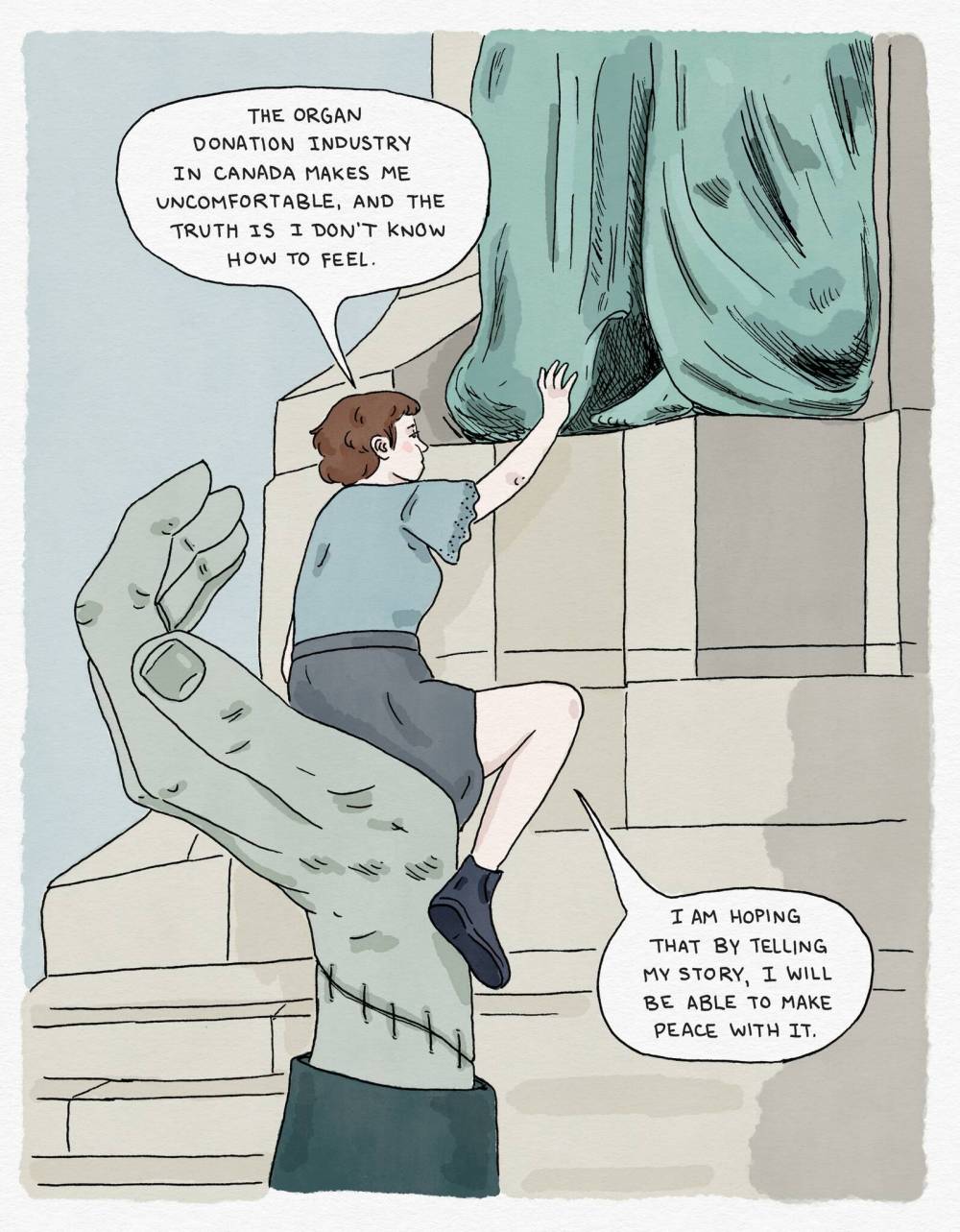
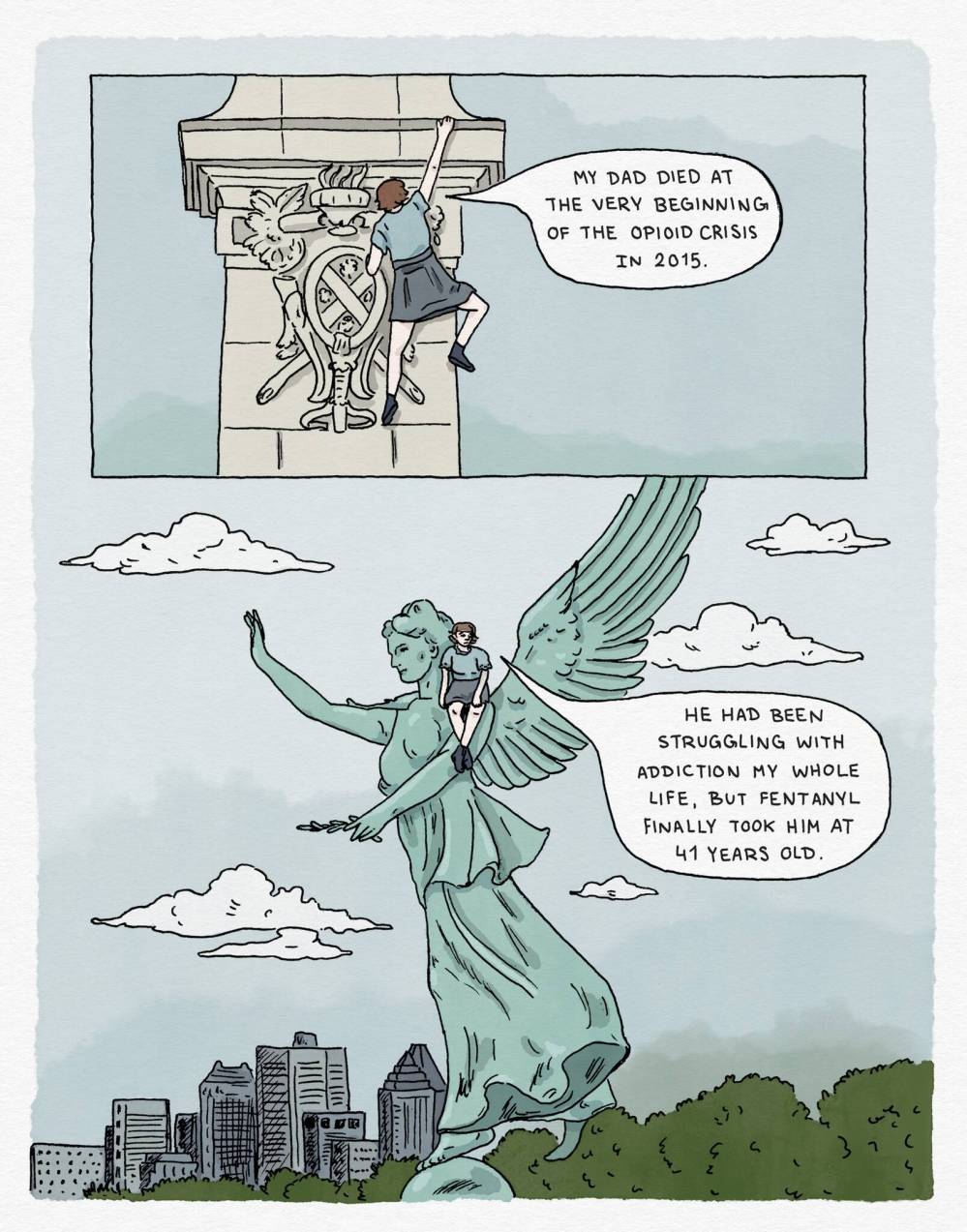
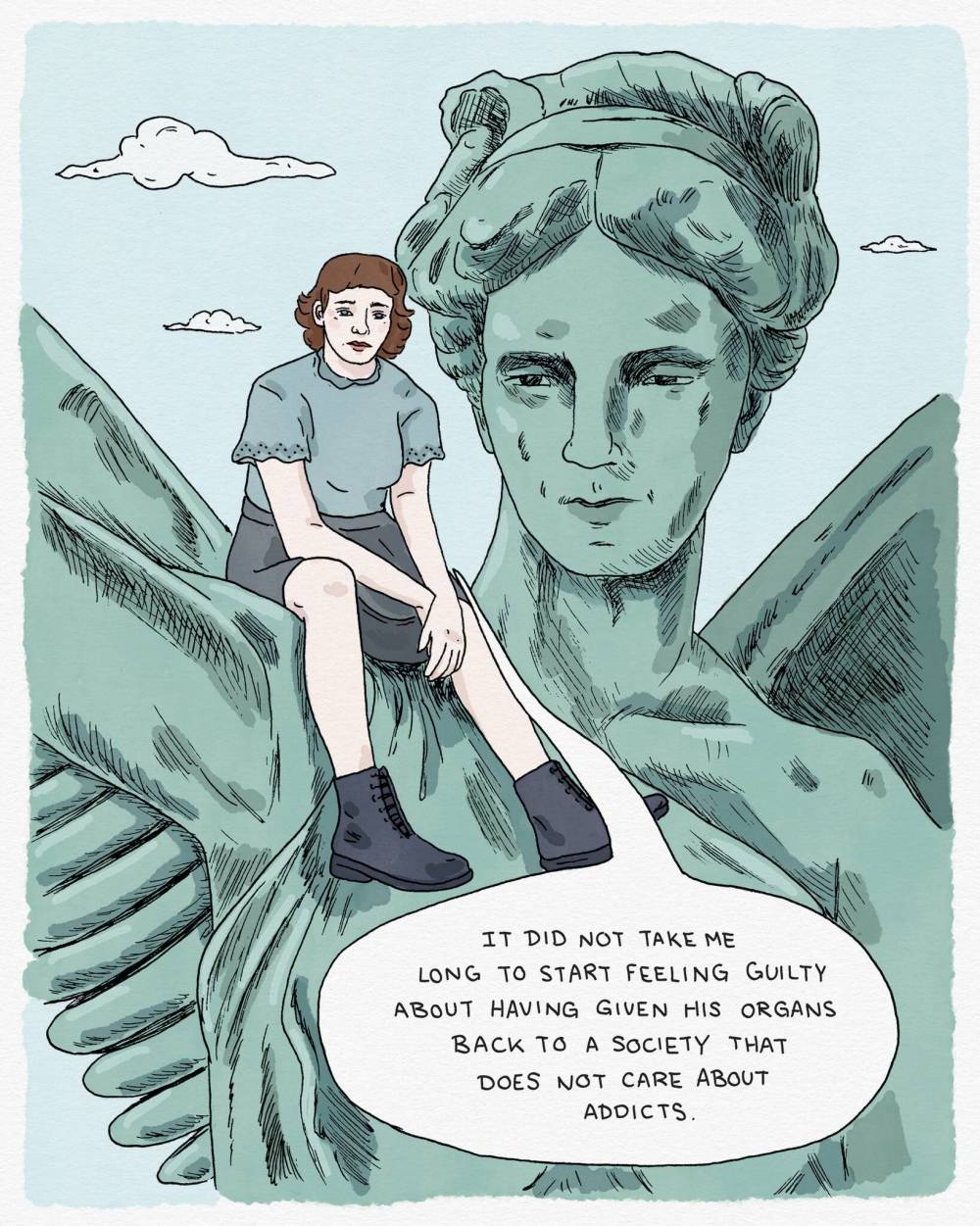
But what about today? This is the central question driving the story of Opioids & Organs, O’Neill’s beautifully drawn story of coming to terms with her father’s untimely death due to a fentanyl overdose as well as the awful truth that Canada’s post-2015 opioid crisis has greatly increased the number of organs available for donation, mostly from otherwise healthy young men like her father.
O’Neill is an author, illustrator, cartoonist, animator and regular contributor to Radio-Canada’s Il restera toujours la culture. Together with her mother, Montreal author Heather O’Neill (who also appears in Opioids & Organs), she runs the Instagram reading account @oneillreads.
Her love of reading is obvious throughout Opioids & Organs, but it is the visual style that really elevates this graphic narrative. The clear lines and skilful use of bright and muted colours will appeal to fans of Alison Bechdel and Rutu Modan, and to those who want detailed and rich images on which to linger.
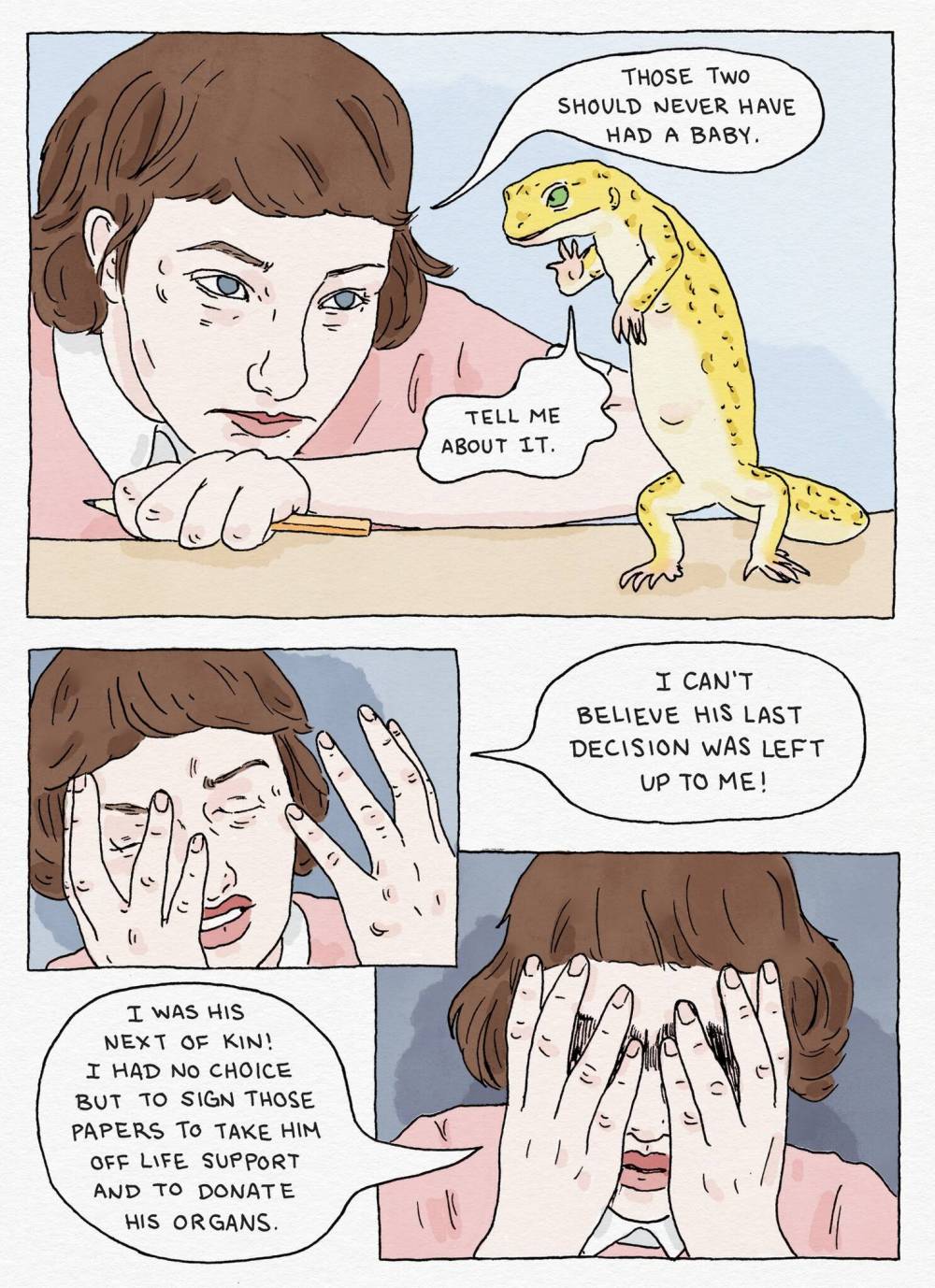
As she investigates the history and current state of organ procurement (the more acceptable term to “harvesting,” we are told), O’Neill embraces comics’ ability to combine the real with the surreal and fantastical: she sees body parts in everyday objects and her friends transform into giant organs; she daydreams herself into the past and finds herself inside classic works of literature; she is accompanied by Izzy, a cheeky lizard sidekick who goads her on because he is the embodiment of her anxieties and unhealthy obsessions; and she has a faithful companion in a kind and noble version of Dr. Frankenstein’s creature who insists on being called Frankie because he is no monster.
Together, Arizona, Izzy and Frankie do research, talk to experts and visit medical museums, libraries, cemeteries and ossuaries, from McGill University to Harvard Medical School to the Paris catacombs. This journey leads to discussions about the rights of dead bodies, the societal and medical attitudes towards people with addictions and the ethical quandaries inherent to scientific advancement.
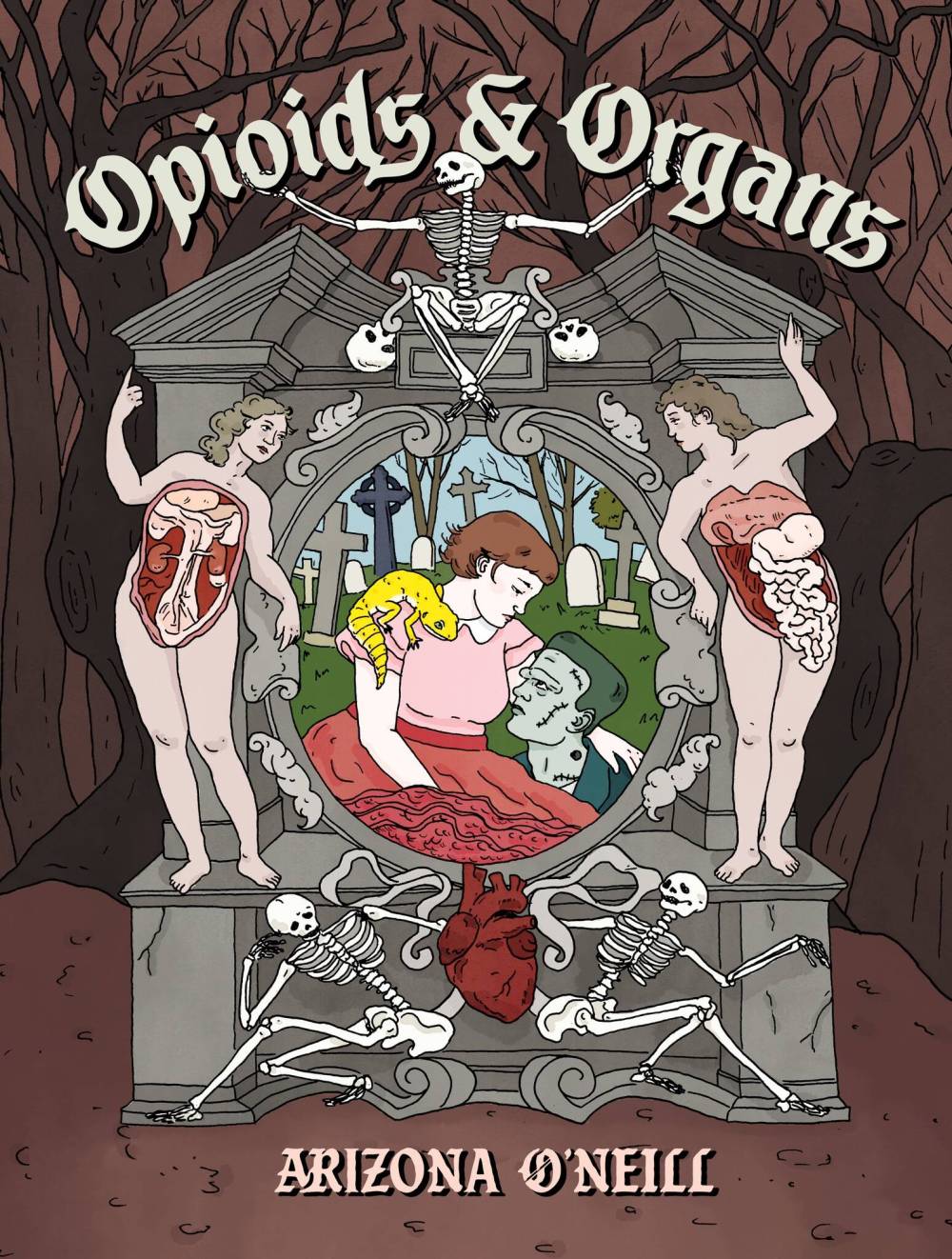
Opioids & Organs
If this sounds like heavy material, it is — but O’Neill’s lively sense of humour, flights of fancy and self-reflexive portrayal of the project as an obsession she can turn into art all make this a compelling read. O’Neill creates a highly personal, complex journey into the afterlife of a fatal overdose as it plays out for both the deceased person and their next of kin.
Asking more questions than it can answer, Opioids & Organs also delves into philosophical debates about what makes us who we are and how much of our self lives on in our hearts, brains and other organs once they are transplanted into someone else.
This is a story that benefits from the comics format enormously; O’Neill knows how to draw readers into this dark and thorny investigation by holding onto the playful possibilities of a medium where talking animals, gentle monsters, daydreams and time travel are never out of place.
Candida Rifkind is a professor in the Department of English at the University of Winnipeg, where she teaches and researches comics and Canadian literature.