

Iraqi national pleads not guilty in 18 attacks in Europe, calling himself a ‘prisoner of war’
Advertisement
Read this article for free:
or
Already have an account? Log in here »
To continue reading, please subscribe:

Digital Subscription
One year of digital access for only $205*
- Enjoy unlimited reading on winnipegfreepress.com
- Read the E-Edition, our digital replica newspaper
- Access News Break, our award-winning app
- Play interactive puzzles
*First annual payment billed as $205.00 + GST for one year. This annual subscription will automatically renew at $233.00 + GST every 52 weeks (10% off the regular annual price of $259.35). Offer available to new and qualified returning subscribers only. Cancel any time.
To continue reading, please subscribe:
Add Free Press access to your Brandon Sun subscription for only an additional
$1 for the first 4 weeks*
- Enjoy unlimited reading on winnipegfreepress.com
- Read the E-Edition, our digital replica newspaper
- Access News Break, our award-winning app
- Play interactive puzzles
*Your next Brandon Sun subscription payment will increase by $1.00 and you will be charged $17.95 plus GST for four weeks. After four weeks, your payment will increase to $24.95 plus GST every four weeks.
Read unlimited articles for free today:
or
Already have an account? Log in here »
NEW YORK (AP) — An Iraqi national accused of plotting at least 18 attacks in Europe in retaliation for the U.S. and Israel’s war with Iran pleaded not guilty on Monday before calling himself a “prisoner of war” and telling a judge that children and women were being killed “by your rockets.”
Mohammad Baqer Saad Dawood Al-Saadi finally was persuaded to sit down in Manhattan federal court as two marshals approached him at a judge’s urging. One marshal put his hand on his shoulder to guide him into his seat.
Al-Saadi did not appear to be trying to be disruptive as he commented beyond his response to the charges. The charges say he conspired to provide material support to Kata’ib Hizballah, an Iran-backed Iraqi Shia militant group, and Iran’s Islamic Revolutionary Guard Corps.
“I’m not guilty in a war situation,” Al-Saadi responded, before adding through an Arabic translator: “I’m a prisoner of war. I’m not a threat. Children and women are being killed by your rockets.”
Judge Colleen McMahon responded by saying: “The defendant will be seated please,” which prompted the marshals behind Al-Saadi to move up to where he was seated.
Both Kata’ib Hizballah and Iran’s Islamic Revolutionary Guard Corps. have been designated by the U.S. government as foreign terrorist organizations. U.S. prosecutors say Al-Saadi was a Kata’ib Hizballah commander.
But his lawyer, Andrew Dalack, told the judge that his client worked for the Iraqi government, though he did not specify what position.
The lawyer said Al-Saadi was held at an underground Turkish prison for two weeks before he was turned over to the FBI.
“I’m sure it was unpleasant, to say the least,” the judge said.
Dalack said Al-Saadi has been held in solitary confinement at a federal lockup in Brooklyn but was hoping to communicate with a diplomatic counsel from Iraq and his mother and siblings, although he expects the U.S. government to severely limit his communications.
Last month when the charges against Al-Saadi were announced, Dalack told reporters that his client believed he was being persecuted for his relationship with Qasem Soleimani, the Revolutionary Guard leader who was killed in a U.S. drone strike in 2020.
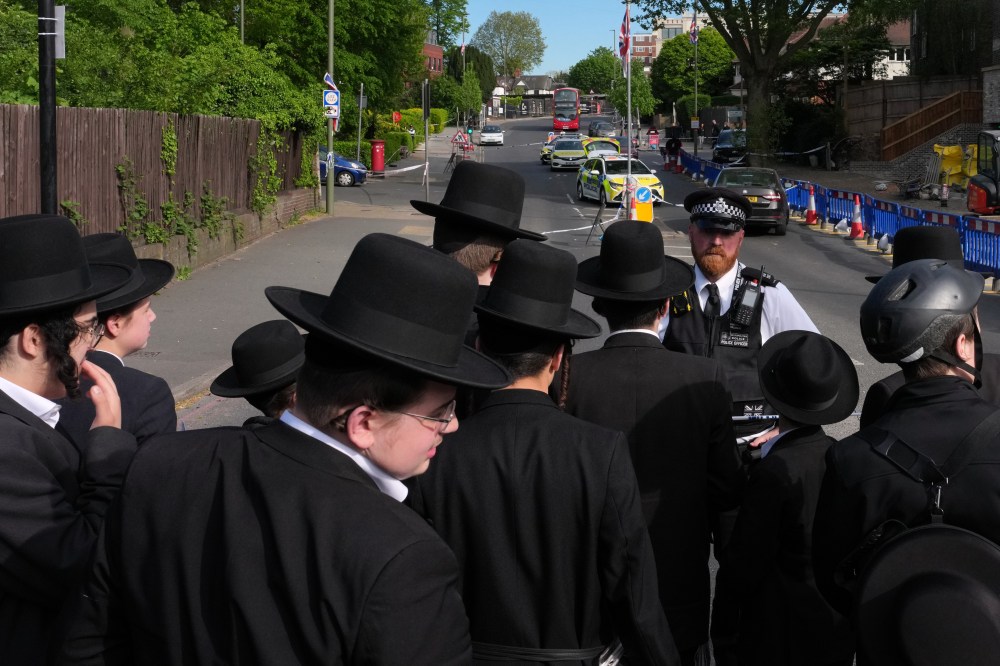
Among the 18 attacks in Europe, Al-Saadi is charged in the firebombing of a bank in Amsterdam and with stabbing Jewish men in London.
Federal authorities also said in court papers that he sought to attack a New York City synagogue last month and provided an undercover law enforcement officer with photos and maps of Jewish centers in Los Angeles and Scottsdale, Arizona, that he planned to target.
Al-Saadi is also accused of involvement in two recent attacks in Canada: an attack on a synagogue and a shooting at the U.S. consulate in Toronto in March. U.S. prosecutors said he directed and urged other people to attack U.S. and Israeli interests, including by killing Americans and Jews.
Al-Saadi posted about the attacks on Snapchat and Telegram and spoke about them in phone calls recorded by an FBI informant whose help he solicited in planning attacks in the U.S., according to court papers.