Anthropic urges industry coordination to allow for a ‘pause’ in AI development if risks grow

Advertisement

Advertise with us

Anthropic is proposing that the world's top artificial intelligence companies come up with a coordinated way to pause development of advanced AI systems, warning the technology is improving so quickly there's a risk humans would lose control.

Read this article for free:

or

Already have an account? Log in here »

To continue reading, please subscribe:

Subscribe and receive a limited-edition Free Press branded hat or tote.

Digital Subscription

One year of digital access for only $205*

  • Enjoy unlimited reading on winnipegfreepress.com
  • Read the E-Edition, our digital replica newspaper
  • Access News Break, our award-winning app
  • Play interactive puzzles

*First annual payment billed as $205.00 + GST for one year. This annual subscription will automatically renew at $233.00 + GST every 52 weeks (10% off the regular annual price of $259.35). Offer available to new and qualified returning subscribers only. Cancel any time.

To continue reading, please subscribe:

Add Free Press access to your Brandon Sun subscription for only an additional

$1 for the first 4 weeks*

  • Enjoy unlimited reading on winnipegfreepress.com
  • Read the E-Edition, our digital replica newspaper
  • Access News Break, our award-winning app
  • Play interactive puzzles
Start now

*Your next Brandon Sun subscription payment will increase by $1.00 and you will be charged $17.95 plus GST for four weeks. After four weeks, your payment will increase to $24.95 plus GST every four weeks.

Anthropic is proposing that the world’s top artificial intelligence companies come up with a coordinated way to pause development of advanced AI systems, warning the technology is improving so quickly there’s a risk humans would lose control.

The company behind the Claude chatbot said in a blog post Thursday that as cutting-edge AI gets increasingly faster at carrying out tasks, “it would be good for the world to have the option to slow or temporarily pause” its development.

Anthropic said its internal research institute plans to explore the issue in collaboration with others and “take actions” to help build the systems for a credible slowdown or pause, without being more specific.
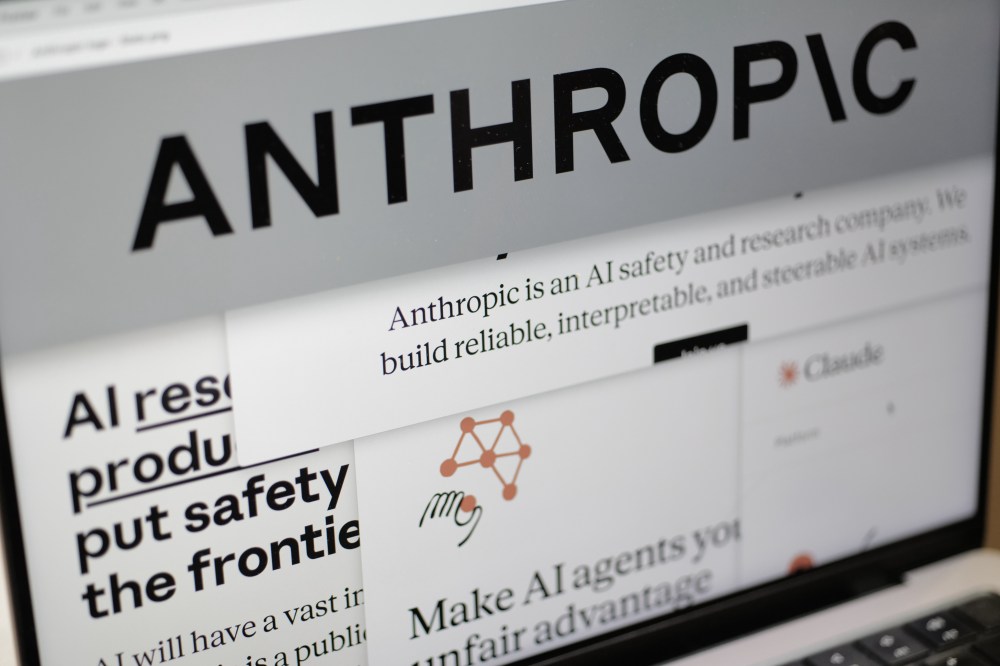
FILE - Pages from the Anthropic website and the company's logo are displayed on a computer screen in New York, Feb. 26, 2026. (AP Photo/Patrick Sison, File)

Anthropic rival OpenAI argued for a different approach in a report published Wednesday, saying that “democratic governments — not private companies acting alone — must ultimately determine the rules, safeguards, and accountability mechanisms.”

“Our view is that decisions about the pace of AI innovation should not be left to any one lab, company, or special interest group,” it said.

AI models are getting faster, with rapid increases in how quickly they can carry out software tasks like coding on their own, Anthropic said in its post. Based on current trends and given enough computing power, an AI system could be able to design and develop its own successor, in what is known as “recursive self-improvement.”

Self-building AI would be a major technological milestone that would bring benefits in science, healthcare and other areas, Anthropic said, but it “also might increase the risks of humans losing control over AI systems.”

Some tech industry figures have long warned of such a scenario.

Anthropic’s post comes after a different warning this week from a team of researchers at the University of Toronto who showed how AI tools could be used to create a new kind of AI “worm” that adapts its hacking strategy as it spreads from device to device and takes over a vast computing network.

“I think it’s really important that people understand that it’s not just the biggest, most powerful language models that pose the security concerns,” lead researcher Nicolas Papernot said in an interview.

The authors of the Anthropic post, company co-founder Jack Clark and Marina Favaro, head of its research institute, said the pause would be used to enable “societal structures and alignment research” to keep up with AI advances. Alignment is industry shorthand for making sure the technology matches human values and intentions.

The proposed coordination would let advanced AI labs verify that global rivals have actually stopped or slowed their work, “and that a bad actor could not use the auspices of a coordinated slowdown to jump ahead in secret.”

The company said a coordinated global mechanism is needed because without it a slowdown in AI development could let the “least cautious” players catch up and add to pressure on companies and governments as they make tough choices about AI safety.

Anthropic’s post comes as the company and ChatGPT-maker OpenAI race to sell shares on the stock market, in an IPO that could value Anthropic at nearly a trillion dollars.

Papernot notified Canadian cybersecurity authorities prior to releasing his report, which shows how researchers developed the worm in a laboratory by using an “open-source” AI tool that is easy for software developers to cheaply access and modify.

“In the past, cyber attackers would focus on targets that are very high value,” he said. “Banking systems, hospitals, electricity grids, water treatment systems, schools.”

Papernot agreed that there should be more collaboration between companies, government agencies and academic researchers to develop countermeasures as AI-powered hacking tools supercharge the search for computer vulnerabilities.

“That old laptop you have in your basement that you don’t check on regularly doesn’t seem like a very high-value target, but It can be used as a launch pad to attack these higher-value targets,” he said. “Anything connected to the internet is now at risk because of how low the cost has become to mount these cyberattacks.”

Report Error Submit a Tip

More Stories

Meeting the needs of disabled Indigenous children

Sherry Gott 5 minute read 2:00 AM CDT

Navigating Manitoba’s disability services is difficult under the best circumstances. For Indigenous families, access is further constrained by geography, poverty, jurisdictional confusion, and culturally-inappropriate systems that do not reflect Indigenous approaches to raising and supporting children. Culturally-insensitive intakes, assessments, and treatments in Manitoba also contribute to misunderstanding, misdiagnosis, and inappropriate service responses across the province.

The consequences for Indigenous children with disabilities and their families are profound — they are forced into a system that does not recognize who they are, how they are understood in their communities or what they need to thrive.

Many First Nations families, particularly in remote and northern communities, are faced with the choice of living in their home community with limited or no resources for their child with a disability or relocating to an urban centre to access necessary supports. This further disconnects families from family and community support, connectedness to shared values and teachings and a child’s right to a sense of belonging.

Additionally, First Nations families living with a disabled child experience significant over-involvement with the child welfare system compared to non-Indigenous Manitobans. This is due to a couple of key factors, namely the differing perspectives regarding disabilities between the Western clinical and many First Nations world views and the prevailing systemic default that families be pressured to surrender their disabled child to child and family services care in order to access resources that are otherwise unavailable.

Letters, Aug. 4

7 minute read 2:01 AM CDT

Charge highlights need for action

The recent reporting regarding a Winnipeg Fire Paramedic Service employee accused of violating a protection order, following previous convictions related to criminal harassment and breaches of court orders against former partners, raises concerns that extend beyond a single individual.

I believe this case highlights important questions about how public institutions assess and respond to risks associated with intimate partner violence, stalking, coercive control and repeated violations of court-imposed conditions.

Gender-based violence is a public safety issue. Survivors are encouraged to seek protection orders and to call emergency services for safety and support. When those orders are breached, organizations have a responsibility to carefully consider workplace safety, public safety and survivor safety in their decision-making. Manitobans deserve confidence that public institutions have clear, consistent processes to assess risk and respond appropriately.

Hydro CEO needs to reckon with winds of change

Dan Lett 5 minute read Preview

Hydro CEO needs to reckon with winds of change

Dan Lett 5 minute read Yesterday at 3:28 PM CDT

Methinks Hydro CEO Allan Danroth protests too much.

At a recent hearing in front of the Public Utilities Board, Danroth suggested Hydro’s plan to build a $3-billion natural-gas-powered generating plant near Brandon was being subjected to unfair criticism. The gas turbines are meant to bolster Hydro’s grid in the event that drought lowers output from hydro-generating stations.

After hearing submissions from interveners concerned about the gas-turbine plan, Danroth lashed out at the “constant, uninformed criticism” that has not only shaken trust in Hydro but also triggered threatening responses from the public.

Danroth said Hydro is monitoring “eight credible threats” against employees, five of which targeted the CEO himself. Although Danroth cited some specific incidents — employees being threatened with guns, and one where a homeowner set his dogs on a meter reader — he refused to elaborate on the circumstances.

Read
Yesterday at 3:28 PM CDT

Toronto’s alternative crisis response model deemed a success

Scott Billeck 4 minute read Preview

Toronto’s alternative crisis response model deemed a success

Scott Billeck 4 minute read 2:01 AM CDT

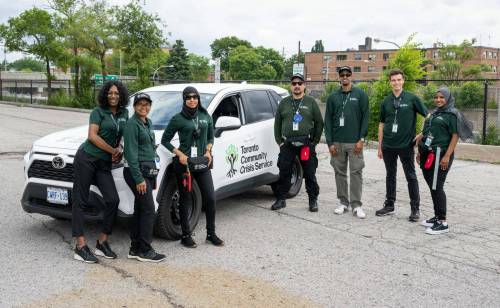
A Toronto emergency response program that helped inspire Winnipeg’s proposed alternative crisis response model has already expanded city-wide, just four years after launching as a pilot project.

The Toronto Community Crisis Service, launched in 2022, has become the city’s fourth emergency service, providing a 24-7, community-based response to people experiencing mental health crises. The service has handled nearly 50,000 calls through 911 and 211, dispatched mobile crisis teams to more than 41,000 incidents, made more than 11,600 referrals to health and social services and resolved the majority of eligible 911 calls without police involvement.

Winnipeg Mayor Scott Gillingham last week proposed creating a similar “fourth crisis response pathway” that would allow 911 calls that aren’t violent or criminal in nature to be transferred to community-based crisis teams.

Under the proposal, which has support from both the Winnipeg Police Service and the Winnipeg Fire Paramedic Service, a centralized crisis dispatch and co-ordination hub would receive triaged calls and match them with citywide response teams, staffed in part through existing community organizations, including the Downtown Community Safety Partnership and The Link’s mobile crisis teams. The goal is to divert appropriate calls away from the WPS and WFPS.

Read
2:01 AM CDT

Puzzles Palace

1 minute read Monday, Jul. 27, 2026

To solve our puzzles, please subscribe with this special offer: |

Anthropic urges industry coordination to allow for a ‘pause’ in AI development if risks grow

Kelvin Chan And Matt O'brien, The Associated Press 4 minute read Preview

Anthropic urges industry coordination to allow for a ‘pause’ in AI development if risks grow

Kelvin Chan And Matt O'brien, The Associated Press 4 minute read Friday, Jun. 5, 2026

Anthropic is proposing that the world's top artificial intelligence companies come up with a coordinated way to pause development of advanced AI systems, warning the technology is improving so quickly there's a risk humans would lose control.

The company behind the Claude chatbot said in a blog post Thursday that as cutting-edge AI gets increasingly faster at carrying out tasks, “it would be good for the world to have the option to slow or temporarily pause” its development.

Anthropic said its internal research institute plans to explore the issue in collaboration with others and “take actions" to help build the systems for a credible slowdown or pause, without being more specific.

Anthropic rival OpenAI argued for a different approach in a report published Wednesday, saying that “democratic governments — not private companies acting alone — must ultimately determine the rules, safeguards, and accountability mechanisms.”

Read
Friday, Jun. 5, 2026