

Rights groups denounce arrest of 2 Malian journalists, in latest crackdown on press freedom
Advertisement
Read this article for free:
or
Already have an account? Log in here »
To continue reading, please subscribe:

Digital Subscription
One year of digital access for only $205*
- Enjoy unlimited reading on winnipegfreepress.com
- Read the E-Edition, our digital replica newspaper
- Access News Break, our award-winning app
- Play interactive puzzles
*First annual payment billed as $205.00 + GST for one year. This annual subscription will automatically renew at $233.00 + GST every 52 weeks (10% off the regular annual price of $259.35). Offer available to new and qualified returning subscribers only. Cancel any time.
To continue reading, please subscribe:
Add Free Press access to your Brandon Sun subscription for only an additional
$1 for the first 4 weeks*
- Enjoy unlimited reading on winnipegfreepress.com
- Read the E-Edition, our digital replica newspaper
- Access News Break, our award-winning app
- Play interactive puzzles
*Your next Brandon Sun subscription payment will increase by $1.00 and you will be charged $17.95 plus GST for four weeks. After four weeks, your payment will increase to $24.95 plus GST every four weeks.
Read unlimited articles for free today:
or
Already have an account? Log in here »
BAMAKO, Mali (AP) — Rights groups on Wednesday denounced the arrest of two prominent journalists in Mali in the past two days, the latest crackdown on freedom of expression by the West African country’s military leadership during a security crisis.
The “Maison de La Presse,” the main press association in Mali, had said Tuesday that Abdramane Keita was arrested on charges of “undermining national unity and the credibility of the State” and “dissemination of false and misleading information.”
Keita had said on his popular TV program “Grand Jury” that the Al-Qaeda-linked JNIM group controls the town of Kidal, a northern town that was seized by JNIM and separatists during major coordinated attacks in April.
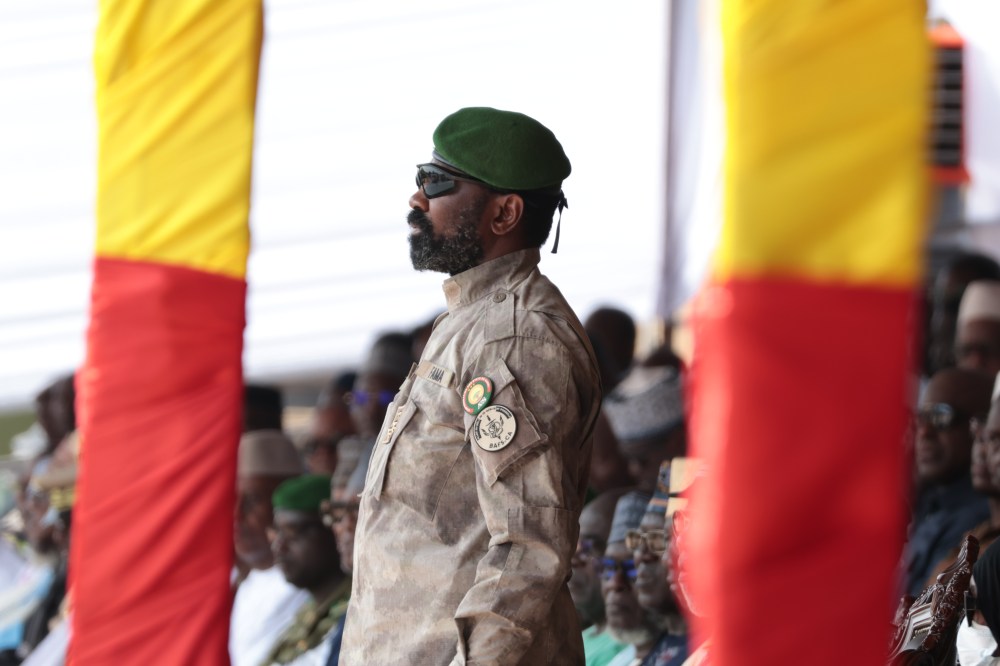
In Mali, public statements suggesting that the military is losing ground to jihadist groups often lead to charges.
His arrest comes a day after the arrest of Chahana Takiou, a well-known television presenter and editor-in-chief of the newspaper “22 Septembre.” According to the same press association he was arrested Monday on charges of “undermining the credibility of the State through the judicial system.” Takiou had recently criticized the authorities’ application of a cybercrime law, claiming it represents an attack on press freedom.
“The recent arrests starkly illustrate the problem Takiou identified: authorities increasingly use cybercrime legislation to punish peaceful criticism and sidestep the protections that press laws afford journalists,” Ilaria Allegrozzi, senior Sahel researcher for Human Rights Watch, said Wednesday.
She said Mali’s 2019 cybercrime law often uses broadly defined online offenses, including alleged threats and insults, to curb free expression, with penalties of up to 10 years in prison.
Sadibou Marong, director of Reporters Without Borders in West Africa, said the arrests of Keita and Takiou reveal “the degree of insecurity in which media professionals operate in Mali.” He said the military leadership has plunged the press into a “spiral of repression” through silencing tactics, exclusion of dissenting voices, and the use of justice as a weapon against independent media.
Both groups called for the two journalists’ release.
Mali, alongside neighboring Niger and Burkina Faso, have been wracked by coups in recent years and are now ruled by military leaders who took power by force, pledging to provide more security to citizens.
Since seizing power, the juntas have cut ties with France and other Western powers, created their own security alliance and turned to Russia for military support to fight extremist insurgencies.
The security situation in Mali, Niger and Burkina Faso has worsened recently, analysts say, with a record number of attacks by Islamic extremists. Government forces have been accused of killing civilians they suspect of collaborating with militants.
Meanwhile, the military leaders have cracked down on political dissent and journalists. In January 2025, Malian authorities banned the sale of the Pan-African magazine Jeune Afrique. Several French media outlets, including France24, TV5 Monde, and Radio France International, are also banned from broadcasting in Mali. Several opposition leaders have been imprisoned for criticizing the military regime.