Despair, spelled with the letter of the law Unmoved by young offender’s progress, judge ordered prison term; Indigenous man later chose death
Read this article for free:
or
Already have an account? Log in here »
To continue reading, please subscribe:

Digital Subscription
One year of digital access for only $205*
- Enjoy unlimited reading on winnipegfreepress.com
- Read the E-Edition, our digital replica newspaper
- Access News Break, our award-winning app
- Play interactive puzzles
*First annual payment billed as $205.00 + GST for one year. This annual subscription will automatically renew at $233.00 + GST every 52 weeks (10% off the regular annual price of $259.35). Offer available to new and qualified returning subscribers only. Cancel any time.
To continue reading, please subscribe:
Add Free Press access to your Brandon Sun subscription for only an additional
$1 for the first 4 weeks*
- Enjoy unlimited reading on winnipegfreepress.com
- Read the E-Edition, our digital replica newspaper
- Access News Break, our award-winning app
- Play interactive puzzles
*Your next Brandon Sun subscription payment will increase by $1.00 and you will be charged $17.95 plus GST for four weeks. After four weeks, your payment will increase to $24.95 plus GST every four weeks.
Read unlimited articles for free today:
or
Already have an account? Log in here »
The day started with an email from my editor.
“Are there any updates on Ethan Wildcat?” she wanted to know.
Good question, and one I was curious to answer, as well. It had been more than three years since Wildcat, a young first-time offender, was sentenced to three years in prison in a case that highlighted how differently Indigenous and non-Indigenous offenders in similar circumstances can be treated by the justice system.
Wildcat was 19 when he was arrested in March 2021 following a firearm incident at a Winnipeg home that resulted in no injuries.
MORBERG HOUSE Ethan Wildcat was 19 when he was arrested in March 2021 following a firearm incident.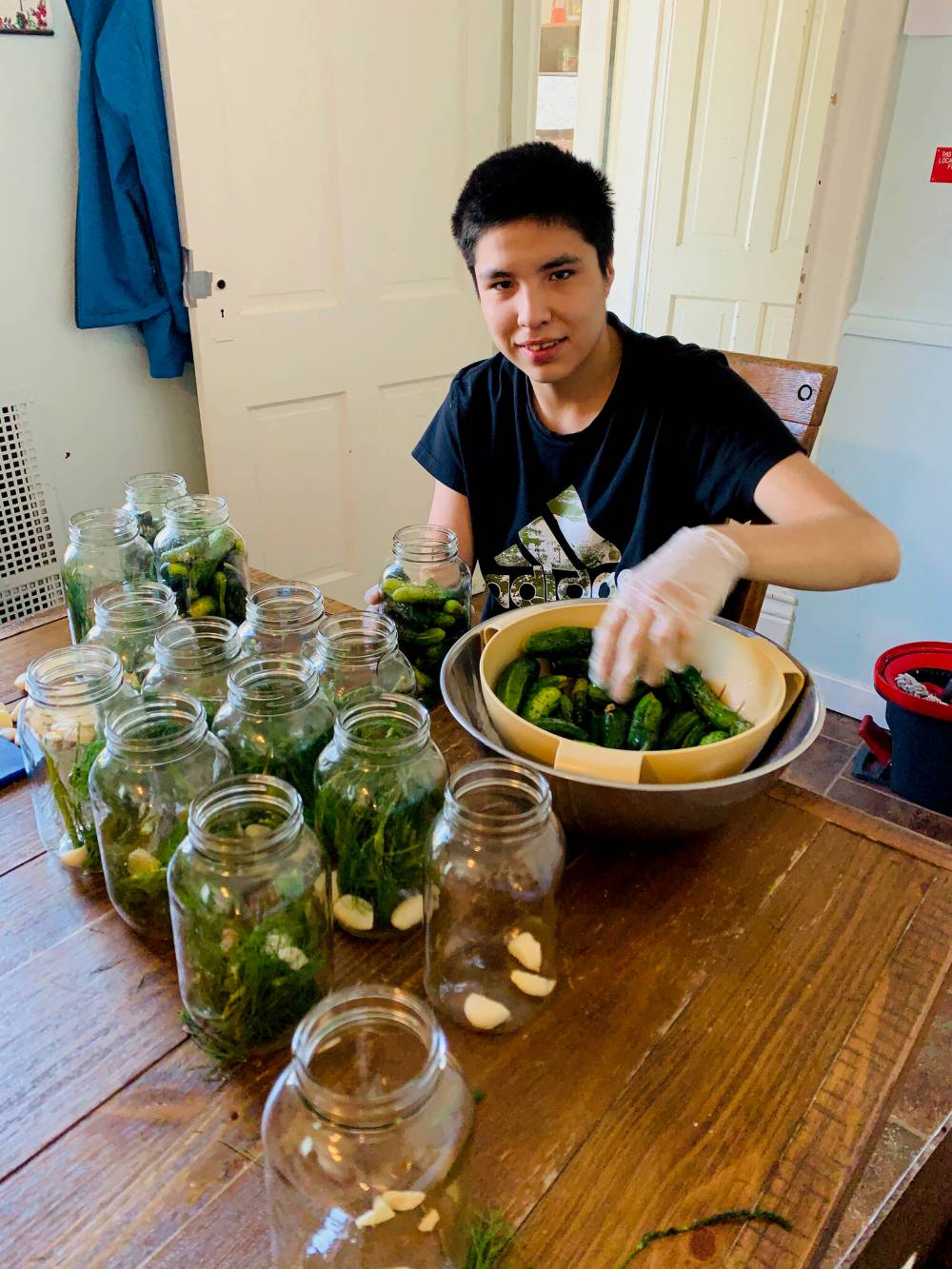
Wildcat was released on bail to Morberg House, a 12-bed recovery facility in St. Boniface where executive director Marion Willis said he embraced the idea of a life beyond gangs, guns and drugs and worked diligently for 20 months to achieve it.
Wildcat — the youngest person ever admitted to the recovery facility — did so well in his rehabilitation, Willis said, that his support team developed a case plan that included a recommendation he be sentenced to two years house arrest, during which time he would continue to live and continue programming at Morberg House.
Wildcat pleaded guilty to three firearm offences, possession of drugs for the purpose of trafficking and three counts of failing to comply with court orders.
At his November 2022 sentencing, a provincial court judge rejected the conditional sentence recommendation and sentenced Wildcat to prison, saying the work he had done at Morberg House was “commendable and significant,” but he had not “fully and completely turned his life around.”
A Free Press story in March 2023 contrasted Wildcat’s sentencing to that of a white middle-class offender with a prior criminal record who appeared before the same judge, guilty of stashing an arsenal of prohibited firearms in his garage and was granted a two-year conditional sentence.
Unlike in Wildcat’s case, the judge ruled the offender’s extensive rehabilitative efforts amounted to exceptional circumstances that justified a community-based sentence.
“Any hope that Ethan had has been extinguished,” Willis said at the time. “He had to learn a whole new normal, and he embraced that. And to have that all taken away from him? They sentenced him basically to hood life for the rest of his life.”
Late last month I checked court records and found Wildcat had not been charged with any new offences since his release on parole.
Encouraged by the news, I called Willis to see if she knew how he was doing. She delivered a gut punch I wasn’t expecting.
“He hanged himself,” she said.
JOHN WOODS / THE CANADIAN PRESS FILES ‘Ethan really believed that if he continued to do really well there would be a positive outcome for him and a reward in the end,’ says Marion Willis, executive director of Morberg House.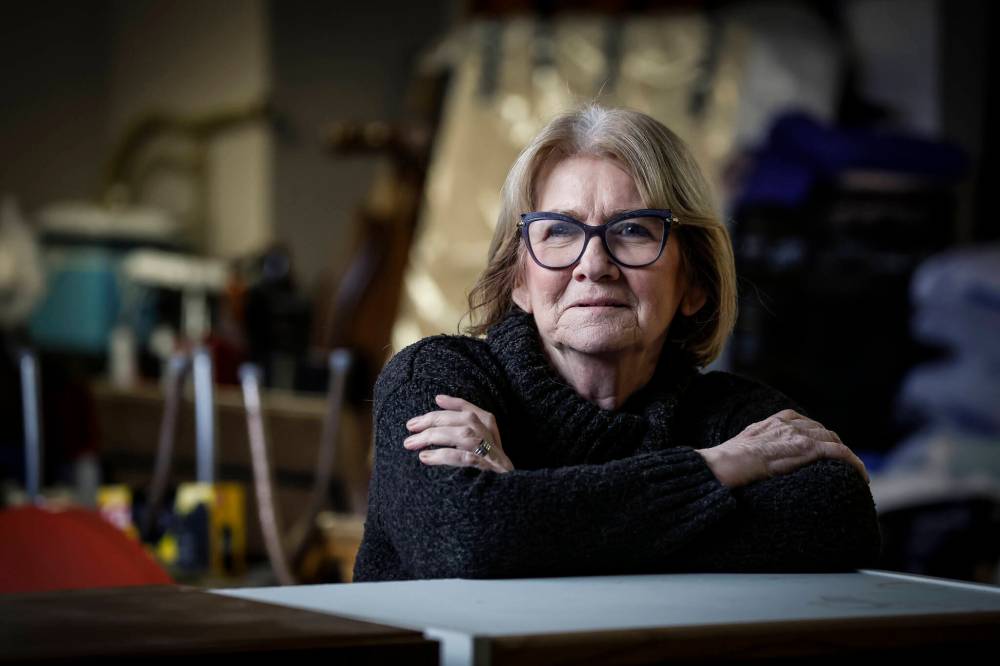
Wildcat was living in a halfway house in Edmonton last November when family members picked him up and drove him to nearby Ermineskin Cree First Nation to visit his mother. When family members didn’t return to drive him back to Edmonton he panicked, believing a warrant would be issued for his arrest.
Willis talked to the mother of Wildcat’s five-year-old son, who told her he called her in Winnipeg “really upset. He didn’t know what to do, he didn’t want to go back into custody.”
It was after that Wildcat went into the basement of his mother’s home and ended his life, Willis said.
“I can understand why Ethan would be overly distraught about that because he had no reason to believe in a compassionate system that would understand,” she said.
”It’s really horrible.”
“He had no reason to believe in a compassionate system that would understand.”
Wildcat was raised on Ermineskin Cree First Nation, where the mainstays of his young life were poverty, neglect and a struggle to survive.
In 2022, Pope Francis visited the site of the former Ermineskin Indian Residential School — whose attendees included Wildcat’s mother and grandmother — where he apologized for the damage the Catholic Church inflicted on Indigenous Peoples.
That backdrop and the positive strides Wildcat made at Morberg House, where he became a valued member of the facility’s outreach team, made him the perfect candidate for a restorative justice sentence, Willis argued.
“Ethan was very much a product of the environment that he was raised in with families who had so much childhood and complex trauma, all of it from residential schools passed down from generation to generation,” she said.
Wildcat was further failed in that a formal Gladue report was not prepared for his sentencing, Willis argued.
Gladue reports identify relevant systemic and background factors in an Indigenous offender’s life that a court can take into consideration when sentencing.
Manitoba does not have a publicly funded Gladue program. Instead, probation officers prepare pre-sentence reports, when ordered by the court, that include Gladue factors or “a Gladue component.” Manitoba Justice provides probation officers a four-day Gladue PSR writing course.
“Should the probation officer be writing a Gladue report?” Willis said. “I think not, unless that probation officer is an Indigenous person that has a deep understanding of residential schools and colonialism and the impacts on Indigenous people.
“(Wildcat) was entitled to one.… What they relied on instead was a PSR written by a probation officer that did not understand his social history, at all. People’s lives are decided on the weight of those reports.”
Information included in such reports meant to explain and contextualize an offender’s background is often used by the report writer to improperly inflate their risk assessment, said lawyer Stacey Soldier, a partner with Indigenous law firm Cochrane Sinclair LLP.
“In contrast, private Gladue reports I have obtained were exceptionally well done and helpful to the court,” Soldier said.
RUTH BONNEVILLE / FREE PRESS FILES Stacey Soldier, a partner with Indigenous law firm Cochrane Sinclair LLP.
The demand for proper Gladue reports is far outstripping the ability of report providers to prepare them, she said.
“There is a need and it is the provincial and federal government’s responsibility to ensure these programs are robustly funded,” she said.
Wildcat’s death was shattering news to Morberg House staff who watched him blossom, but not surprising, Willis said.
“I knew this would be the outcome,” she said. “Ethan was suicidal. He said more than once he didn’t see a future for himself, that there was no way out for him and he might as well end it.”
“Ethan really believed that if he continued to do really well there would be a positive outcome for him and a reward in the end.”
When he was sentenced to prison, Wildcat resisted efforts to proceed with an appeal, feeling he was betrayed by those who promised he could have a better life.
“He felt betrayed by even me, which is the hardest thing for me to live with,” Willis said. “Ethan really believed that if he continued to do really well there would be a positive outcome for him and a reward in the end.”
Wildcat suffered the “ultimate harm” that life as an Indigenous man in Canada dealt him, Soldier said.
He “didn’t get the opportunities to grow and learn from the mistakes he made,” she said.
“I think what can be taken away is we all have a responsibility to push for change (as) outlined in the Aboriginal Justice Inquiry and the Calls to Action from the Truth and Reconciliation Commission.”
MORBERG HOUSE ‘There was no justice for Ethan Wildcat,’ says Willis.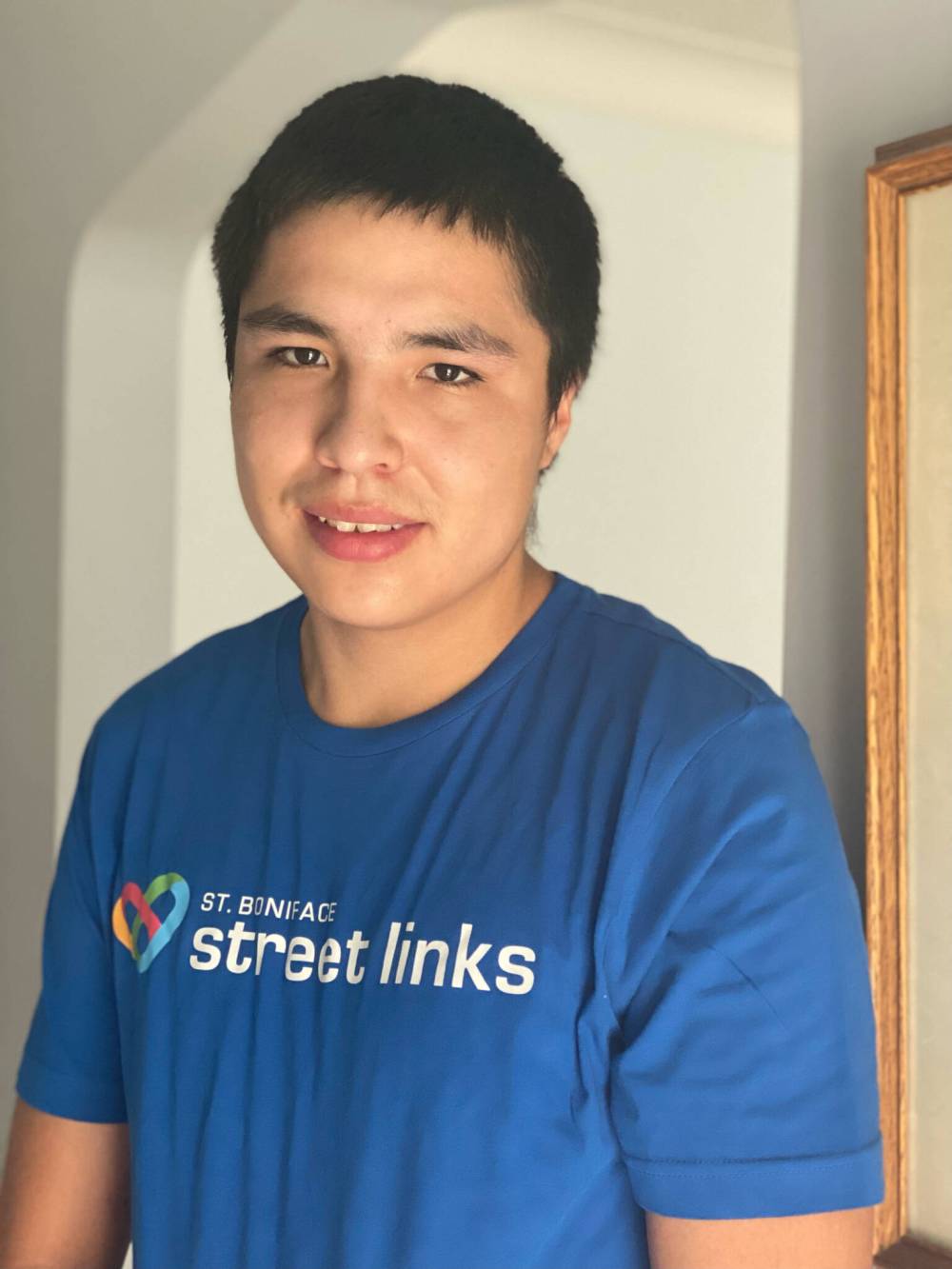
There is a saying in legal circles that sentencing is an art, not a science. It’s an observation that recognizes no two cases are identical and that every case must be examined and adjudicated on its own specific facts.
And that sometimes the justice system is going to get it wrong.
The facts of Wildcat’s crimes legally supported a prison sentence, and many judges would have made the same decision. That didn’t make it the right call.
Would Ethan Wildcat still be alive today if he hadn’t been sent to prison? That’s a question no one can answer with complete certainty.
What can be said with some assurance is that sending a young, impressionable first-time offender to prison is not going to make him a better person, and is not going to leave him undamaged.
What’s more important: seeing that bad deeds are punished or helping the people who commit them overcome their past and move toward a positive future?
Wildcat was shown a better path forward, and it was taken from him.
There’s got to be a better way.
The last word goes to Willis.
“There was no justice for Ethan Wildcat, and he was a kid,” she said.
dean.pritchard@freepress.mb.ca

Dean Pritchard is courts reporter for the Free Press. He has covered the justice system since 1999, working for the Brandon Sun and Winnipeg Sun before joining the Free Press in 2019. Read more about Dean.
Every piece of reporting Dean produces is reviewed by an editing team before it is posted online or published in print — part of the Free Press‘s tradition, since 1872, of producing reliable independent journalism. Read more about Free Press’s history and mandate, and learn how our newsroom operates.
Our newsroom depends on a growing audience of readers to power our journalism. If you are not a paid reader, please consider becoming a subscriber.
Our newsroom depends on its audience of readers to power our journalism. Thank you for your support.
Related Articles
Reinstated appeal of sentence sought