

North and east to Hudson Bay: Port Nelson
Advertisement
Read this article for free:
or
Already have an account? Log in here »
To continue reading, please subscribe:

Digital Subscription
One year of digital access for only $205*
- Enjoy unlimited reading on winnipegfreepress.com
- Read the E-Edition, our digital replica newspaper
- Access News Break, our award-winning app
- Play interactive puzzles
*First annual payment billed as $205.00 + GST for one year. This annual subscription will automatically renew at $233.00 + GST every 52 weeks (10% off the regular annual price of $259.35). Offer available to new and qualified returning subscribers only. Cancel any time.
To continue reading, please subscribe:
Add Free Press access to your Brandon Sun subscription for only an additional
$1 for the first 4 weeks*
- Enjoy unlimited reading on winnipegfreepress.com
- Read the E-Edition, our digital replica newspaper
- Access News Break, our award-winning app
- Play interactive puzzles
*Your next Brandon Sun subscription payment will increase by $1.00 and you will be charged $17.95 plus GST for four weeks. After four weeks, your payment will increase to $24.95 plus GST every four weeks.
Read unlimited articles for free today:
or
Already have an account? Log in here »
Who in Canada doesn’t like the beaver? It’s a Canadian symbol that represents hard work and ingenuity and using the resources around you to build up what you need.
Western Canada was largely opened because of the value of a rodent.
From the 1600s on, it was the trading of beaver pelts for European goods that helped raise everyone’s standard of living. Two historic figures, Samuel Hearne and Matonabee, (who first met each other by accident west of Hudson Bay) epitomized this new era.
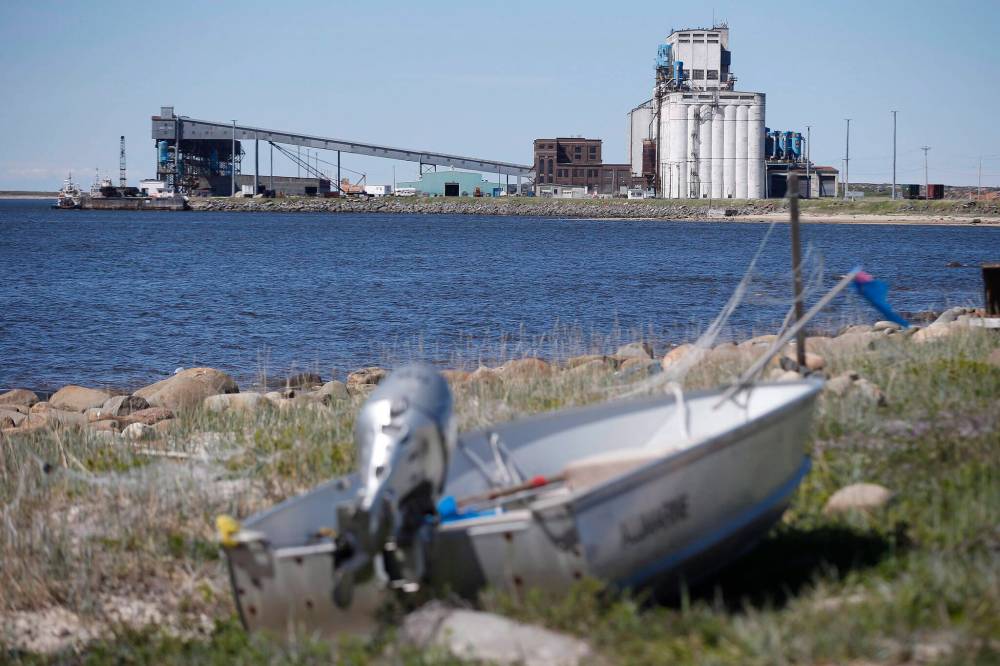
The Canadian Press files
The Port of Churchill is the wrong choice for northern expansion, Wally Daudrich argues.
‘Sam’ came with the Hudson Bay Company to make profit for the investors, and ‘Mat,’ a chief of the Dene people, led young Sam across the west to introduce trade with his colleagues in the Athabaskan country. Mat became well known for his “portable trading posts” that he brought across the west.
The mutual benefit was not lost by these two men: Nobody argued the fact that boiling water for stew was easier using a copper pot over a fire than dropping hot stones into a caribou stomach. Mat and Sam not only became trading buddies, but their partnership led to a lifelong, loyal friendship.
The beaver-equivalent today is potash, bitumen, oil, liquefied natural gas (LNG), agricultural products, hydroelectricity and hydrogen, and ammonia nitrate, a derivative of natural gas and an invaluable fertilizer that makes our modern farming production possible. Today, as then, the Port of Churchill is set up to handle the business; agricultural products, container bitumen, potash, and the rest.
When Premier Wab Kinew came to Churchill in January and held a town hall, it wasn’t the bickering that I would hear in the dysfunctional Manitoba legislature. It was a premier who made a solid case for an LNG plant and the economic benefits for Manitoba. The premier said a lot of things that I’ve been promoting for the last 10 years with regards to a port 15 kilometres north of the Nelson River.
Having spent 45 years of my life building up my business on Hudson Bay, here are a few pointers to help my premier increase our province’s gross domestic product by at least five per cent.
Firstly, Churchill is a tourism town built to a $100-million industry of sightseeing for polar bears and beluga whales and northern lights. The footprint needed for an LNG plant and all the associated industrial complex is significant. Also, the proposal to build a road to Churchill is in the neighbourhood of several billion dollars and would still take a decade to construct and would be built through the world’s largest polar bear denning area in God’s creation. It would also interfere with the largest caribou (Kaminariak) migration in the 10 southern provinces.
I would like to direct our premier’s attention to the area north of the Nelson River, which is already an industrial river. It has the following advantages:
first, it is a pure saltwater port with the current coming from the north and providing a saltwater environment and pushing any silty water south and away; second, a substrate that allows for the berths necessary for the large LNG ships to safely moor offshore where pipelines can be buried in the bottom of the ocean; and third, it is in close proximity to hydroelectric projects that would need to be built. The Conawapa dam and the Gillam dams, either or both, could be started and financed alongside this project as the power would absolutely be needed for the natural gas compressor station coming from Western Canada.
About 75 per cent of the power generated by the Conawapa dam would go towards the gasification plant. The plant could be located near Gillam/Fox lake, where the heat generated could be used to house associated industrial buildings and possibly even a large mall and greenhouses, which would house workers and health-care providers and consumer goods, and groceries with virtually no heat costs.
The site is also at the same latitude that would correlate with the natural gas fields of Alberta and Saskatchewan. All of this with not a single Manitoba taxpayer dime, while building in equity to create a revenue stream that would help finance Manitoba infrastructure not only for northern Manitobans, but all Manitobans.
This was a project I touted during my race for leader of the PC Party.
I believe most importantly that it’s a good deal for Manitoba and it’s also a good deal for Canada.
Give me a mandate and we will work for Manitoba to put a deal together. It is obvious that Europe, South America, and yes, eastern North America still need western gas.
I believe Churchill is a bad business case.
Meanwhile, a new Port Nelson has been a widely-shared dream, here in Manitoba.
Based upon my experience as a captain operating in Hudson Bay for the past 42 years, the plan to operate a new Port Nelson could facilitate liquified natural gas shipments and crude oil 12 months out of the year.
There is the cost advantage of compressing natural gas there when -40 temperatures have already reduced its volume, and the efficiency of using hydro-generated electricity at off-peak hours when power is plentiful and cheaper.
A mismanaged Manitoba Hydro with multi-billion-dollar debt accumulated over decades could work with the other western provinces and northern Indigenous leaders to create an east/west hydro grid, connect all four western provinces, increase Manitoba’s market share of hydro-generated power and create efficiencies in that system that couldn’t be had otherwise except by spanning several peak-usage time zones.
Along the same corridor, while hydro energy flows upstream, natural gas can move down to the Hudson Bay. The energy which was once provided by the Russian federation from their north coast should be replaced by Canadian energy and delivered in the most efficient manner via Manitoba.
The movement of western resources out of western Hudson Bay — which is as close as Montreal to Europe — but without the need of a cross-Canada pipeline, is not only the most ethical way to move western energy and resource exports, but also the best investment that northern Manitobans could ever make.
When I think about an energy corridor exporting out of Western Canada, I think about royalties moving into the coffers of northern communities.

I think of maintenance contracts for our young people to thrive. I think of a health-care industry providing the best to northerners. I think of seniors’ homes for our elders.
I think of a Manitoba Hydro with no debt and with expanded opportunities for a better deal for our northern people. I think of a Manitoba government building better northern airports and able to build an efficient road and transit system for Winnipeggers.
I think of access to western Canadian natural gas.
Hundreds of years ago, we all got together to trade along the waterways. Today, I applaud those promoting this energy corridor that can bring benefits to all Manitobans and increase our provincial GDP by at least 10 per cent year over year.
Capt. Wally Daudrich is a Churchill businessman and the candidate of record for the Conservative Party of Canada.