

Reactive response to nurses’ safety concerns absurd

Advertisement
Read this article for free:
or
Already have an account? Log in here »
To continue reading, please subscribe:

Digital Subscription
One year of digital access for only $205*
- Enjoy unlimited reading on winnipegfreepress.com
- Read the E-Edition, our digital replica newspaper
- Access News Break, our award-winning app
- Play interactive puzzles
*First annual payment billed as $205.00 + GST for one year. This annual subscription will automatically renew at $233.00 + GST every 52 weeks (10% off the regular annual price of $259.35). Offer available to new and qualified returning subscribers only. Cancel any time.
To continue reading, please subscribe:
Add Free Press access to your Brandon Sun subscription for only an additional
$1 for the first 4 weeks*
- Enjoy unlimited reading on winnipegfreepress.com
- Read the E-Edition, our digital replica newspaper
- Access News Break, our award-winning app
- Play interactive puzzles
*Your next Brandon Sun subscription payment will increase by $1.00 and you will be charged $17.95 plus GST for four weeks. After four weeks, your payment will increase to $24.95 plus GST every four weeks.
Read unlimited articles for free today:
or
Already have an account? Log in here »
A hospital should be one of the safest workplaces in our communities. Yet across Manitoba, nurses increasingly feel they must resort to extraordinary measures just to get long-standing safety concerns addressed.
The fact that nurses at Seven Oaks General Hospital have voted overwhelmingly in favour of what their union calls “grey-listing,” should concern every Manitoban.
Not because grey-listing itself is the problem. It’s a symptom of a much bigger one.
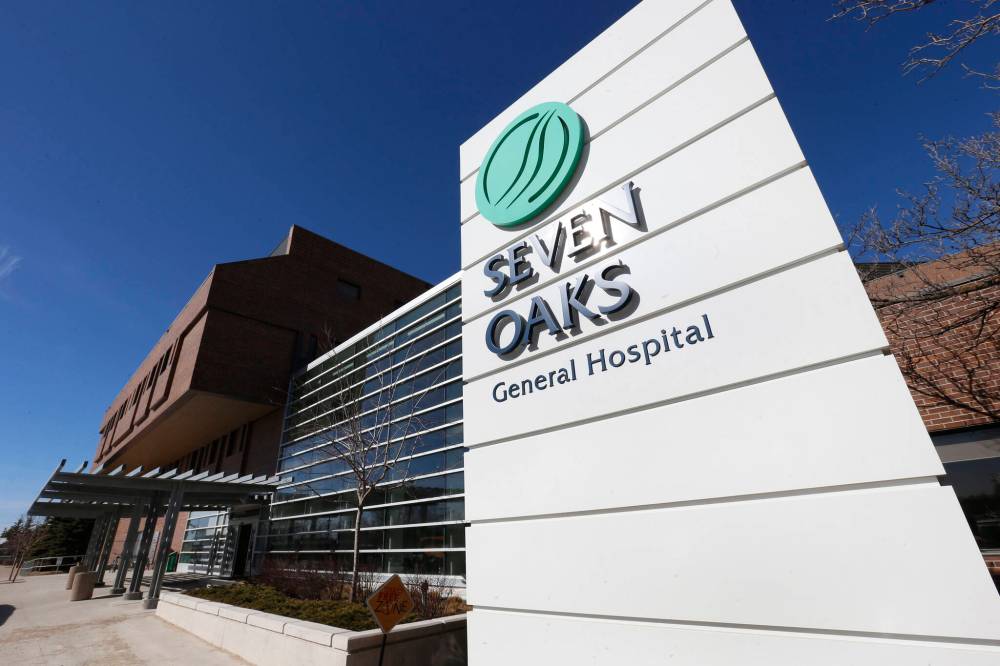
WAYNE GLOWACKI / FREE PRESS FILES
The fact unionized nurses voted to grey-list Seven Oaks General Hospital signals a workforce that feels ignored, frustrated and increasingly unsafe.
The real question is why nurses have to resort to such measures before governments and health authorities take meaningful action to make hospitals safer.
The Manitoba Nurses Union says 98 per cent of nurses at Seven Oaks voted in favour of grey-listing because of concerns about violence, security gaps, poor communication and unsafe staffing levels.
It signals a workforce that feels ignored, frustrated and increasingly unsafe in its workplace.
Seven Oaks is hardly an isolated case. Health Sciences Centre, Thompson General Hospital and St. Boniface Hospital have been grey-listed by nurses over the past year because of safety concerns. When one facility after another reaches the point where nurses feel compelled to take such action, it’s no longer a local issue, it’s a system-wide failure.
No one should be surprised that violence in Manitoba hospitals has become a major concern. Front-line health-care workers have been sounding the alarm for years.
Emergency departments routinely deal with patients suffering from mental illness, addictions, homelessness and severe emotional distress. Nurses, physicians and other staff often find themselves on the receiving end of threats, verbal abuse and physical assaults.
While violence can never be entirely eliminated from health-care settings, it can certainly be reduced through better planning, stronger security measures, improved staffing levels and quicker responses when concerns are raised.
That is where the system continues to fall short.
The most troubling aspect of the Seven Oaks situation is the allegation that concerns had been raised repeatedly for more than a year with little progress. Then, once grey-listing became a real possibility, promises of action suddenly emerged.
If that perception is accurate, it represents a serious failure of leadership.
Health-care workers should not have to threaten recruitment actions before their safety concerns are taken seriously. Governments should proactively identify risks and address them before matters reach a crisis point.
To be fair, the provincial government has made investments in hospital security since taking office.
Institutional safety officers have been expanded across the system. New security measures have been introduced at HSC. Thompson Hospital received additional security resources. Concordia Hospital is receiving around-the-clock coverage by institutional safety officers. The province is also introducing First Nations safety officers in The Pas.
Those are positive developments, but they also raise an obvious question.
If institutional safety officers prove effective elsewhere, why are nurses at Seven Oaks still fighting to secure adequate coverage at one of Winnipeg’s busiest hospitals?
Why does each hospital appear to have to battle individually for resources after staff reach a breaking point?
A reactive approach is not good enough. Every hospital should undergo regular safety reviews. Every facility should have clear standards for security staffing. Every serious incident should trigger prompt evaluations of whether additional resources are required.
Waiting until nurses vote to grey-list a facility is like waiting until a bridge starts collapsing before inspecting it.
The safety issue is also inseparable from staffing shortages. Hospitals that are short-staffed become more dangerous environments. Nurses who are stretched thin have less ability to monitor patients, respond to escalating situations and support one another during violent incidents.
The connection between workplace violence and staffing levels is well established. When staffing is inadequate, risks increase for both employees and patients.
That is one reason grey-listing carries such serious implications.
The purpose of grey-listing is to discourage nurses from accepting work at a particular facility. While it is designed to pressure employers into addressing concerns, it can also make recruitment and retention challenges even worse if problems remain unresolved.
That should worry health officials.
Manitoba has spent years trying to recover from severe nursing shortages. Recruiting nurses is difficult enough without allowing hospitals to develop reputations as unsafe workplaces.
The province cannot afford to lose experienced nurses because they no longer feel protected on the job.
Nor should Manitobans accept a health-care system where violence becomes normalized.
No nurse should have to wonder whether they will be threatened, assaulted or injured during a shift. No employee should have to choose between their personal safety and their professional commitment to patient care.
Hospitals exist to heal people; they should not become workplaces where violence is viewed as simply part of the job.

The NDP government deserves credit for acknowledging the issue and making investments in security, but the recurring pattern of grey-listing votes suggests the response remains too slow and too reactive.
Health-care workers are sending a clear message: They want action before crises develop, not after.
Manitobans should ask the same question nurses ask: why does it take a grey-listing vote to finally get attention?
The answer should be simple. It shouldn’t.
tom.brodbeck@freepress.mb.ca
Tom Brodbeck is an award-winning author and columnist with over 30 years experience in print media. He joined the Free Press in 2019. Born and raised in Montreal, Tom graduated from the University of Manitoba in 1993 with a Bachelor of Arts degree in economics and commerce. Read more about Tom.
Tom provides commentary and analysis on political and related issues at the municipal, provincial and federal level. His columns are built on research and coverage of local events. The Free Press’s editing team reviews Tom’s columns before they are posted online or published in print – part of the Free Press’s tradition, since 1872, of producing reliable independent journalism. Read more about Free Press’s history and mandate, and learn how our newsroom operates.
Our newsroom depends on a growing audience of readers to power our journalism. If you are not a paid reader, please consider becoming a subscriber.
Our newsroom depends on its audience of readers to power our journalism. Thank you for your support.
Tom Brodbeck is an award-winning author and columnist with over 30 years experience in print media. He joined the Free Press in 2019. Born and raised in Montreal, Tom graduated from the University of Manitoba in 1993 with a Bachelor of Arts degree in economics and commerce. Read more about Tom.
Tom provides commentary and analysis on political and related issues at the municipal, provincial and federal level. His columns are built on research and coverage of local events. The Free Press’s editing team reviews Tom’s columns before they are posted online or published in print – part of the Free Press’s tradition, since 1872, of producing reliable independent journalism. Read more about Free Press’s history and mandate, and learn how our newsroom operates.
Our newsroom depends on a growing audience of readers to power our journalism. If you are not a paid reader, please consider becoming a subscriber.
Our newsroom depends on its audience of readers to power our journalism. Thank you for your support.
Related Articles
Nurses’ vote makes Seven Oaks General Hospital fourth Manitoba facility on safety-focused grey list

Advertisement Advertise With Us
Advertisement Advertise With Us