

Kinew vows financial aid on way for rural Manitobans, but Winnipeggers may not be covered after flooding

Advertisement
Read this article for free:
or
Already have an account? Log in here »
To continue reading, please subscribe:

Digital Subscription
One year of digital access for only $205*
- Enjoy unlimited reading on winnipegfreepress.com
- Read the E-Edition, our digital replica newspaper
- Access News Break, our award-winning app
- Play interactive puzzles
*First annual payment billed as $205.00 + GST for one year. This annual subscription will automatically renew at $233.00 + GST every 52 weeks (10% off the regular annual price of $259.35). Offer available to new and qualified returning subscribers only. Cancel any time.
To continue reading, please subscribe:
Add Free Press access to your Brandon Sun subscription for only an additional
$1 for the first 4 weeks*
- Enjoy unlimited reading on winnipegfreepress.com
- Read the E-Edition, our digital replica newspaper
- Access News Break, our award-winning app
- Play interactive puzzles
*Your next Brandon Sun subscription payment will increase by $1.00 and you will be charged $17.95 plus GST for four weeks. After four weeks, your payment will increase to $24.95 plus GST every four weeks.
Read unlimited articles for free today:
or
Already have an account? Log in here »
Premier Wab Kinew announced Tuesday the province is changing rules to give disaster financial assistance to victims of last week’s flash floods in rural Manitoba, while Winnipeg residents may be out of luck.
Kinew encouraged applicants to ignore the standard terms on the government’s website and forms that state insurable damages are not eligible for provincial aid.
“If you have somebody who’s lived in a community for eight or nine decades and they’ve never seen this kind of flooding, it’s reasonable to expect that folks in that area wouldn’t put up flood protection or they wouldn’t purchase overland flood insurance,” he told reporters at an event in Selkirk.
SUPPLIED
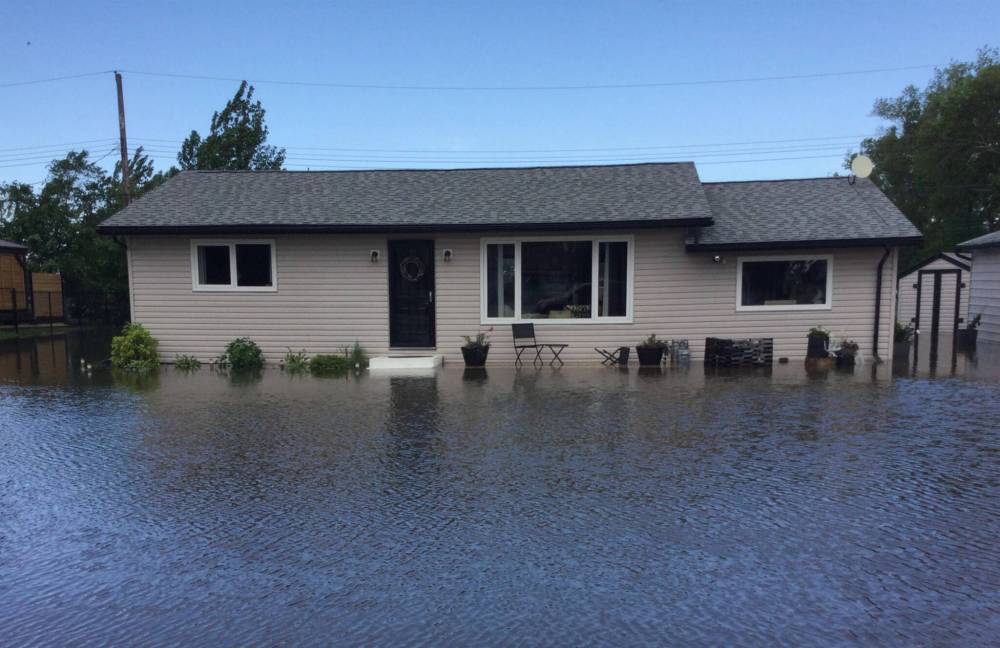
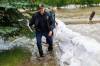
Tara and Darcy Richardson's flooded house in Stony Mountain after severe thunderstorms brought heavy rainfall across southern Manitoba.
“Because of that reality of a changing climate bringing forward impacts we’ve never seen in certain parts of the province before, that’s why we’re looking at ensuring this DFA program is going to be there for people so that no one in rural Manitoba gets left behind, and we’re not going to let the rules, as posted on the website, stand in the way of doing the right thing.”
The Manitoba Emergency Management Organization has so far received more than 300 applications from homeowners and businesses affected by heavy rain from June 6 to 10, a provincial spokesperson said.
Details about individual coverage amounts, timelines of payouts and the total cost of the program are still to be ironed out. So are exact details for people who could have purchased an insurance product but did not, Kinew said.

Flood victims should contact their insurance provider before applying for financial assistance, he said.
Several municipalities declared states of local emergency after torrential rain led to widespread flooding last week. Winnipeg was not among them, meaning residents affected by the downpours may not qualify for provincial help.
“My understanding right now is that the state of emergency has to be declared in the municipality,” Kinew said.
Mayor Scott Gillingham said he would look into the matter further before commenting to reporters.
“We’re not going to let the rules, as posted on the website, stand in the way of doing the right thing.”
From June 9 to 12, the city received nine reports of basement flooding and 374 reports of sewer backups involving clean water or raw sewage, spokeswoman Julie Dooley said.
Stony Mountain resident Tara Richardson, whose house flooded after heavy rain began June 9, welcomed the DFA program. Flood damage is not covered by the home insurance policy she and her husband Darcy have, she said.
“We were naively unaware, like many of our neighbours and people in the community,” she said. “We’ve lived here for over 50 years and we’ve never seen anything like this ever happen.”
Some neighbours with accepted insurance claims could still be thousands of dollars out of pocket, Richardson said.
The Richardsons filled out a DFA application form Tuesday. They continue to salvage belongings that were in floodwater a week ago and do not yet have a damage estimate.
Adding to their stress is the fact they are self-employed and missing work to deal with the flood’s aftermath. A relative started an online fundraising page to help cover costs. The DFA program does not cover loss of income or revenue.
EMO staff are visiting some communities to help storm victims who are applying for financial aid. The Richardsons attended a session at the Rural Municipality of Rockwood’s office in Stonewall Tuesday.
“They have been absolutely amazing. We walked in there this morning and said, ‘We’re really concerned about the underneath part of our home because we have no basement,’” Tara Richardson said. “(Our house) was sitting in a river.”
SUPPLIED
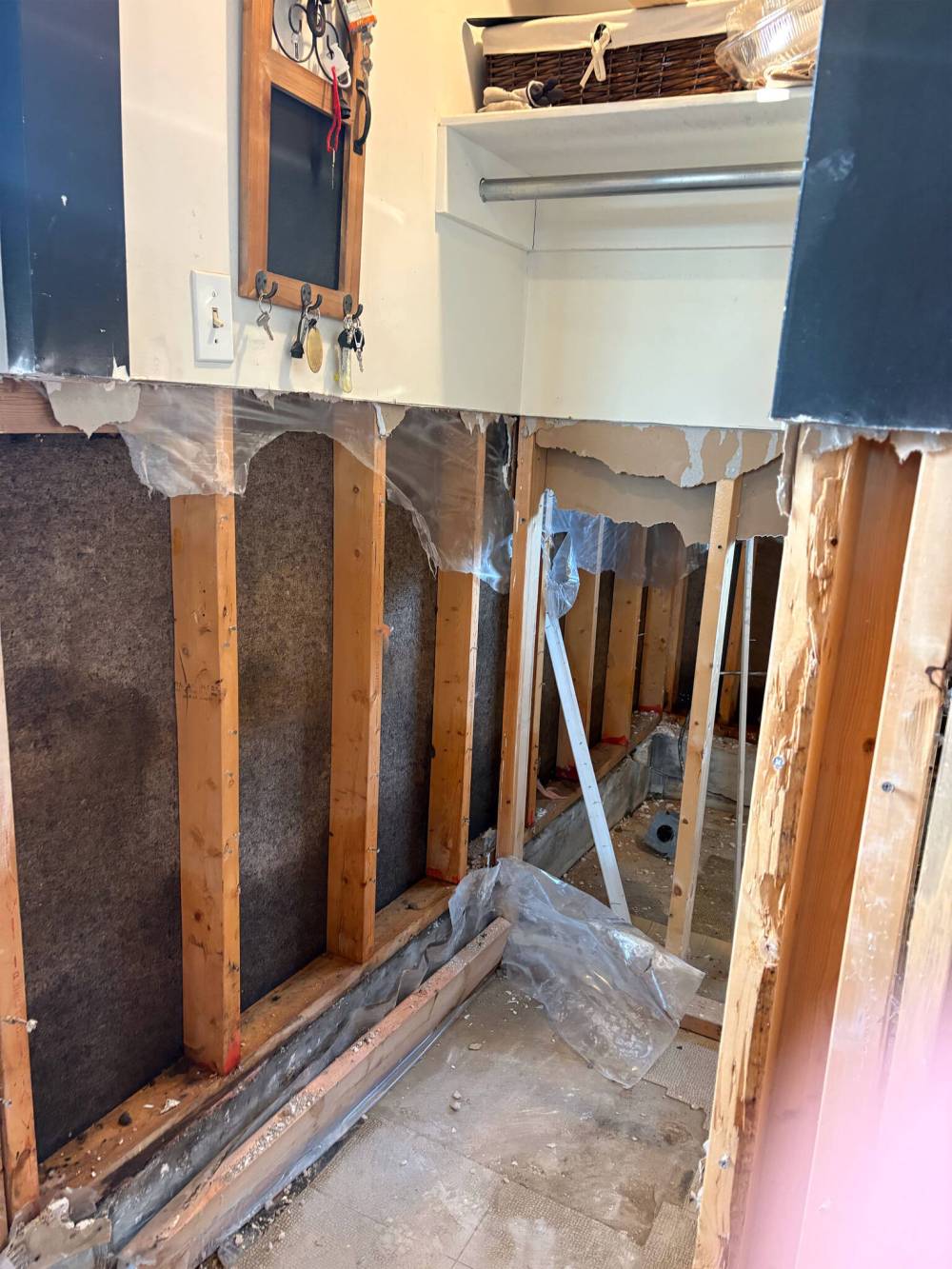
The Richardsons have been salvaging belongings and stripping the interior of their home in Stony Mountain.
She said EMO staff visited a short time later to conduct an inspection of her home, where damaged areas have been stripped.
Information sessions are also scheduled for Stonewall and the rural municipalities of Grahamdale, Rosser and West Interlake.
“The biggest concern is what is covered by insurance and what is covered by DFA,” Rockwood Reeve Wes Taplin said. “That has been the question.”
The municipality itself will submit a DFA claim for damage to roads, culverts and other infrastructure.
“We’re still repairing, so we have no idea what the end tally is going to be,” Taplin said.
Some flood victims or municipal officials sought clarification after Kinew last Thursday announced financial assistance.
The confusion stemmed from the fact that the DFA program’s website and application form said insurable damages were not eligible, despite Kinew’s vow that no one in rural Manitoba will be left behind.
A provincial regulation states that an expense is not eligible for disaster financial assistance if adequate insurance to cover the expense was available for purchase in the impacted region or community.
“We were naively unaware, like many of our neighbours and people in the community. We’ve lived here for over 50 years and we’ve never seen anything like this ever happen.”
Kinew said Tuesday his government is working with EMO on how to “codify” the new approach.
The website and application forms contained “boilerplate language” when the program launched, he added.
“I want to reassure people this is going to look different than how it has in the past,” he said.
Kinew stressed the government’s policy and emergency response has to evolve with climate change.
The insurance industry expects the extreme weather event to be a costly one.
Rob de Pruis, the Insurance Bureau of Canada’s national director of consumer and industry relations, said thousands of claims have been reported already.
He said a 2025 survey found about 55 per cent of home insurance policies in Manitoba had optional coverage for overland flooding. The national average was 70 per cent.
About nine per cent of properties were considered ineligible because they were deemed at higher risk.
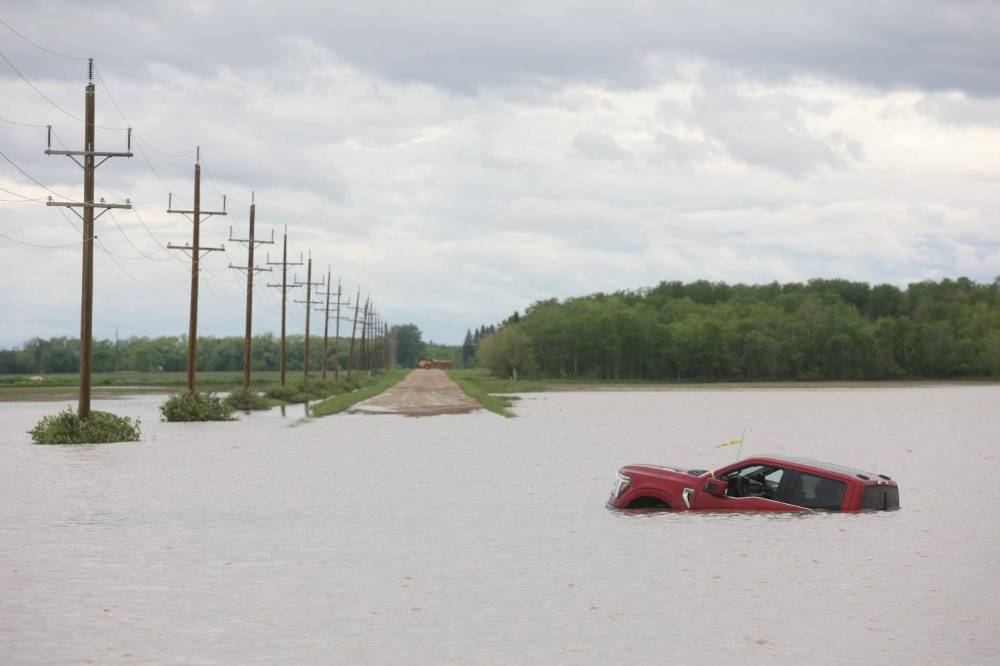
De Pruis said DFA programs in Canada are not intended to replace insurance, and are generally for uninsured events and basic essential costs.
“Don’t expect DFA to completely pay for all cleanup, all rebuild and replacing all of your contents at current replacement values. That’s not the way these programs are generally designed,” he said.
A day after the Tories called on the NDP government to operate the Portage Diversion, a provincial spokesperson said officials are monitoring water levels along the Assiniboine River and assessing the situation as conditions change.
— With files from Nicole Buffie and Joyanne Pursaga
chris.kitching@freepress.mb.ca
Chris Kitching is a general assignment reporter at the Free Press. He began his newspaper career in 2001, with stops in Winnipeg, Toronto and London, England, along the way. After returning to Winnipeg, he joined the Free Press in 2021, and now covers a little bit of everything for the newspaper. Read more about Chris.
Every piece of reporting Chris produces is reviewed by an editing team before it is posted online or published in print — part of the Free Press‘s tradition, since 1872, of producing reliable independent journalism. Read more about Free Press’s history and mandate, and learn how our newsroom operates.
Our newsroom depends on a growing audience of readers to power our journalism. If you are not a paid reader, please consider becoming a subscriber.
Our newsroom depends on its audience of readers to power our journalism. Thank you for your support.
Chris Kitching is a general assignment reporter at the Free Press. He began his newspaper career in 2001, with stops in Winnipeg, Toronto and London, England, along the way. After returning to Winnipeg, he joined the Free Press in 2021, and now covers a little bit of everything for the newspaper. Read more about Chris.
Every piece of reporting Chris produces is reviewed by an editing team before it is posted online or published in print — part of the Free Press‘s tradition, since 1872, of producing reliable independent journalism. Read more about Free Press’s history and mandate, and learn how our newsroom operates.
Our newsroom depends on a growing audience of readers to power our journalism. If you are not a paid reader, please consider becoming a subscriber.
Our newsroom depends on its audience of readers to power our journalism. Thank you for your support.
Related Articles
Provincial disaster officials headed to flooded rural communities to answer questions about aid


Advertisement Advertise With Us
Advertisement Advertise With Us
History
Updated on Tuesday, June 16, 2026 5:48 PM CDT: Adds quotes, details and photo