

Federal bail bill becomes law as two other crime bills await passage
Advertisement
Read this article for free:
or
Already have an account? Log in here »
To continue reading, please subscribe:

Digital Subscription
One year of digital access for only $205*
- Enjoy unlimited reading on winnipegfreepress.com
- Read the E-Edition, our digital replica newspaper
- Access News Break, our award-winning app
- Play interactive puzzles
*First annual payment billed as $205.00 + GST for one year. This annual subscription will automatically renew at $233.00 + GST every 52 weeks (10% off the regular annual price of $259.35). Offer available to new and qualified returning subscribers only. Cancel any time.
To continue reading, please subscribe:
Add Free Press access to your Brandon Sun subscription for only an additional
$1 for the first 4 weeks*
- Enjoy unlimited reading on winnipegfreepress.com
- Read the E-Edition, our digital replica newspaper
- Access News Break, our award-winning app
- Play interactive puzzles
*Your next Brandon Sun subscription payment will increase by $1.00 and you will be charged $17.95 plus GST for four weeks. After four weeks, your payment will increase to $24.95 plus GST every four weeks.
Read unlimited articles for free today:
or
Already have an account? Log in here »
OTTAWA – Justice Minister Sean Fraser said Tuesday he hopes all three of the crime bills introduced by the Liberal government become law before Parliament rises for the summer.
Bail Bill C-14 received royal assent and became law on Monday, in what is likely the last sitting week of the spring session.
Fraser told reporters Monday the bill was “designed to target some of the most frequent causes of concern we hear in our engagement with communities across Canada.”
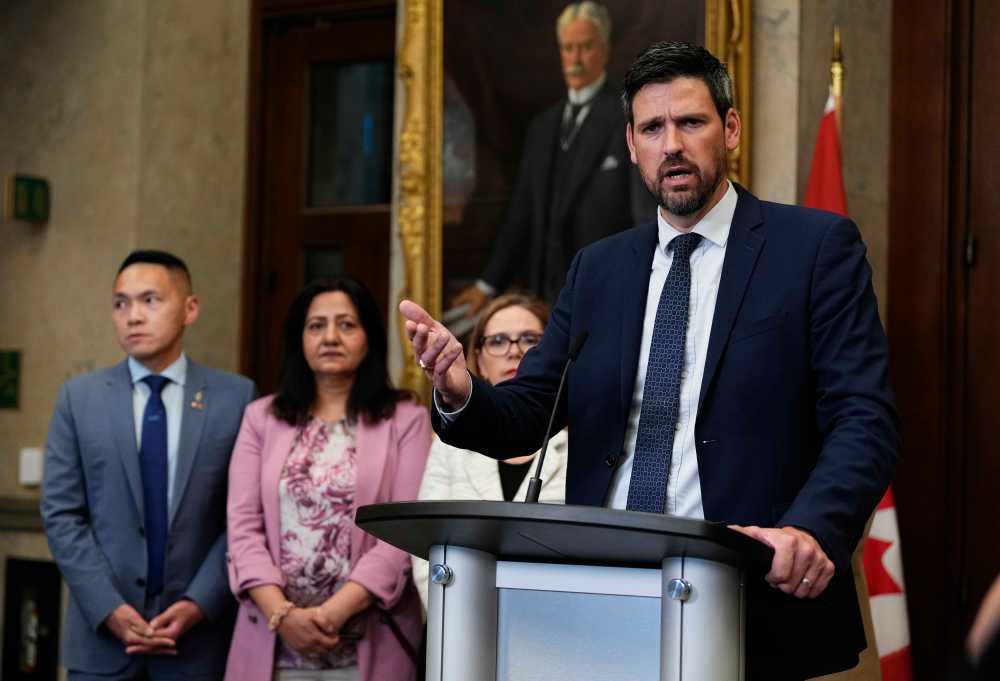
He said the bill responded to the most pressing concerns he heard from provinces, mayors and law enforcement.
The legislation makes it more difficult to get bail for a variety of crimes, including some vehicle thefts, extortion and human trafficking offences, by imposing a reverse onus on bail. That moves the burden of proof from the prosecutor to the accused, meaning they would have to justify being granted bail.
It also allows for consecutive sentences for repeat violent offences, vehicle theft, breaking and entering, extortion and arson.
The Federation of Canadian Municipalities welcomed the passage of the legislation.
“In communities of all sizes, local governments, police, firefighters, paramedics and other front-line responders witness daily the strain repeat offending places on public safety, essential services, residents, workers and local businesses,” president Tim Tierney said in a statement.
“This legislation responds to long-standing local concerns, and municipal leaders are ready to do their part to deliver lasting results.”
B.C.’s attorney general Niki Sharma said in a statement the bill addresses reforms her province has been advocating for.
Sharma said she was “especially encouraged by changes to reverse-onus bail provisions, one of B.C.’s top priorities in our proposals to the federal government. Too many families in British Columbia have experienced devastating loss because of repeat violence.”
The statement said B.C. looks forward to the passage of Bill C-16 as well. That bill would restore mandatory minimum imprisonment penalties and criminalize coercive control and non-consensual sexual deepfakes. It’s still in front of the Senate.
Fraser told reporters Tuesday it could also get royal assent this week.
“We expect, by the end of the week, we could see the Combating Hate Act, which is being debated in Parliament behind me at this very moment, and the Protecting Victims Act, which is at the final stages of the Senate, to potentially become law,” he said.
The House of Commons is currently considering amendments made by the Senate to hate crime Bill C-9. It creates new offences for intimidating or obstructing someone outside a religious or cultural institution, among other measures.
This report by The Canadian Press was first published June 16, 2026.