

Ottawa’s new bail law won’t make cities safer, but it will clog up courts

Advertisement
Read this article for free:
or
Already have an account? Log in here »
To continue reading, please subscribe:
Digital Subscription
One year of digital access for only $1.44 a week*
- Enjoy unlimited reading on winnipegfreepress.com
- Read the E-Edition, our digital replica newspaper
- Access News Break, our award-winning app
- Play interactive puzzles
*Billed as $5.77 plus GST every four weeks. After 52 weeks, price increases to the regular rate of $19.95 plus GST every four weeks. Offer available to new and qualified returning subscribers only. Cancel any time.
To continue reading, please subscribe:
Add Free Press access to your Brandon Sun subscription for only an additional
$1 for the first 4 weeks*
- Enjoy unlimited reading on winnipegfreepress.com
- Read the E-Edition, our digital replica newspaper
- Access News Break, our award-winning app
- Play interactive puzzles
*Your next Brandon Sun subscription payment will increase by $1.00 and you will be charged $17.95 plus GST for four weeks. After four weeks, your payment will increase to $24.95 plus GST every four weeks.
Read unlimited articles for free today:
or
Already have an account? Log in here »
If Canadians were hoping Ottawa’s latest round of bail reform would reduce crime and make communities safer, they are likely to be disappointed.
The federal government has presented Bill C-14 — which received royal assent this week — as a significant public safety measure aimed at repeat and violent offenders.
In reality, the legislation changes little about how bail decisions are made and is unlikely to have any meaningful effect on crime rates.
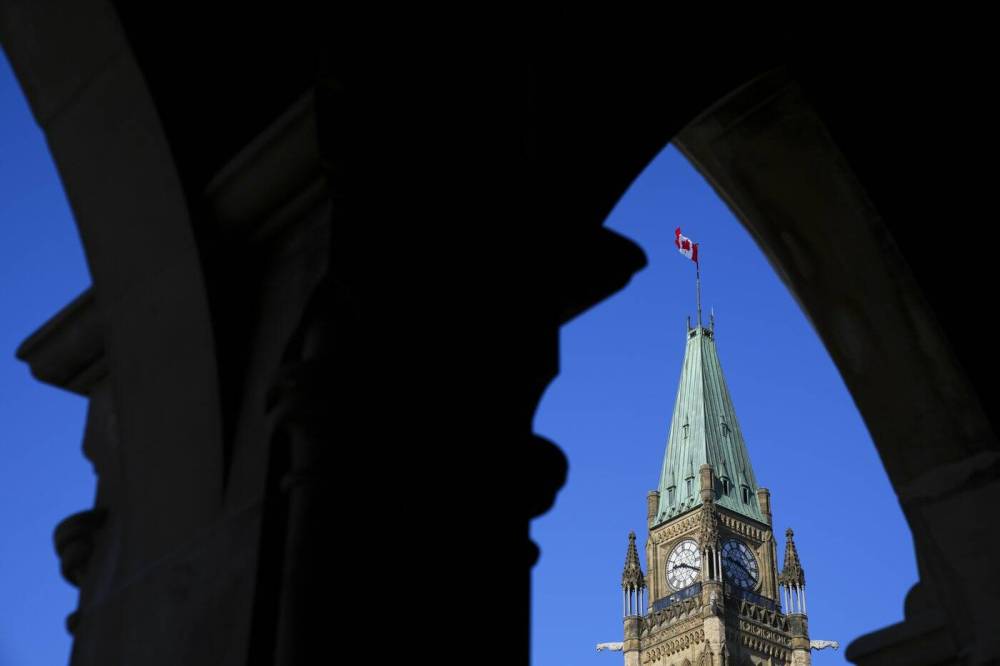
Sean Kilpatrick / THE CANADIAN PRESS FILES
The Peace Tower on Parliament Hill in Ottawa. The federal government’s Bill C-14 received royal assent this week.
That’s because the centrepiece of the legislation — expanding the list of offences subject to reverse-onus provisions — is not new, groundbreaking or particularly significant.
Reverse onus has existed in Canadian law for years.
For certain serious offences, the accused must demonstrate why they should be released on bail rather than requiring Crown prosecutors to prove why they should remain in custody. Murder has long been subject to reverse onus, as have a variety of other serious crimes.
Ottawa expanded the list of reverse-onus offences in 2024 (Bill C-48) after premiers demanded tougher bail laws. At the time, Canadians were told the reforms would address concerns about repeat violent offenders and improve public safety. It didn’t change much, if anything.
The new legislation expands the list by adding offences such as violent and organized auto theft, break and enter of homes, human trafficking and violent extortion.
The problem is that expanding reverse onus does not automatically result in more people being denied bail — not even close.
A reverse-onus provision shifts the burden of persuasion during a bail hearing. Instead of the Crown arguing for detention, the accused must argue for release.
The legal test, however, remains unchanged.
Judges and magistrates must still apply constitutional principles: they must still consider whether detention is justified, and they must still weigh factors such as public safety, the likelihood of appearing in court and maintaining confidence in the administration of justice.
Canadians still have a constitutional right not to be denied reasonable bail without just cause, just like they did before the last two pieces of legislation.
That protection is enshrined in the Charter of Rights and Freedoms and no federal government can simply legislate it away.
If a court cannot establish a compelling legal reason to detain an accused person, bail should be granted regardless of whether the offence falls under a reverse-onus provision.
Sometimes bail must be denied, and it often is. Provincial jails are busting at the seams with people who have been refused bail, but there has to be a good reason for it, as prescribed by law.
That’s why claims that these reforms represent a major crackdown on crime are greatly exaggerated.
The offences added under Bill C-14 are already viewed as serious crimes by courts. Judges already consider public safety when making bail decisions involving those offences. Crowns already seek detention when circumstances warrant it.
The notion that dangerous offenders are routinely being released simply because a particular offence was not included on a reverse-onus list is nonsense.
Few issues generate more public anger than stories involving accused offenders who commit serious crimes while on bail. Such cases are tragic and alarming, but they can’t all be eliminated unless the courts detain everyone who is charged with a crime, which would be a gross violation of human rights.
The real problem is that bail reform has become more of a political slogan than a serious policy discussion.
Every time a high-profile crime occurs involving someone released on bail, governments promise another round of reforms. Yet those reforms rarely, if ever, alter the fundamental legal framework because constitutional protections remain in place, as they should.
Canada’s justice system is built on the principle that people are presumed innocent until proven guilty. Bail exists because individuals charged with crimes have not yet been convicted.
That principle can be uncomfortable at times, particularly when someone released on bail later commits another offence, but the alternative would require far greater restrictions on individual liberty.
No democratic society can completely eliminate risk without severely compromising fundamental rights.
That reality often gets lost in political debates about bail.
Meanwhile, Bill C-14 risks creating unintended consequences.
More reverse-onus offences will likely mean more contested bail hearings, more court appearances and more legal challenges. Prosecutors, defence lawyers and judges will spend more time litigating bail applications. That could place additional strain on overburdened courts and correctional systems.
Crime prevention is far more complicated than adjusting procedural rules at bail hearings. It involves policing, addiction treatment, mental health services, housing supports, poverty reduction and effective rehabilitation programs.

Those issues rarely generate the same political attention as bail reform because they are tougher, more expensive and take longer to produce results.
Expanding reverse onus, by contrast, makes for an easy announcement and an appealing political message.
Canadians deserve an honest conversation about what drives crime and which measures are most likely to reduce it.
Until that happens, bail reform will remain what it has largely become: a politically attractive response that creates the appearance of action without addressing the underlying problems that put public safety at risk.
tom.brodbeck@freepress.mb.ca
Tom Brodbeck is an award-winning author and columnist with over 30 years experience in print media. He joined the Free Press in 2019. Born and raised in Montreal, Tom graduated from the University of Manitoba in 1993 with a Bachelor of Arts degree in economics and commerce. Read more about Tom.
Tom provides commentary and analysis on political and related issues at the municipal, provincial and federal level. His columns are built on research and coverage of local events. The Free Press’s editing team reviews Tom’s columns before they are posted online or published in print – part of the Free Press’s tradition, since 1872, of producing reliable independent journalism. Read more about Free Press’s history and mandate, and learn how our newsroom operates.
Our newsroom depends on a growing audience of readers to power our journalism. If you are not a paid reader, please consider becoming a subscriber.
Our newsroom depends on its audience of readers to power our journalism. Thank you for your support.
Tom Brodbeck is an award-winning author and columnist with over 30 years experience in print media. He joined the Free Press in 2019. Born and raised in Montreal, Tom graduated from the University of Manitoba in 1993 with a Bachelor of Arts degree in economics and commerce. Read more about Tom.
Tom provides commentary and analysis on political and related issues at the municipal, provincial and federal level. His columns are built on research and coverage of local events. The Free Press’s editing team reviews Tom’s columns before they are posted online or published in print – part of the Free Press’s tradition, since 1872, of producing reliable independent journalism. Read more about Free Press’s history and mandate, and learn how our newsroom operates.
Our newsroom depends on a growing audience of readers to power our journalism. If you are not a paid reader, please consider becoming a subscriber.
Our newsroom depends on its audience of readers to power our journalism. Thank you for your support.
Advertisement Advertise With Us
Advertisement Advertise With Us