Innu Nation axes exhibit, says N.L. government believes ‘fringe theory’ about history

Advertisement

Advertise with us

ST. JOHN'S - The Innu Nation has cancelled a cultural exhibit about its history, accusing the Newfoundland and Labrador government of interfering based on its belief of a "fringe theory" that the Europeans arrived in Labrador before the Innu.

Read this article for free:


or

Already have an account? Log in here »

To continue reading, please subscribe:

Subscribe and receive a limited-edition Free Press branded hat or tote.

Digital Subscription

One year of digital access for only $205*

  • Enjoy unlimited reading on winnipegfreepress.com
  • Read the E-Edition, our digital replica newspaper
  • Access News Break, our award-winning app
  • Play interactive puzzles

*First annual payment billed as $205.00 + GST for one year. This annual subscription will automatically renew at $233.00 + GST every 52 weeks (10% off the regular annual price of $259.35). Offer available to new and qualified returning subscribers only. Cancel any time.

To continue reading, please subscribe:

Add Free Press access to your Brandon Sun subscription for only an additional

$1 for the first 4 weeks*

  • Enjoy unlimited reading on winnipegfreepress.com
  • Read the E-Edition, our digital replica newspaper
  • Access News Break, our award-winning app
  • Play interactive puzzles
Start now

*Your next Brandon Sun subscription payment will increase by $1.00 and you will be charged $17.95 plus GST for four weeks. After four weeks, your payment will increase to $24.95 plus GST every four weeks.

ST. JOHN’S – The Innu Nation has cancelled a cultural exhibit about its history, accusing the Newfoundland and Labrador government of interfering based on its belief of a “fringe theory” that the Europeans arrived in Labrador before the Innu.

Jodie Ashini, a cultural guardian with the Innu Nation, said she received a call from executives with the provincial art gallery just days before the “Innu Pakassiun” exhibit was set to open in Labrador on National Indigenous Peoples Day.

The art gallery team relayed the wishes of the provincial government that the exhibit not include an Innu timeline, nor make any links between the stone tools on display and the Innu, Ashini said in an interview Monday.
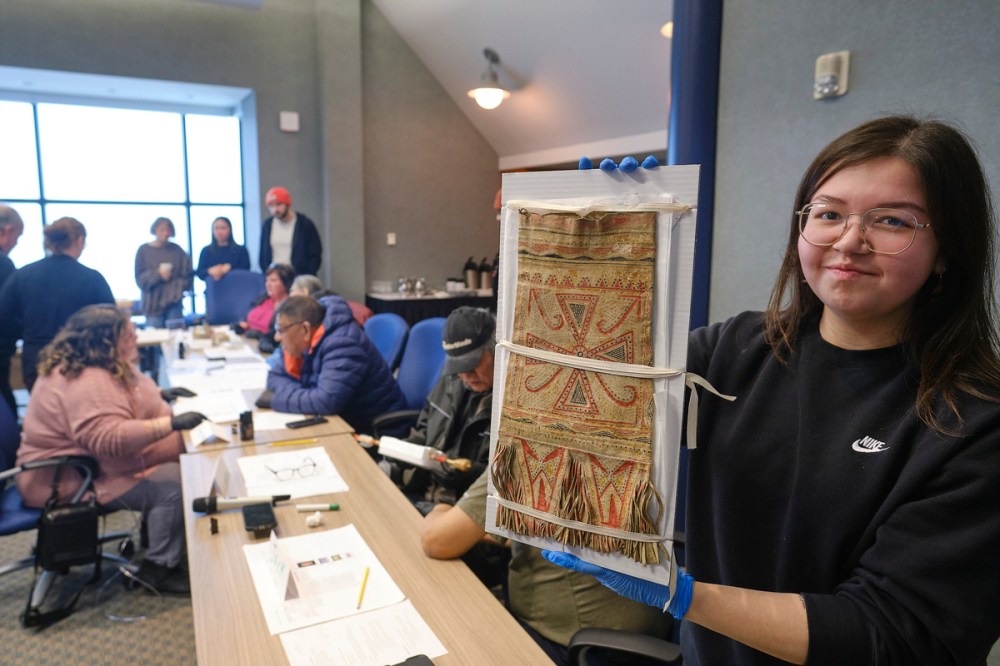
University student Bailey Andrew is shown in this handout photo holding up an artifact at The Rooms provincial art gallery in St. John's, N.L., on Jan. 28, 2026, in preparation for the Innu Pakassiun cultural exhibit. THE CANADIAN PRESS/Handout-Innu Nation-Greg Locke (Mandatory Credit)

“I knew in my heart I couldn’t go back to all the elders and all the knowledge keepers and Innu historians and everybody that worked so hard collaborating on this exhibit and tell them what they knew was wrong because the provincial government didn’t believe it,” Ashini said.

“They’re really erasing our history.”

Ashini said the government opposed the timeline of Innu history that was to be included in the show because it subscribes to a “fringe theory” that Innu have been in Labrador for about 300 years. She said this theory is incorrect, and the government is essentially erasing thousands of years of Innu history in Labrador.

In a statement, Lela Evans, the provincial minister of Labrador affairs and Indigenous relations and reconciliation, said her team previously met with the Innu Nation in hopes of finding “a solution that respects all points of view.”

“I understand that this approach has caused concern, and I am sorry for the impact this has had,” Evans said.

Evans did not elaborate on what “points of view” needed accommodation. She said she hoped her government could still work with the Innu Nation so the exhibit could go ahead.

The Innu Nation represents about 3,200 Innu in Labrador, most of whom live in the communities of Sheshatshiu and Natuashish. The name of the exhibit, which was supposed to open Sunday, is “Innu Pakassiun,” which means “Innu tools for survival.”

The Newfoundland and Labrador Heritage website, which is housed at Memorial University, says “Innu people and their ancestors lived on the Quebec-Labrador peninsula for thousands of years before Europeans arrived.” Because they lived deep in the interior and had little contact with traders, explorers or settlers, a number of “historical fables” have arisen about the Innu, the site says.

“One of these fables was that they were recent arrivals to Labrador and eastern Quebec,” it says.

A 2008 article on Memorial University’s Gazette website details work by the school’s Labrador Institute setting up an archeological field school in Sheshatshiu, which unearthed tools dating back 3,000 years. 

Ashini said provincial officials seem to have first raised the idea of Innu being in Labrador for just 300 years during a recent trial examining Innu rights to hunt caribou. She said nobody from the provincial archeology office has contacted the Innu Nation to discuss the issue.

“We’ve had so many anthropologists and different people just come in and talk about us and write about us, and we’ve never been able to tell our own story,” Ashini said.

The Innu Pakassiun exhibition was the Innu story assembled and told by Innu people, she said.

On Sunday, the chiefs of the Innu Nation in Quebec expressed their solidarity with their counterparts in Labrador.

“The history of the Innu cannot be rewritten, minimized or interpreted according to contemporary political considerations,” said their statement, which was posted to Facebook. “It is based on (millenniums) of occupation, governance, knowledge and inseparable links to the territory.”

Ashini said she and others from the Innu Nation were scheduled to meet with Evans and Newfoundland and Labrador Premier Tony Wakeham on Monday night.

She said she hoped they change their stance and acknowledge the harm they’ve caused. And she hopes the Innu Nation will then be able to open their exhibit, the way it was intended to be opened.

It would be especially important for Innu youth, Ashini said.

“This was a way to see themselves in a provincial building, and to really gain that pride and knowledge in who they are as Innu people,” she said.

This report by The Canadian Press was first published June 22, 2026.
Report Error Submit a Tip

More Stories

Canadian author Anne Carson wins literature Nobel for ‘bold and inventive’ works that blend genres

Jill Lawless, Hillel Italie And Kostya Manenkov, The Associated Press 6 minute read Preview

Canadian author Anne Carson wins literature Nobel for ‘bold and inventive’ works that blend genres

Jill Lawless, Hillel Italie And Kostya Manenkov, The Associated Press 6 minute read Updated: Yesterday at 5:05 PM CDT

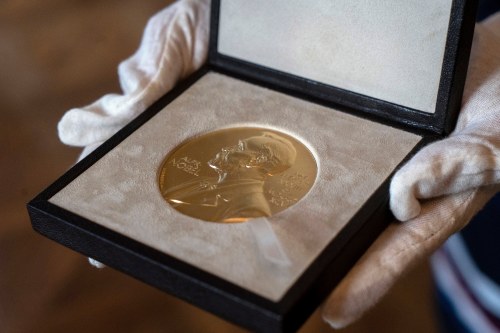
STOCKHOLM (AP) — Canadian poet, essayist and translator Anne Carson won the Nobel Prize in literature Thursday for “bold and inventive” works that fuse the classical and the modern and blur the boundaries of poetry and prose.

The Toronto-born Carson, 76, has drawn on themes from classical Greek and Roman literature, modern influences and personal experience for genre-blending titles that have ranged from translations of ancient Greek poets to collaborations with dancers and musicians, including Laurie Anderson and Lou Reed.

The Swedish Academy that awards the prize said she won “for her bold and inventive oeuvre that, in playful dialogue with the classical tradition, has created new forms for contemporary literature.”

The permanent secretary of the academy said the author was in Iceland “listening to the wind” when the panel reached her to notify her of the honor.

Read
Updated: Yesterday at 5:05 PM CDT

‘Please excuse us from writing these notes …’

Editorial 4 minute read Preview

‘Please excuse us from writing these notes …’

Editorial 4 minute read 2:01 AM CDT

It’s a common-sense prescription for the health-care system. The only wonder is that it took so long to happen.

On Oct. 1, new provincial legislation came into effect that will stop employers from requiring employees to get a sick note from a physician unless the employee has been absent for more than a week or has called in sick 10 or more times in a calendar year.

And the legislation could have a big effect.

Doctors Manitoba has calculated that its members write over 600,000 sick notes every year — a process that costs the provincial health-care system approximately $8 million annually. And the effort doesn’t even help sick workers get better: one-third of sick notes are written for patients who don’t even have symptoms anymore, making them little more than a comfortable fiction. To put it simply, doctors have to trust that a symptom-less patient was sick and write a note saying they were ill, in order to satisfy an employer who doesn’t share that same level of trust.

Read
2:01 AM CDT

Ladies and gentlemen of voting age, please turn your attention to the centre ring…

Dan Lett 5 minute read Preview

Ladies and gentlemen of voting age, please turn your attention to the centre ring…

Dan Lett 5 minute read Wednesday, Oct. 7, 2026

If there’s one thing that we in the news business wish for any election, it’s that the campaign is competitive and voters have multiple, viable options when it comes time to cast their ballots.

That is certainly what I wished for in this year’s Winnipeg mayoral election: a ballot with two or more competent candidates — including incumbent Scott Gillingham — that offered contrasting visions for the future of the city.

Unfortunately, this time we didn’t get competent or viable. Instead, we got a clown show stuffed with candidates for mayor who have demonstrated a stunning capacity for self-inflicted wounds.

It all started when mayoral candidates Kevin Klein and Mike Vogiatzakis both alleged they had been asked by each other’s campaign to step down to give the remaining candidate a better shot at defeating Gillingham.

Read
Wednesday, Oct. 7, 2026

Letters, Oct. 8

6 minute read Preview

Letters, Oct. 8

6 minute read Yesterday at 2:01 AM CDT

Computer scientist Melvin Conway once stated, “Any organization that designs a system (defined broadly) will produce a design whose structure is a copy of the organization’s communication structure.”

Read
Yesterday at 2:01 AM CDT

Mayoral race all sideshow, little substance

Editorial 4 minute read Preview

Mayoral race all sideshow, little substance

Editorial 4 minute read Yesterday at 2:00 AM CDT

Well, there’s one thing that can be said about Winnipeg’s 2026 mayoral race that sets it apart from most previous campaigns for city council’s top position:

Read
Yesterday at 2:00 AM CDT

Release police HQ report: Klein

Joyanne Pursaga 5 minute read Preview

Release police HQ report: Klein

Joyanne Pursaga 5 minute read Yesterday at 8:49 PM CDT

Mayoral candidate Kevin Klein is lobbying the province to release the final report from the public inquiry into the Winnipeg Police Service headquarters before the upcoming municipal election.

Klein wrote to the provincial government to request that the information be shared promptly and before Winnipeg voters go to the polls on Oct. 28.

A Thursday CBC report stated the document is finished, “has been sent to the printer” and submitted to the province but isn’t expected to be publicly released until after Winnipeg’s Oct. 28 municipal election.

“It’s all about accountability. The report is done. People have waited (many) years,” said Klein.

Read
Yesterday at 8:49 PM CDT