

Class-action lawsuit over deadly Toronto shooting clears another legal hurdle
Advertisement
Read this article for free:
or
Already have an account? Log in here »
To continue reading, please subscribe:

Digital Subscription
One year of digital access for only $205*
- Enjoy unlimited reading on winnipegfreepress.com
- Read the E-Edition, our digital replica newspaper
- Access News Break, our award-winning app
- Play interactive puzzles
*First annual payment billed as $205.00 + GST for one year. This annual subscription will automatically renew at $233.00 + GST every 52 weeks (10% off the regular annual price of $259.35). Offer available to new and qualified returning subscribers only. Cancel any time.
To continue reading, please subscribe:
Add Free Press access to your Brandon Sun subscription for only an additional
$1 for the first 4 weeks*
- Enjoy unlimited reading on winnipegfreepress.com
- Read the E-Edition, our digital replica newspaper
- Access News Break, our award-winning app
- Play interactive puzzles
*Your next Brandon Sun subscription payment will increase by $1.00 and you will be charged $17.95 plus GST for four weeks. After four weeks, your payment will increase to $24.95 plus GST every four weeks.
Read unlimited articles for free today:
or
Already have an account? Log in here »
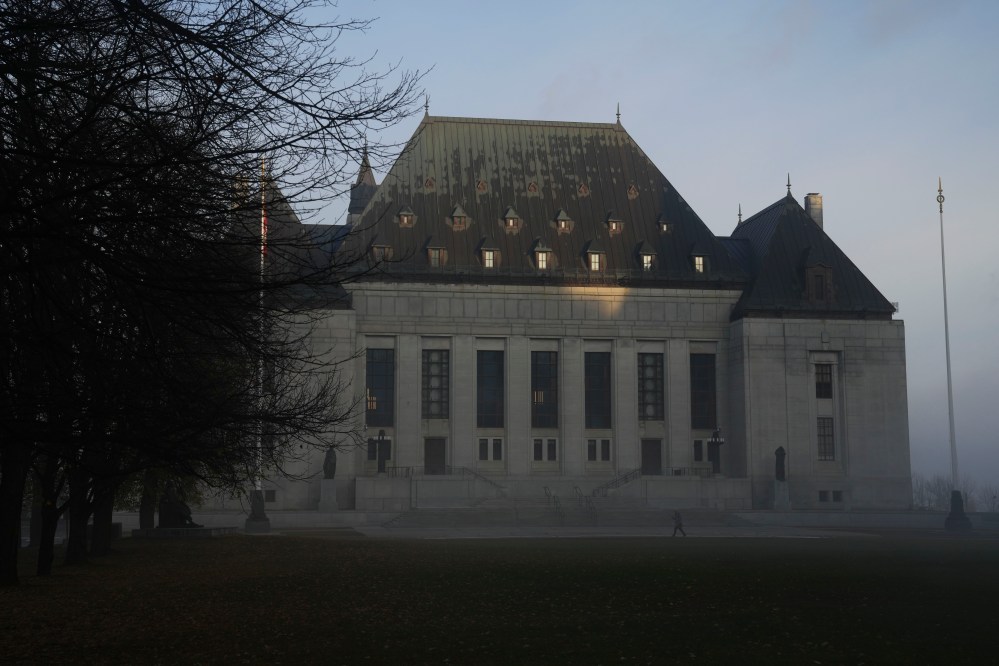
OTTAWA – The Supreme Court of Canada will not review a ruling by Ontario’s top court allowing survivors of mass shooting to proceed with a class-action lawsuit against a gunmaker.
Eighteen-year-old Reese Fallon and 10-year-old Julianna Kozis were killed, and 13 others were injured, when a gunman went on a shooting rampage on Toronto’s Danforth Avenue in July 2018.
The gunman, who used a stolen semi-automatic handgun made by Smith & Wesson, then turned the weapon on himself.
Some of the survivors and their families brought a class action against the gun manufacturer for failing to implement technology that would prevent unauthorized use of the gun, but the claim failed at the certification stage.
The motions judge found the plaintiffs’ negligence claim didn’t meet one of the criteria for certification which requires them to propose issues that are common to the members of the class.
Last year, Ontario’s Court of Appeal found the motions judge set the bar too high by essentially requiring the plaintiffs to prove their case on its merits at the certification stage.
This report by The Canadian Press was first published June 25, 2026.