

Picture perfect
Fish handling tips for fishes’ welfare and better photos
Advertisement
Read this article for free:
or
Already have an account? Log in here »
To continue reading, please subscribe:
Digital Subscription
One year of digital access for only $1.44 a week*
- Enjoy unlimited reading on winnipegfreepress.com
- Read the E-Edition, our digital replica newspaper
- Access News Break, our award-winning app
- Play interactive puzzles
*Billed as $5.77 plus GST every four weeks. After 52 weeks, price increases to the regular rate of $19.95 plus GST every four weeks. Offer available to new and qualified returning subscribers only. Cancel any time.
To continue reading, please subscribe:
Add Free Press access to your Brandon Sun subscription for only an additional
$1 for the first 4 weeks*
- Enjoy unlimited reading on winnipegfreepress.com
- Read the E-Edition, our digital replica newspaper
- Access News Break, our award-winning app
- Play interactive puzzles
*Your next Brandon Sun subscription payment will increase by $1.00 and you will be charged $17.95 plus GST for four weeks. After four weeks, your payment will increase to $24.95 plus GST every four weeks.
Read unlimited articles for free today:
or
Already have an account? Log in here »
Most of us who spend any appreciable time fishing have encountered those special moments when we want to capture a photograph of the catch that has just made it into the boat.
Numerous circumstances might be driving our desire to get that photo: a neophyte’s first fish, an exceptional catch, the so called “fish of a lifetime,” or any number of other factors that really can be determined only by the angler and the photographer.
Regrettably, many of us have also experienced varying levels of satisfaction with the images captured after we have released the fish to swim free, leaving the angler wishing for more, at which time it’s too late.
SUPPLIED
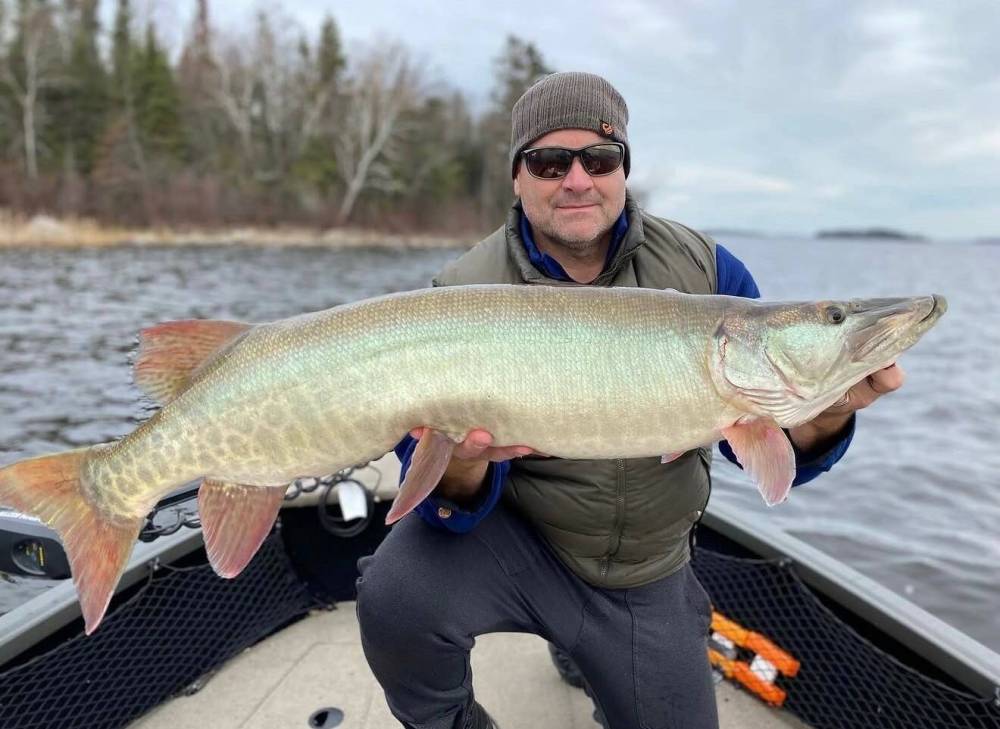
Steve Bradley with a nice late season muskellunge. Species of considerable length, like pike, muskies and large lake trout must be held horizontally across the front of the subject or seated and supported by the angler’s legs.
The good news is that with a little bit of forethought and planning, we can consistently take great photos of the fish we catch — with the fishes’ welfare of utmost interest, of course.
We all have an ethical obligation to treat the fish we catch in a responsible and respectful way, from the second it hits the twine of the net until the moment we are getting it back in the water and being absolutely sure it swims away in good shape.
Survivability and the health of the resource are dependent on how we as anglers manage these interactions, keeping in mind that once that fish is out of the water it is totally reliant on us for its health and well-being.
How we touch, hold and handle our catch is a critical piece in the big picture of angler photography, as many have surely seen images that show sub optimal technique and — unfortunately — in some cases, inappropriate handling of a catch that may lead to harm.
Be absolutely certain to minimize the amount of time that the fish is out of the water. In many cases this can be accomplished by simply keeping the fish in the basket of the net in the water, until such time that the photographer in the boat is prepped and ready to take photos.
Use this opportunity to clean up gear, get clutter out the way, put your subject where you want them for the shot.
Once you’re ready, carefully manage handling of the catch into the angler’s hands. Hold on tight so as not drop the fish, and — if the subject is not comfortable with handling — switch places or recruit another volunteer who is.
Compelling a person who really isn’t interested in holding a slippery, muscular living thing is not a recipe for success, and not respectful of the angler nor the fish. It’s often at these critical moments where accidents occur and fish are dropped, a result that can and should be avoided.
Species with physical characteristics of considerable length, like pike, muskies and large lake trout must be held horizontally across the front of the subject or seated and supported by the angler’s legs.
Holding the fish in the vertical, also known as the “Hero Hold,” is incredibly deleterious to catch and release survival rates due to the effects of gravity on heavy fish, especially those with longer spinal columns.
Remember those basic lessons in physics where we learned about the buoyant effect of water and always let that be your guide for every fish you handle. Under no circumstances hold any fish by the eyes or use tools like Boga Grips.
For shots taken with the fish supported vertically, keep hands and fingers out of the way when and where possible. Keep the hand that is supporting the fish towards the tail supporting beneath, but not wrapped around. Those digits and hands have a way of taking away from an otherwise fantastic photo.
SUPPLIED
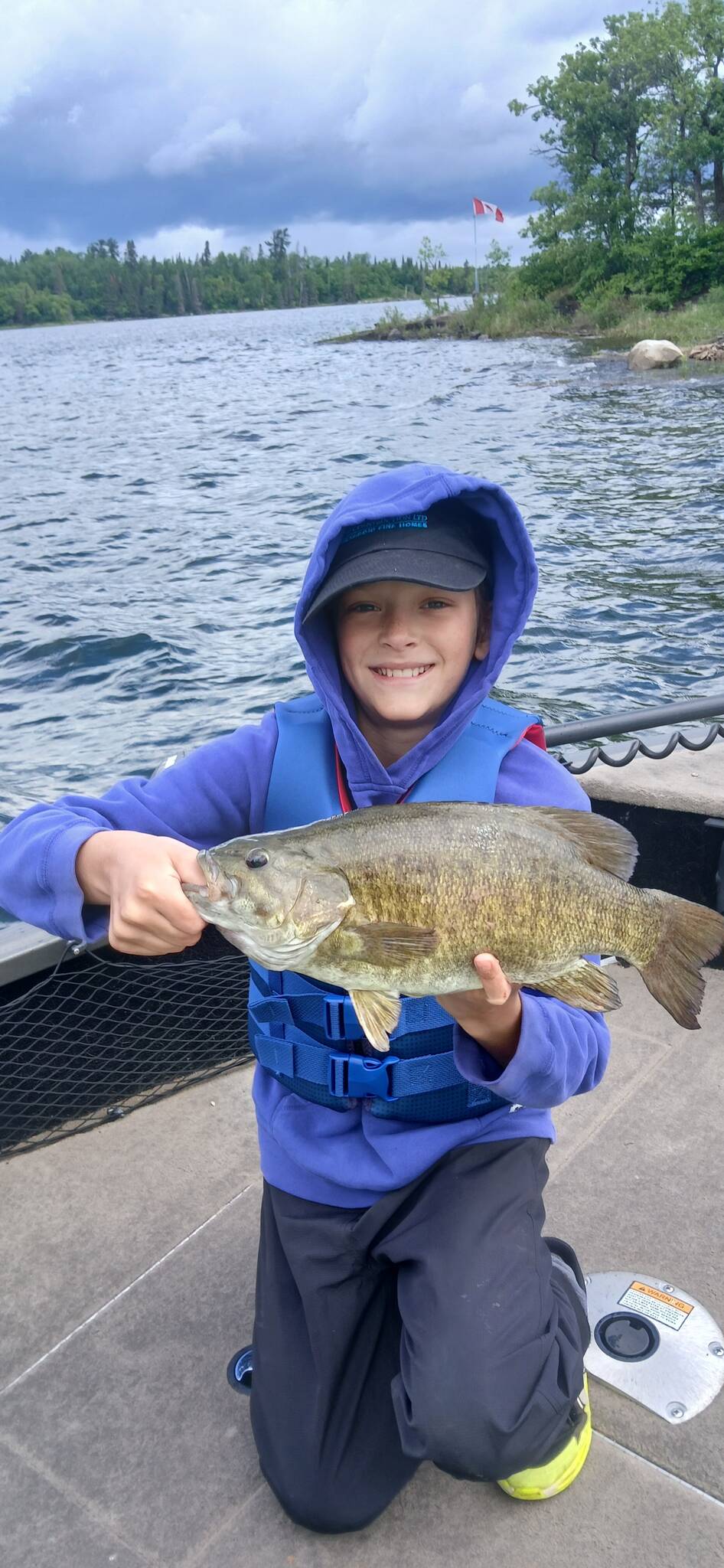
Wyatt Given with a nice smallmouth bass and properly supporting the fish. Rotating the fish vertically is unnatural and can actually make the fish appear smaller than it is.
Also, make sure that the fish is being held squarely, and neither angled too far forward or back. Rather, imagine how that fish would position itself in it’s natural environment, dorsal fin facing up and belly facing down. Rotations are unnatural and can actually make the fish appear smaller than it is.
Now that welfare is covered, here’s some aesthetic tips. And for context, let’s assume we are taking photos with a smartphone as they’re ubiquitous.
Lesson learned many years ago: lighting really is the pillar of a better fish photo. And the single biggest tip here is simple: when there is any sunlight whatsoever, make sure it is behind the photographer and on the subject.
Sunlight behind the subject can wash out the photo, blur contrast and by not ensuring that we have positioned our shot in such a way that they have the sun on them is a surefire approach to get an unremarkable result.

Use whatever light you have to your advantage. Think of it as a natural flash, as it can really illuminate and contrast a photo, from any markings on the fish to the angler’s smile.
And get close to your subject. All too often the photographer and the subject are too far apart from each other. As you frame the shot on your device, move close enough so that the subject fills most of the frame and little else, taking care to include them and — of course — the fish.
Remember, we want a photo of the happy angler and the fish, not their legs, or shoes, or distracting objects in the background. And on that note make sure the backdrop is clean and free of clutter.
For those who have a front casting deck in their boats, this is an optimal spot for photos. And, if necessary, spin the boat to ensure the best positioning for success.
Great fish photos are possible for anyone with a smartphone. Minimize the amount of time the fish spends out of the water, plan ahead and remember: lighting is the key to success.