An Italian region defies US pressure to end a Cuban doctors program
Advertisement
Read this article for free:
or
Already have an account? Log in here »
To continue reading, please subscribe:

Digital Subscription
One year of digital access for only $205*
- Enjoy unlimited reading on winnipegfreepress.com
- Read the E-Edition, our digital replica newspaper
- Access News Break, our award-winning app
- Play interactive puzzles
*First annual payment billed as $205.00 + GST for one year. This annual subscription will automatically renew at $233.00 + GST every 52 weeks (10% off the regular annual price of $259.35). Offer available to new and qualified returning subscribers only. Cancel any time.
To continue reading, please subscribe:
Add Free Press access to your Brandon Sun subscription for only an additional
$1 for the first 4 weeks*
- Enjoy unlimited reading on winnipegfreepress.com
- Read the E-Edition, our digital replica newspaper
- Access News Break, our award-winning app
- Play interactive puzzles
*Your next Brandon Sun subscription payment will increase by $1.00 and you will be charged $17.95 plus GST for four weeks. After four weeks, your payment will increase to $24.95 plus GST every four weeks.
Read unlimited articles for free today:
or
Already have an account? Log in here »
POLISTENA, Italy (AP) — Italy’s southern Calabria region is the rare place in Europe where Cuba sends medical professionals under a long-running program that the United States wants to stamp out.
Cuba’s doctors for decades have worked in developing nations such as Gambia and Venezuela, skilled in providing care with scarce resources. Over 200 now staff remote hospitals across Calabria, Italy’s poorest region in the tip of the country’s boot. A shortage of homegrown healthcare workers had forced some hospital departments to close.
“It was a disaster. I was keeping the emergency room open all by myself,” the chief physician of Polistena hospital, Francesco Moschella, told The Associated Press, recalling the days before the Cubans arrived in January 2023.
Their presence triggered a visit this year from U.S. officials. The U.S. has long criticized the Cuban program and called it a moneymaker for the socialist government that the Trump administration has isolated, sanctioned and wants to see changed.
Facing U.S. pressure, some Caribbean and Central American countries have canceled Cuban missions. But Calabria’s governor has refused. Even if Cuba’s socialism doesn’t fit with his political views, he says the region depends on them.
One Calabria hospital had lines several hours long
Despite growing tourism and a strong farming economy, Calabria symbolizes southern Italy’s lack of development compared to the more wealthy and industrialized north. Wages are about 30% lower, and its unemployment rate is double the national average.
Calabria ranks last among Italy’s 20 regions in public healthcare access, according to the health ministry.
Until April, Calabria had spent 17 years under special administration due to persistent budget deficits, which along with corruption scandals and Mafia infiltration affected health investments. Many newly graduated doctors built careers in the north instead.
During the COVID-19 pandemic, Cuba sent doctors to several areas of Italy. Calabria continued employing Cubans after the pandemic ended.
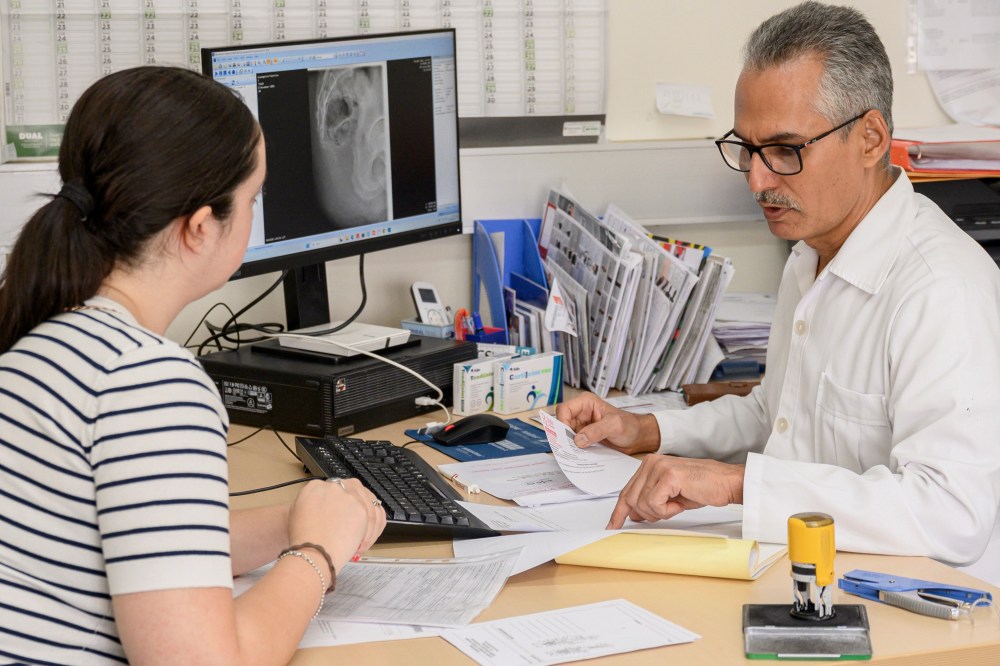
Emergency medicine specialist Zoila Yakelin Arevalo Cruz left her young son in Cuba in mid-2023. The emergency room where she works in Polistena town sees 30,000 patients annually, and six Cuban doctors make up half its staff.
“For a first-world country, Europe, we had a completely different idea. We didn’t think that the shortage of doctors was so serious,” said Arevalo Cruz, 38. “In this hospital there were lines that lasted up to eight or 12 hours. Now, thanks to our work, in less than an hour a doctor visits you.”
During an AP visit last month, she conducted her work in now-fluent Italian. She says she even picked up some of the local dialect by chatting with grateful former patients who swing by to say hi.
Not all countries are bowing to US pressure
U.S. Secretary of State Marco Rubio has accused the Cuban missions of being a “form of human trafficking” — a reference to Cuba’s government keeping most of doctors’ salaries and allegedly confiscating some passports.
“Cuban medical brigades are a key source of hard cash for the failing regime,” the State Department told the AP in an emailed response to questions, adding it was sharing information with partner nations on “the sobering realities of Cuban medical brigades to which they might otherwise be unaware.”
In March, Jamaica ended its 50-year medical cooperation agreement with Cuba, affecting nearly 300 healthcare workers. Honduras expelled more than 150.
Mexico’s President Claudia Sheinbaum in March, however, defended the program and said it provides vital care to underserviced people.
Officials in Cuba have said it has 22,000 medical personnel deployed to 55 countries in what they called a “mission of solidarity.” Neither they nor the State Department has specified which ones.
US officials pressured Calabria’s governor
Calabria’s Gov. Roberto Occhiuto is an unlikely booster of the Cuban program, as a high-ranking member of a political party strongly rooted in anti-Communist sentiment.
Calabria’s deal to bring in Cuban doctors was praised in the newspaper of Cuba’s Communist Party.
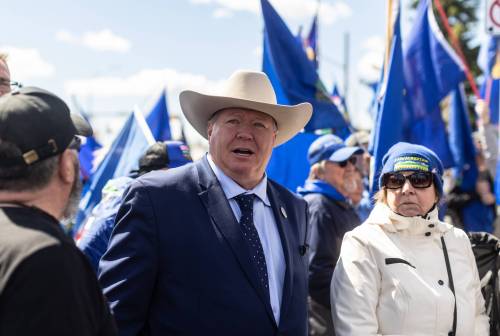
“Can you imagine, I got my photo in Granma?” Occhiuto said, smiling.
It also drew U.S. attention. Its charge d’affaires to Cuba, Mike Hammer, flew to Calabria in February alongside the U.S. consul-general in Naples. Talks with Occhiuto were cordial, but Hammer made clear that alternative sources of international staff would be highly appreciated.
“I had some pressures also during the Biden administration. But pressure grew under Trump,” Occhiuto said. He told Hammer his government is working on incentives to lure Calabrian doctors home.
“But at the same time, I have also reiterated to the U.S. Ambassador Hammer that I needed to keep hospitals open and that I intend to keep the Cuban doctors who are currently in Italy in their posts,” Occhiuto said.
He told the AP he would like to triple the Cuban medical staff to about 1,000 but has refrained to avoid running afoul of Washington.
The State Department did not answer questions about the meeting. Occhiuto’s office provided the AP with a photo of him meeting Hammer.
The Calabria deal pays Cuban doctors directly
Rather than paying the Cuban government agency that runs medical missions, Calabria signed individual contracts with the doctors and makes deposits in their Italian bank accounts.
Cuban doctors told the AP they still send as much as half their salaries to the Cuban government.
“We are all aware of the economic situation Cuba is going through. It’s a contribution that we make voluntarily because Cuba trained us, educated us and made us doctors,” Arevalo Cruz said.

Cuban cardiologist Daisy Luperon Loforte echoed that sentiment: “We do not consider ourselves modern-day slaves at all, as somebody called it. We love our country, we give an economic contribution and we are happy to do so.”
The Calabria governor confirmed that 63 Cuban doctors, some of them previously involved in Cuba’s international medical mission, recently applied to work in its healthcare system independently.
The Cuban government didn’t comment on whether the doctors applied for positions outside the program.
Patients are largely unaware of the diplomatic tensions.
“They’re smart, they have empathy and they’re also humble — something you don’t often see with Italian doctors,” said a resident, Maria Morano. “We are lucky they came, otherwise our hospital would have been closed.”