Blueberry First Nations says native plant orchard to help restore B.C. industry sites

Advertisement

Advertise with us

FORT ST. JOHN - A First Nation in British Columbia says a new native plant orchard established in its territory could help reclaim and restore thousands of industrial sites around northeastern B.C.

Read this article for free:


or

Already have an account? Log in here »

To continue reading, please subscribe:

Subscribe and receive a limited-edition Free Press branded hat or tote.

Digital Subscription

One year of digital access for only $205*

  • Enjoy unlimited reading on winnipegfreepress.com
  • Read the E-Edition, our digital replica newspaper
  • Access News Break, our award-winning app
  • Play interactive puzzles

*First annual payment billed as $205.00 + GST for one year. This annual subscription will automatically renew at $233.00 + GST every 52 weeks (10% off the regular annual price of $259.35). Offer available to new and qualified returning subscribers only. Cancel any time.

To continue reading, please subscribe:

Add Free Press access to your Brandon Sun subscription for only an additional

$1 for the first 4 weeks*

  • Enjoy unlimited reading on winnipegfreepress.com
  • Read the E-Edition, our digital replica newspaper
  • Access News Break, our award-winning app
  • Play interactive puzzles
Start now

*Your next Brandon Sun subscription payment will increase by $1.00 and you will be charged $17.95 plus GST for four weeks. After four weeks, your payment will increase to $24.95 plus GST every four weeks.

FORT ST. JOHN – A First Nation in British Columbia says a new native plant orchard established in its territory could help reclaim and restore thousands of industrial sites around northeastern B.C.

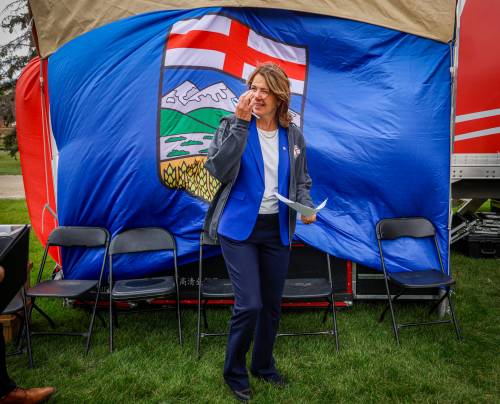
The Blueberry First Nations near Fort St. John unveiled the orchard last week, and Chief Sherry Dominic said it will produce native plants for sale to industry partners in the oil and gas sector, as well as Indigenous communities.

The nation says in a statement the garden will eventually have 1.7 million seedlings from a representative supply of grasses, shrubs, wildflowers and trees to reflect various layers of a healthy forest system.
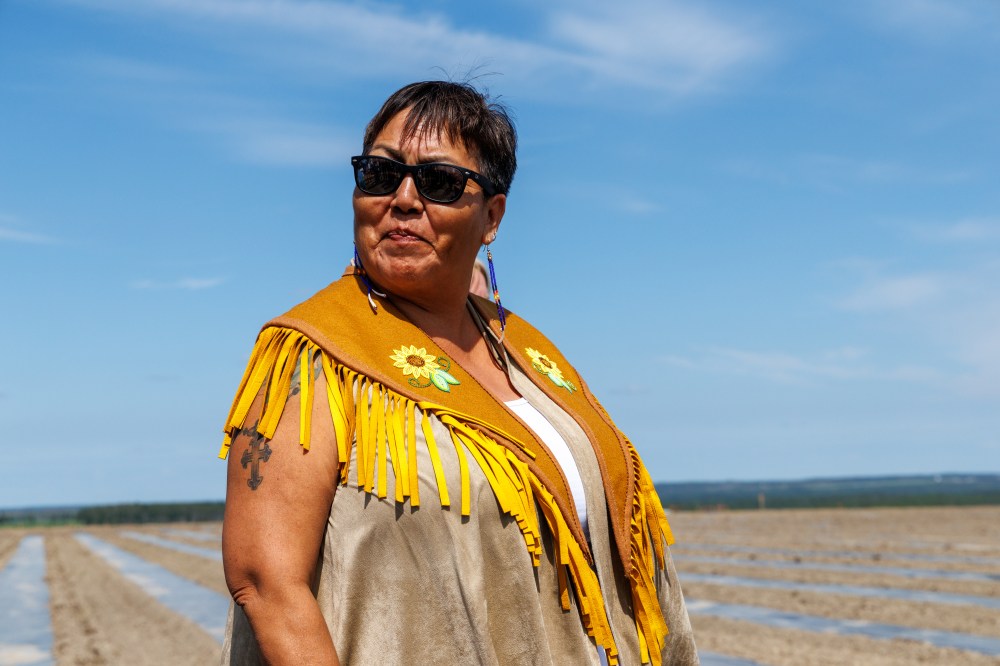
Chief Sherry Dominic of the Blueberry River First Nations, near Fort St. John, B.C., is shown in this handout photo during the unveiling of a new Indigenous-led commercial Native Plant Orchard on Tuesday, July 14, 2026. THE CANADIAN PRESS/Handout — Blueberry River First Nations (Mandatory Credit)

“So, eventually, (the orchard) will be putting the land back to its natural form,” Dominic said in an interview.

A crew of its members have been picking the initial seedlings for the orchard over the past two years, she said.

The plantation grew out of an agreement with the province in 2023, after a court found in 2021 that British Columbia had infringed on local treaty rights due to decades of industrial development.

The nation claimed its territory had an estimated 8,000 abandoned well sites and fully restoring the sites will require about 850 million trees and native plants.

The region has also suffered damage from wildfires, including the 2023 Donnie Creek fire, which is the largest recorded wildfire in B.C.’s history.

Dominic said restoration won’t happen overnight but the launch of the orchard itself marks an important moment.

“This is a huge milestone in Blueberry’s journey toward restoring and healing the land across our traditional territory,” Dominic said.

A background document said about 80 per cent of the 40-hectare facility will be used to grow plants for sale, while the remaining area is reserved for the 500-plus nation members to harvest their own supplies.

The chief said the facility will help her members exercise treaty rights, like picking berries for medicinal purposes, while learning and sharing traditional knowledge.

“This initiative delivers meaningful and long-term benefits to Blueberry members through employment, skills development opportunities and connection to our cultural roots,” Dominic said.

“I look forward to seeing our members harvesting there, and I am excited to witness how this project will upscale restoration across our region, which is sorely needed.”

The northeastern corner of British Columbia is a central hub of the province’s energy sector.

The Blueberry Restoration Society, which was established as part of the 2023 agreement with the province, is contributing $9.5 million toward the restoration project.

Another $200,000 comes from Grandmother’s Greenhouse, a subsidiary of Blueberry River Resources, which the nation owns.

The nation is part of the Treaty 8 Nations, a group that also includes seven other First Nations in B.C.

The treaty itself was signed in 1899 and covers 41 First Nations across northeastern British Columbia, northern Alberta, northwestern Saskatchewan and the southwest portion of the Northwest Territories.

This report by The Canadian Press was first published July 20, 2026.
Report Error Submit a Tip

More Stories

Frequency of private plasma donations called into question

Marsha McLeod and Rylee Gerrard 9 minute read Preview

Frequency of private plasma donations called into question

Marsha McLeod and Rylee Gerrard 9 minute read Yesterday at 12:47 PM CDT

Two weeks after the death of a second plasma donor in Winnipeg at a privately run collection site, provincial and territorial health officials compiled a list of urgent questions for Health Canada.

A health department official in Nova Scotia, which leads the Provincial Territorial Blood Liaison Committee, wrote in mid-February to the federal regulator that their members had expressed “a great deal of curiosity tempered with concern” and forwarded two dozen questions, according to documents obtained by the Free Press.

Under a section titled “MANITOBA ESTABLISHMENT INCIDENTS,” the provinces wanted to know: “What requirements are in place to ensure Grifols is ensuring collections frequency (does) not exceed the limit under the Health Canada licence?” and “Is Health Canada able to identify whether Grifols Canada has a donor system across establishments? (e.g., can identify when a donor last donated and where, similar to their operations in the United States).”

“Does the situation of two high-severity incidents in one Province or at establishments run by a relatively new entity to Canada, within a short period of time, initiate any additional protocols?”

Read
Yesterday at 12:47 PM CDT

Smith’s pretzel logic confuses

Editorial 4 minute read Preview

Smith’s pretzel logic confuses

Editorial 4 minute read 2:01 AM CDT

Alberta Premier Danielle Smith had both sides of her mouth working overtime on Aug. 30, when she spoke at an event in Calgary to commemorate Alberta Day, the annual celebration of the province’s entry into Confederation in 1905 (officially Sept. 1, it was celebrated on the weekend).

Smith’s comments — and the things she did not say — revealed a lot about the political tightrope the premier is trying to walk over the challenges currently faced by her province. At the top of that list of challenges is a persistent campaign to separate Alberta from the aforementioned Confederation. A campaign that Smith appears to both support and oppose, depending on which day of the week it is.

Her Alberta Day remarks were an excellent case in point.

Smith has decided that on Oct. 19, Albertans will vote on a series of non-binding propositions in a province referendum. One of those questions will ask Albertans whether they want to hold a referendum on separation, thus making this fall’s vote a “referendum on whether to hold a referendum,” as some observers have dubbed it.

Read
2:01 AM CDT

Mayoral candidate Gillingham vows building boom; Vogiatzakis, Woodstock promise improved safety

Joyanne Pursaga 5 minute read Preview

Mayoral candidate Gillingham vows building boom; Vogiatzakis, Woodstock promise improved safety

Joyanne Pursaga 5 minute read Yesterday at 5:00 PM CDT

Scott Gillingham promised several new steps to help get more homes and businesses built in Winnipeg Friday, if re-elected as mayor, amid other pledges from his competition.

Read
Yesterday at 5:00 PM CDT

Westwood standoff ends with two arrested

Morgan Modjeski and Erik Pindera 3 minute read Preview

Westwood standoff ends with two arrested

Morgan Modjeski and Erik Pindera 3 minute read Thursday, Sep. 3, 2026

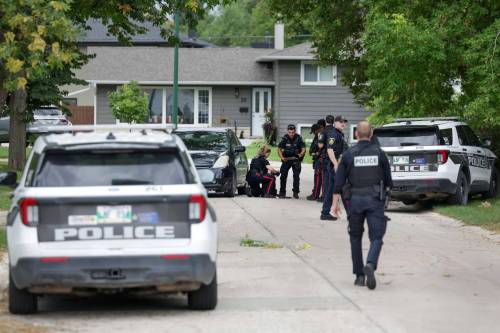
An hours-long standoff in Westwood came to an end Thursday with Winnipeg police arresting two men and seizing a gun.

Winnipeg Police Service officers were called to Byrd Avenue shortly before 9:30 a.m. after a man was seen walking with what appeared to be a firearm, said police spokesman Const. Claude Chancy.

Officers identified a home connected to the investigation, he said.

Two men were arrested but Chancy could not yet say what they will be charged with. It’s not clear whether either of the men arrested was the male spotted with a gun.

Read
Thursday, Sep. 3, 2026

Manitoba’s next power plant already under construction

Colleen Kuruluk 4 minute read Yesterday at 2:00 AM CDT

Across Manitoba, we’re rapidly moving toward a more electrified future, as homes, businesses, industries, and transportation increasingly turn to electricity. This transition offers a significant opportunity to reduce greenhouse gas emissions, but it also requires us to rethink how we plan for and participate in our energy future.

Letters, Sept. 4

7 minute read Preview

Letters, Sept. 4

7 minute read Updated: Yesterday at 8:22 AM CDT

I do think it’s important to stand up and be heard — and that is why I want to add my voice to the chorus of folks condemning U.S. Defence Secretary Pete Hegseth for his recent social media post that very obviously drew attention in a negative way to the physical stature of two Canadian cadets at a military training course.

Read
Updated: Yesterday at 8:22 AM CDT