

Senators still working with SEC, Big Ten on thorny issues involved in college sports bill
Advertisement
Read this article for free:
or
Already have an account? Log in here »
To continue reading, please subscribe:

Digital Subscription
One year of digital access for only $205*
- Enjoy unlimited reading on winnipegfreepress.com
- Read the E-Edition, our digital replica newspaper
- Access News Break, our award-winning app
- Play interactive puzzles
*First annual payment billed as $205.00 + GST for one year. This annual subscription will automatically renew at $233.00 + GST every 52 weeks (10% off the regular annual price of $259.35). Offer available to new and qualified returning subscribers only. Cancel any time.
To continue reading, please subscribe:
Add Free Press access to your Brandon Sun subscription for only an additional
$1 for the first 4 weeks*
- Enjoy unlimited reading on winnipegfreepress.com
- Read the E-Edition, our digital replica newspaper
- Access News Break, our award-winning app
- Play interactive puzzles
*Your next Brandon Sun subscription payment will increase by $1.00 and you will be charged $17.95 plus GST for four weeks. After four weeks, your payment will increase to $24.95 plus GST every four weeks.
Read unlimited articles for free today:
or
Already have an account? Log in here »
WASHINGTON (AP) — Senate negotiators worked Wednesday to resolve thorny differences with leaders of the Southeastern and Big Ten Conferences over revisions to a bill designed to regulate college sports that sponsors want a vote on before the chamber goes on summer break next week.
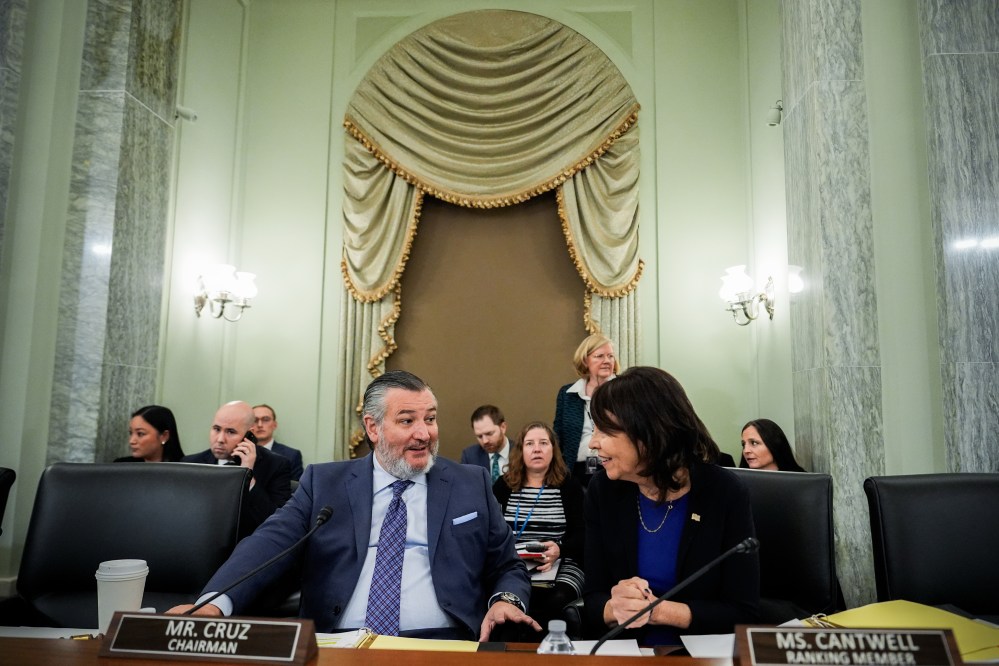
“Those conversations are ongoing,” said one of the bill’s sponsors, Sen. Ted Cruz, R-Texas.
Cruz and co-sponsor Sen. Maria Cantwell, D-Wash., are pushing to bring the Protect College Sports Act to a vote before Aug. 7, the last day the Senate meets before going on break. Senators return for the second half of September, before breaking for all of October — leaving little time remaining before the November midterms.
A pair of documents outlining concessions the lawmakers have made in the negotiations were headlined by a $20 million-plus “retention pool” that schools could use to keep players from leaving. It would amount to a doubling of the revenue-sharing “salary cap,” which is currently set at $21.3 million for this school year.
The conferences are seeking answers on whether the increase in revenue share would impact rules governing third-party payments to players, the likes of which are largely blamed for spiraling roster costs.
There’s also the question of whether such an increase would comport with the House settlement — the $2.8 billion lawsuit settlement that dictates rules around revenue sharing. Jeffrey Kessler, the plaintiffs’ attorney, has said he would need to see the language before weighing in on whether it impacts the settlement.
Absent from the documents was any mention of rewrites regarding antitrust protection or preemption of state laws. Those have been core requests surrounding legislation from virtually all the conferences and NCAA since Congress began this process.
Earlier this month, the SEC and Big Ten put out a paper outlining 10 “Common Sense Improvements” for the PCSA. The first two— and three of the 10 — entries on their list dealt with those two issues.
Other topics have been addressed in the negotiations, including adding flexibility to requirements over how many Olympic and women’s sports programs some schools should have and relaxing language over conference expansion to allow leagues to grow to up to 19 teams.
There has also been language designed to prohibit private equity investors from paying schools to form a super league, though the conferences could seek more refining to that language.
___
Pells reported from Denver.
___
AP college sports: https://apnews.com/hub/college-sports