Life on the streets
Performer’s gritty memoir chronicles his experiences among homeless Indigenous communities
Advertisement
Read this article for free:
or
Already have an account? Log in here »
To continue reading, please subscribe:

Digital Subscription
One year of digital access for only $205*
- Enjoy unlimited reading on winnipegfreepress.com
- Read the E-Edition, our digital replica newspaper
- Access News Break, our award-winning app
- Play interactive puzzles
*First annual payment billed as $205.00 + GST for one year. This annual subscription will automatically renew at $233.00 + GST every 52 weeks (10% off the regular annual price of $259.35). Offer available to new and qualified returning subscribers only. Cancel any time.
To continue reading, please subscribe:
Add Free Press access to your Brandon Sun subscription for only an additional
$1 for the first 4 weeks*
- Enjoy unlimited reading on winnipegfreepress.com
- Read the E-Edition, our digital replica newspaper
- Access News Break, our award-winning app
- Play interactive puzzles
*Your next Brandon Sun subscription payment will increase by $1.00 and you will be charged $17.95 plus GST for four weeks. After four weeks, your payment will increase to $24.95 plus GST every four weeks.
Read unlimited articles for free today:
or
Already have an account? Log in here »
It’s often said that you don’t truly understand addiction until you’ve lived it.
Readers of DerRic Starlight’s See-Me Street: My Homeless Indigenous Journey may well feel they have actually lived the addict’s life.
Starlight, a member of the Tsuut’ina Nation with family ties to the Blackfoot Confederacy, chose to live on Alberta streets on and off for several years to understand how homeless Indigenous people live. See-Me Street is a compilation of Starlight’s diary entries from that time.
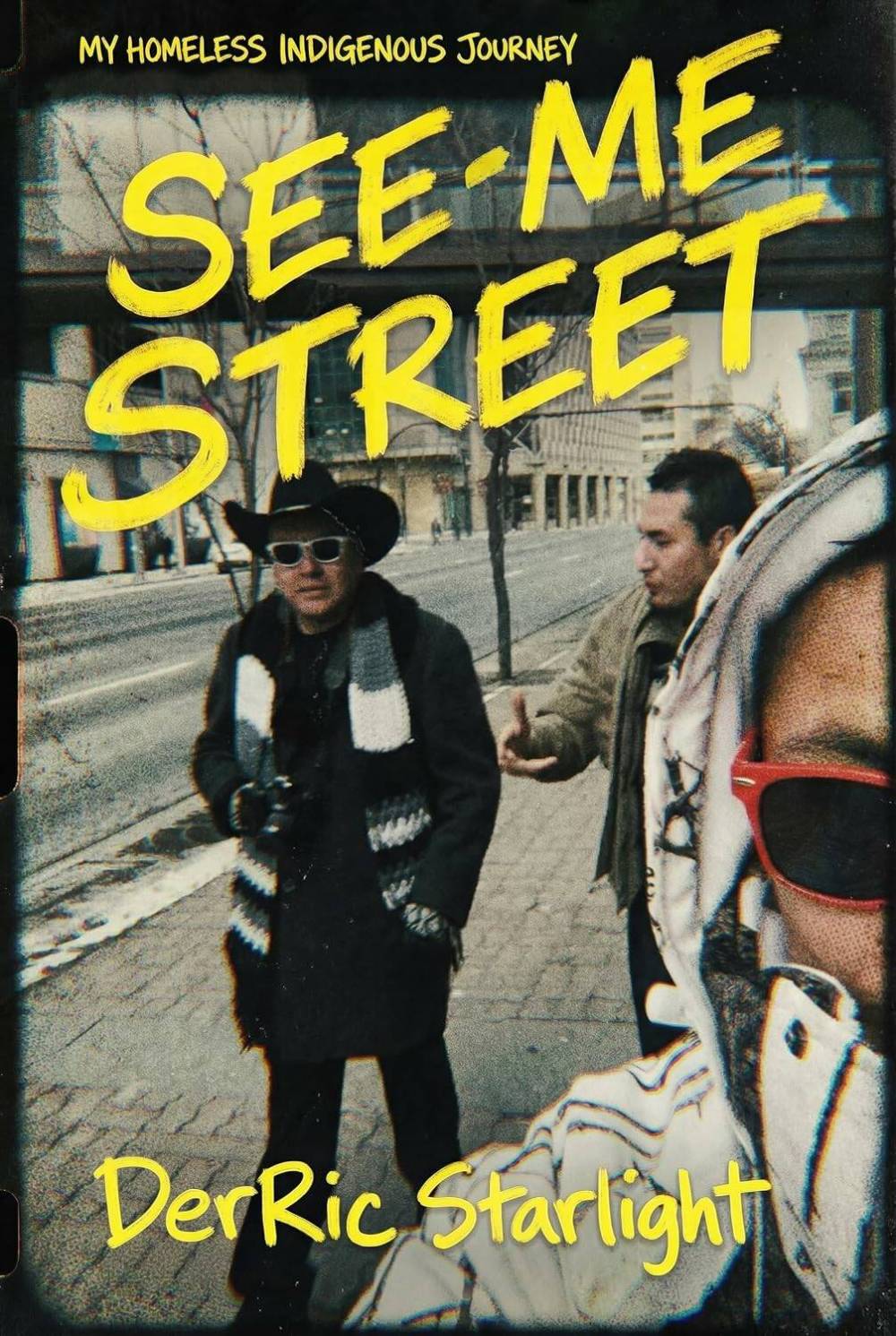
See-Me Street
Starlight is a comedian, puppeteer, screenwriter, keynote speaker and one-time pro-wrestling promoter. He is the creator of the Nuppets, a Muppet-like cast of Indigenous puppet characters.
He was living a pretty good life, with his agent booking him into rodeos, powwows and other events across western Canada, when he threw it all over to risk his health and life to hit the streets. He came up with the idea for See-Me Street after learning about Super Size Me, a documentary about by Morgan Spurlock about eating only McDonald’s food for a month.
But See-Me Street is more like Black Like Me, the 1961, bestselling classic that saw a white journalist work with a dermatologist to take on the appearance of a Black man and travel through the southern U.S. Starlight’s experience echoes those of journalist John Howard Griffin, who was shocked at the hatred he experienced.
Starlight recounts shelter staff refusing to call an ambulance for a dying woman, and he himself narrowly escaping death by pneumonia when no one will help him.
Another man he meets in an emergency department collapses and dies on the floor after being told several times he must wait. That will remind Winnipeg readers of the death of Brian Sinclair, an Indigenous man who in 2008 waited 34 hours for a routine catheter change and was found dead in a Winnipeg emergency waiting room.
Starlight moves with the homeless crowd on an endless circuit from shelter to shelter, through drop-in centres, the occasional food court and dumpsters, dodging fists and knives and drinking copious amounts of alcohol. Common sense dictates that people couldn’t survive life on the street without something to numb the pain. But the sheer amount of alcohol drunk by the people Starlight meets, and the endless drive to get that next bottle, is truly stunning.
For those without money to buy a share in a bottle, there’s always hand sanitizer or the large size of Listerine, known as a Jumbo. If life on the street is slow suicide, as Starlight points out, at least the last two kill more quickly.
Starlight meets a young Indigenous man looking to steal hand sanitizer from a hospital and tells him he’s better than that. The man responds, “I know that I am better than that. But better don’t keep you warm.”
Starlight admits he was a heavy drinker before he joined life on the street. But the life gets him anyway. He detoxes a couple of times and eventually lands in a residential treatment program that works. But then, as he points out, he had money and a strong connection to family, and wasn’t the classic anonymous face of a street person. He always had a way out. The young people who have aged out of foster care, the people harmed by the generational trauma of residential schools and the people who just had bad luck do not have his safety line.
They aren’t bad people, Starlight says; they’re survivors trying to make it through another day. It becomes clear that just making it through even one more day is a victory.
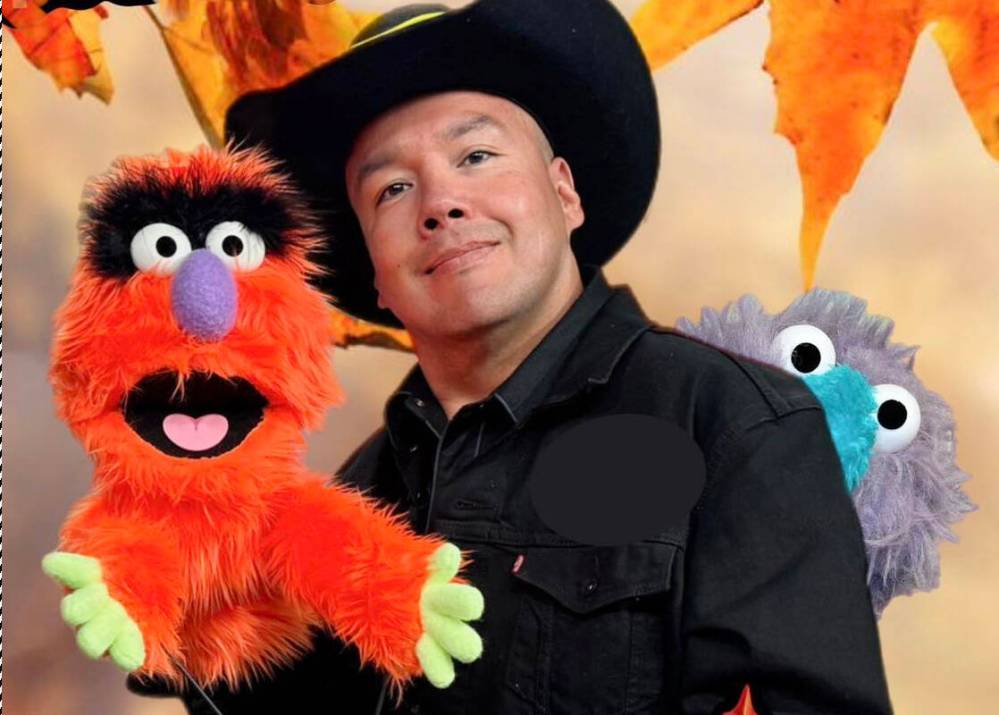
Supplied photo
Starlight is a comedian, screenwriter and puppeteer; he created the Nuppets, Indigenous characters inspired by the Muppets.
The diary entries take the reader into an unfamiliar land full of colourful characters and a surprising amount of laughter. But it offers little context or back story, leaving the reader at times dissatisfied. Starlight seems to step back from the situation, telling the story rather than showing it.

Even so, every now and then there’s a phrase that pulls the reader in — a house “that smelled like supper every night” or “(a) swig from the bottle. Just enough to feel human, not enough to feel brave.”
Starlight uses his safety line. Over the course of his recovery, he writes a children’s book, Morning Star’s Family, which was published in English, Tsuut’ina Dene language and Blackfoot language. And he is accepted as a member of the Jim Henson Company, home of the Muppets.
Even as Starlight’s time on the street has a happy ending, he knows many more won’t live to see that. He urges them to remember “You matter. Your story matters… You are never too far gone to find your way back.”
He urges readers to really see the people on the street — to see their strength behind the pain.
Julie Carl is a freelance journalist living in Toronto.