

Cubans sleep on seaside boardwalk to seek relief from crippling blackouts and summer heat
Advertisement
Read this article for free:
or
Already have an account? Log in here »
To continue reading, please subscribe:

Digital Subscription
One year of digital access for only $205*
- Enjoy unlimited reading on winnipegfreepress.com
- Read the E-Edition, our digital replica newspaper
- Access News Break, our award-winning app
- Play interactive puzzles
*First annual payment billed as $205.00 + GST for one year. This annual subscription will automatically renew at $233.00 + GST every 52 weeks (10% off the regular annual price of $259.35). Offer available to new and qualified returning subscribers only. Cancel any time.
To continue reading, please subscribe:
Add Free Press access to your Brandon Sun subscription for only an additional
$1 for the first 4 weeks*
- Enjoy unlimited reading on winnipegfreepress.com
- Read the E-Edition, our digital replica newspaper
- Access News Break, our award-winning app
- Play interactive puzzles
*Your next Brandon Sun subscription payment will increase by $1.00 and you will be charged $17.95 plus GST for four weeks. After four weeks, your payment will increase to $24.95 plus GST every four weeks.
Read unlimited articles for free today:
or
Already have an account? Log in here »
HAVANA (AP) — Alexey Ríos García awoke not to his bed in Cuba ‘s capital on Monday, but to an ocean breeze and the concrete of Havana’s famous seaside boulevard.
The 30-year-old construction worker ended up curling up with other Cubans on the city’s sea wall, the Malecón, in a desperate attempt to escape the suffocating summer heat during yet another islandwide blackout.
Sunday night marked the sixth islandwide blackout since Trump administration effectively cut Cuba off from oil — its main energy source — in January. The move plunged the endemically crisis-stricken country into free-fall. While authorities on Monday said they were working to get the power back on, much of the island still had no electricity.
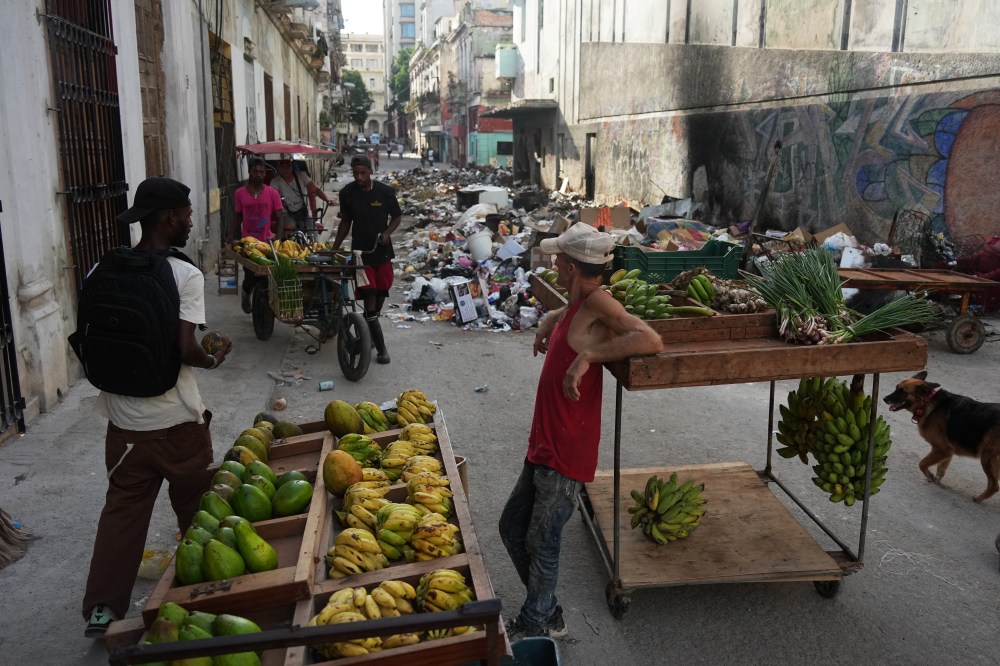
The energy grid collapses have left people like Ríos García with fewer options to get by as the U.S. maintains its pressure campaign against the communist-led government.
“Things are only getting worse. Tomorrow it’ll collapse again … and we’ll be back to sleeping on the Malecón,” said Ríos García, who used a piece of yellow foam as a pillow to cushion his head from the tough concrete.
The recurring power outages combined with the stifling heat have created collective insomnia on the island as residents struggle to get through the night. While some like Ríos García have slept on the boulevard, others struggle to get some rest on balconies and front porches.
The day of the latest blackout on Sunday, the temperature hit 93 degrees Fahrenheit (34 Celsius), but ended up feeling like 106 F when combined with the Caribbean’s 80% humidity levels.
It marks just one of a growing number of struggles on the Caribbean island where day-to-day life has grown increasingly difficult since the U.S. threatened to impose a tariff on any goods from countries that sell or provide it with oil. That was a debilitating blow after decades of U.S. economic sanctions, with the island’s infrastructure crumbling and a surge in migration.
Multiple outages since March
Sunday’s latest total blackout confirmed by the state-run energy company came after sweeping outages across western Cuba, including the cities of Pinar del Río, Matanzas and Havana the day before.
Energy authorities reported two nationwide grid collapses in March and three in July, along with several partial outages.
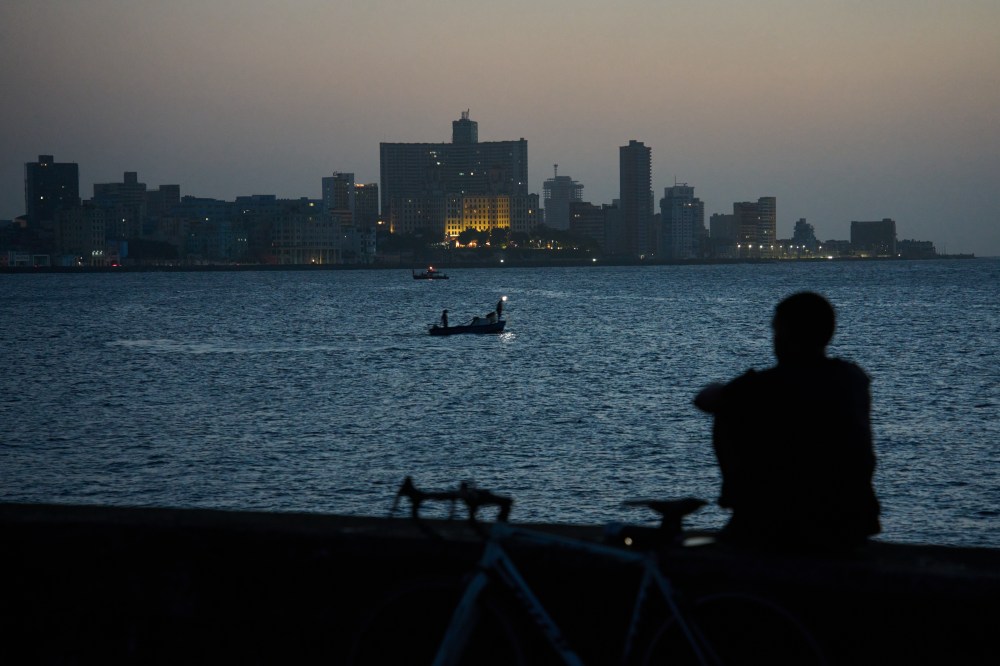
Rolling blackouts now last more than 20 hours a day. Obtaining gas and basic goods have become daylong endeavors. Cubans worry about precious food like frozen chicken rotting in their fridges without power. The island’s once bustling tourism industry has bottomed out, leaving even fewer with a source of income allowing them to get by. With little fuel, public transportation in Havana has effectively collapsed. Hospitals have been left reeling and have sought to install solar panels to keep the lights on.
Cubans have long displayed a characteristic resilience to hardship, adapting to twists and turns and unexpected shortages after decades of living under a U.S. trade embargo. But in recent months and years, a sense of hopelessness has increasingly gripped those still remaining on the island.
Among them was 30-year-old physical education teacher Elaine Delis Ramos, who curled up next to loved ones on the boardwalk on top of a thick blanket in search of a breeze.
“Just when we start hoping (the energy grid) wouldn’t collapse again, there it goes again,” she said. “We don’t have any solution.”
Related Articles
As blackouts stretch for days, life in Cuba revolves around small bursts of electricity
Advertisement Advertise With Us
Advertisement Advertise With Us