

Investigators look at why a plane was allowed to take off as President Trump’s helicopter approached
Advertisement
Read this article for free:
or
Already have an account? Log in here »
To continue reading, please subscribe:

Digital Subscription
One year of digital access for only $205*
- Enjoy unlimited reading on winnipegfreepress.com
- Read the E-Edition, our digital replica newspaper
- Access News Break, our award-winning app
- Play interactive puzzles
*First annual payment billed as $205.00 + GST for one year. This annual subscription will automatically renew at $233.00 + GST every 52 weeks (10% off the regular annual price of $259.35). Offer available to new and qualified returning subscribers only. Cancel any time.
To continue reading, please subscribe:
Add Free Press access to your Brandon Sun subscription for only an additional
$1 for the first 4 weeks*
- Enjoy unlimited reading on winnipegfreepress.com
- Read the E-Edition, our digital replica newspaper
- Access News Break, our award-winning app
- Play interactive puzzles
*Your next Brandon Sun subscription payment will increase by $1.00 and you will be charged $17.95 plus GST for four weeks. After four weeks, your payment will increase to $24.95 plus GST every four weeks.
Read unlimited articles for free today:
or
Already have an account? Log in here »
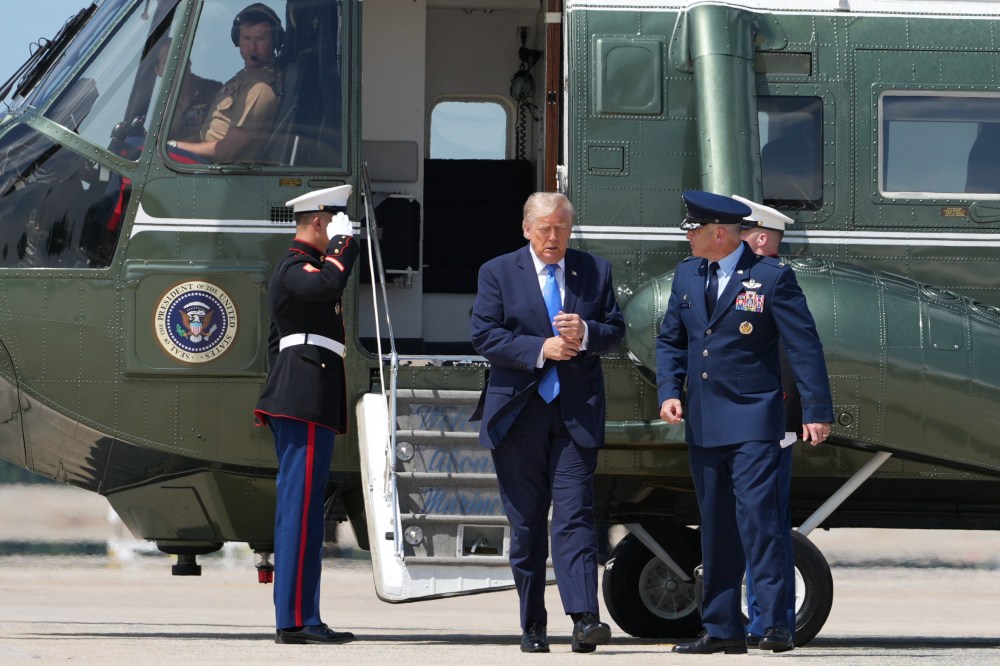
WASHINGTON (AP) — It’s not clear why a plane was allowed to take off as President Donald Trump’s helicopter was approaching Ronald Reagan Washington National Airport on Tuesday afternoon in an apparent violation of safety procedures put in place after last year’s midair collision near the busy airport.
Both the National Transportation Safety Board and the Federal Aviation Administration said Wednesday they were investigating what happened when a commercial jet took off just as Marine One left the White House for Andrews Air Force Base with the president aboard for the first leg of a West Coast trip.
The FAA decided after 67 people died on Jan. 29, 2025, when an airliner collided with an Army Black Hawk helicopter that all takeoffs and landings at the Washington, D.C., airport would be halted anytime a helicopter passes by on a conflicting route. The airspace near the White House and Reagan is heavily congested with military and commercial aircraft.
The airplane that took off Tuesday was climbing above Marine One as the helicopter approached, so the two aircraft were not on a collision course.
The FAA said in a statement that a preliminary investigation showed “there was a momentary loss of separation after which the aircraft continued to move away from one another.”
“The air traffic controller was in contact with both the commercial pilot and Marine One pilot during the loss of separation,” the FAA said.
The White House emphasized that Trump was never in danger.
“Marine One flights are piloted by some of the best aviators in the world, and at no point was the President in harm’s way,” White House spokesperson Kush Desai said in a statement.
The Marine Corps defended the actions of their helicopter pilots.
“There were no ‘close calls’ with the routine Marine One movement,” Marine Corps spokesperson Capt. Jacob Sugg said in an email. “Washington National Tower did not delay the helicopter crew, ask them to hold, or otherwise alter their flight profile.”
Tower audio appears to show confusion over Marine One’s plan
Audio recorded by Air Traffic Control shows the Marine One pilot calling the tower ahead of time: “Tower, just want to make sure you copy. Marine One, three minutes to lift.”
The air traffic controller didn’t acknowledge that transmission and after the pilot tried again, the controller said the message was broken and unreadable. So when Marine One’s pilot announced the helicopter was proceeding as briefed, the controller seemed surprised.
“Uh, Marine One, you said, uh, you’re proceeding as briefed?” the controller asked before giving the helicopter directions and commenting, “OK, no three minutes, roger, proceed as briefed.”
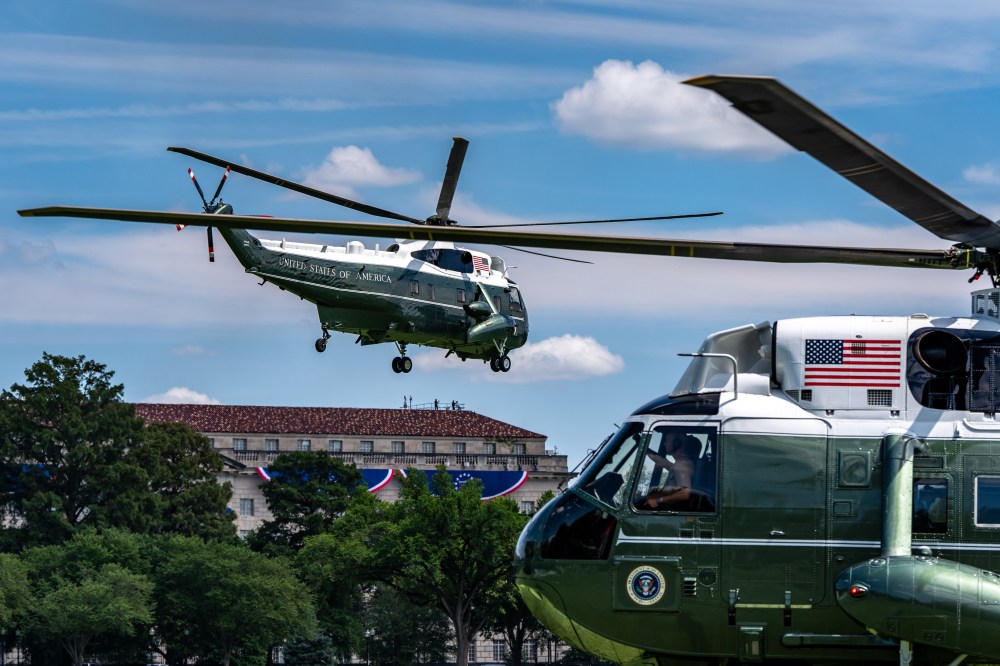
After the controller warned the helicopter about the plane taking off, the Marine One pilot said he saw the traffic and declared, “We’ll be doing a momentary delay.”
The Wall Street Journal first reported the incident.
Last year’s midair collision highlighted communication problems
Poor communication between the military and the civilian air traffic controllers at Reagan has been an issue in the past. It came out last spring after one of the hearings on the midair collision that a hotline connecting the Pentagon to the tower at Reagan hadn’t been working for more than three years, and the FAA hadn’t even realized it.
The FAA took steps to ensure that helicopters and airplanes would no longer share the same airspace around the airport shortly after the investigation into last year’s collision began. The rules also require air traffic controllers to use radar — and not rely on pilots’ eyes — to maintain separation and require all military aircraft to broadcast their locations.
The main group of family members of the victims of last year’s crash questioned why the government hasn’t done more to prevent collisions in the crowded airspace around Reagan in a post Wednesday on the social platform X. The family members have been urging Congress to reach a compromise and pass the package of aviation safety reforms that the NTSB recommended after the midair collision.
___
Funk reported from Omaha, Nebraska.