The antisocial network
Livestreamed mental-health meltdown underscores medium’s disturbing decline

Advertisement
Read this article for free:
or
Already have an account? Log in here »
To continue reading, please subscribe:

Digital Subscription
One year of digital access for only $205*
- Enjoy unlimited reading on winnipegfreepress.com
- Read the E-Edition, our digital replica newspaper
- Access News Break, our award-winning app
- Play interactive puzzles
*First annual payment billed as $205.00 + GST for one year. This annual subscription will automatically renew at $233.00 + GST every 52 weeks (10% off the regular annual price of $259.35). Offer available to new and qualified returning subscribers only. Cancel any time.
To continue reading, please subscribe:
Add Free Press access to your Brandon Sun subscription for only an additional
$1 for the first 4 weeks*
- Enjoy unlimited reading on winnipegfreepress.com
- Read the E-Edition, our digital replica newspaper
- Access News Break, our award-winning app
- Play interactive puzzles
*Your next Brandon Sun subscription payment will increase by $1.00 and you will be charged $17.95 plus GST for four weeks. After four weeks, your payment will increase to $24.95 plus GST every four weeks.
Read unlimited articles for free today:
or
Already have an account? Log in here »
On Tuesday evening, a well-known celebrity blogger, best known by the nom de plume Perez Hilton, opened up his TikTok account and began a livestream from his Miami home. What unfolded over the next 30 minutes horrified all who witnessed it — and should force the rest of us to take a very sober look at the ways social media can harm.
Until just a few nights ago, Hilton was not, to many who knew of him, a very sympathetic figure.
He’d risen to fame through the first decade of the 2000s on the back of his eponymous blog, which offered a constant drip of scandalous — or just plain embarrassing — paparazzi photos, mocking commentary and purported insider gossip.
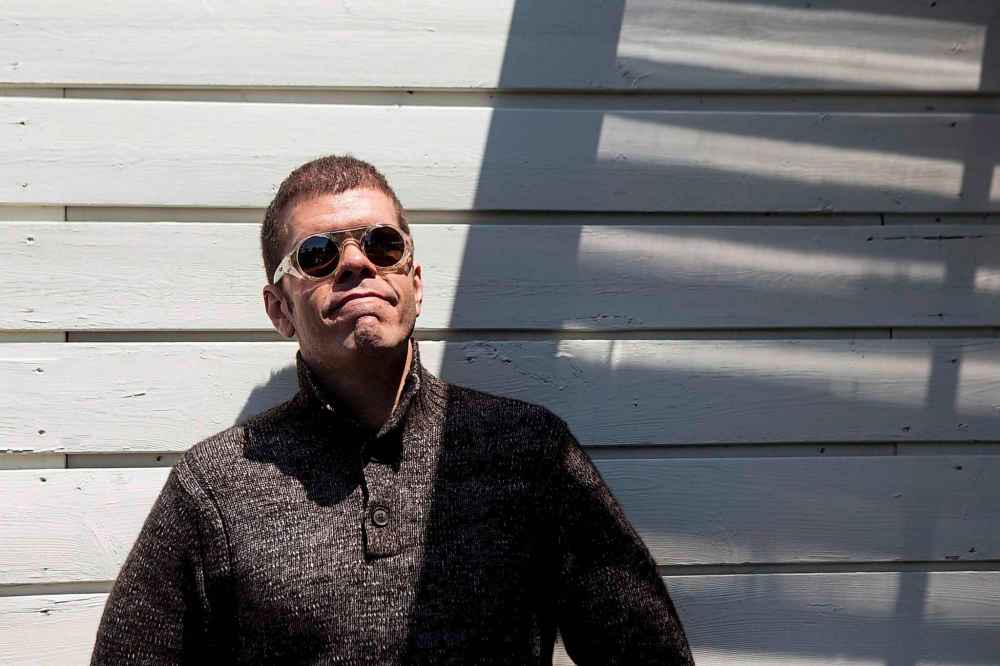
Hilton, whose real name is Mario Lavandeira Jr., wasn’t the first blogger to seize on celebrity gossip as a way to build fame, but he was the most vicious. His digs at actors — including minor-age teens — were often cruel and shockingly invasive. When celebrities publicly struggled with addiction, he didn’t hesitate to kick them when they were down.
Still, he was also a symbiotic part of the celebrity ecosystem, feeding a constant supply of attention to those whose careers depended on such notoriety. (Much of Kim Kardashian’s rise happened on Hilton’s blog.) It’s a dynamic that would, as the social internet matured, erupt into a full-blown attention economy; and Hilton profited immensely.
But in recent months the blogger had become increasingly erratic.
Earlier this year he was hospitalized for nearly a month with a severe septic infection; he survived, but when he came back online, he showed signs of escalating mental illness. He spoke strangely, and professed a sudden religiosity. Some followers grew concerned.
On Tuesday night, those warning signs escalated into a terrifying crisis. As hundreds of thousands of people watched live, Hilton, standing naked, grabbed a knife and began to slice at his own flesh over and over, cutting until he was completely covered in blood. He declared a desire to be killed by police, and stated this was what his viewers wanted.
On Reddit, many who witnessed the crisis were left traumatized. “I have a high tolerance and it was truly one of the worst videos I’ve ever seen,” one user wrote.
As clips of the livestream circulated widely on other social media sites, one witness warned others “to not watch it because it will scar you. I can’t get the image out of my head.”
Despite how high-profile the incident was, it took more than 15 minutes for TikTok to take the livestream down. (The company later stated this was due to a “moderator error.”)
Many witnessed it accidentally, as they scrolled through their otherwise unremarkable feeds — and given TikTok’s youthful audience, this undoubtedly includes many children.
Thankfully, according to statements from police and the blogger’s family, Hilton will survive. After several hours of contact with police, he was taken by ambulance to hospital. He remained there as of Thursday morning receiving treatment.
In most cases, such a catastrophic mental-health crisis should remain private. People deserve a chance to heal and not have the stigma of a major mental-health incident follow them forever. For that reason, I debated using his name here; yet in this case, there’s no point in withholding it. He’s simply too famous, the crisis too public and too widely seen.
But if we can’t offer him the dignity of full privacy after this incident, perhaps we can learn from it.
On some forums, the incident produced useful discussions about trauma and mental health. This was, for instance, the first time I’ve heard about the high prevalence of post-septic psychiatric disorders, including psychosis. Many who survive sepsis experience a range of mental-health challenges; this is potentially life-saving information.
There were also many constructive comments about how to reduce PTSD risk for those who had stumbled across the video. Most referred to a 2017 Oxford University study, which found that playing Tetris after a traumatic incident seems to disrupt the cognitive process that can produce intrusive PTSD symptoms.
All of this is good to know. But the discussion shouldn’t just be reactive; it shouldn’t stop at calling us to better understand and react to such a crisis.
It should also push us, once again, to take a deeper look at the media world in which we live, one which intersects deeply with mental health, and ask where its safeguards are failing.
In June, the federal government put forth Bill C-34, the Safe Social Media Act, which would ban children under the age of 16 from using social media. In this, Canada joins about 20 other countries that are focusing on the issue; Australia passed its ban in December, while the United Kingdom, France and others are weighing their own legislation.
This approach is deeply imperfect. If a ban passes, kids will inevitably find ways around it. (One thing that’s held true across generations: the average 13-year-old will be more tech-savvy than their parents.)
Yet something has to be done; the evidence is mounting that immersion in these worlds damages kids’ cognition, attention spans, socialization and self-esteem.
The bigger problem is that it’s not enough.
A social media ban for kids does not seriously contend with how harmful these platforms can be, and what risks exist when everyone has unfettered access to one another with relatively weak protections. It’s not clear what else it will take for societies to realize we need to gain better control of these functions.
Take livestreaming as an example. It can be a powerful tool for good or simple entertainment, allowing people to organize, chat and connect with each other in real time.
But that same visibility also makes it an obvious draw for some people going through crises, and may even heighten their disconnection or deepen their suffering.
There are multiple cases of people ending their lives on livestream, in some cases appearing to be galvanized by comments of viewers urging them to continue. In 2016, a 12-year-old girl in the United States died by suicide on livestream; the video was soon uploaded to Facebook, and remained viewable there for two weeks.

When so many people live most of their lives online, some, in their most painful hour, will choose to die that way too.
And as seen on Tuesday night, with TikTok moderators so slow to act even on such a high-profile account — action necessary to save both the suffering individual and the audience from cascading harm — this makes the world a much darker place.
It is not healthy for us to witness such things. It certainly wasn’t healthy for hundreds of thousands — and possibly millions now, since clips spread on X and elsewhere — of people, including children, to be involuntarily confronted with the graphic, traumatizing images of what should have been one very public person’s private health crisis.
May Hilton get the care he needs to heal, and be safe. May this incident push us to make our online media worlds safer too.
melissa.martin@freepress.mb.ca
Melissa Martin
Reporter-at-large
Melissa Martin reports and opines for the Winnipeg Free Press.
Every piece of reporting Melissa produces is reviewed by an editing team before it is posted online or published in print — part of the Free Press‘s tradition, since 1872, of producing reliable independent journalism. Read more about Free Press’s history and mandate, and learn how our newsroom operates.
Our newsroom depends on a growing audience of readers to power our journalism. If you are not a paid reader, please consider becoming a subscriber.
Our newsroom depends on its audience of readers to power our journalism. Thank you for your support.
Melissa Martin
Reporter-at-large
Melissa Martin reports and opines for the Winnipeg Free Press.
Every piece of reporting Melissa produces is reviewed by an editing team before it is posted online or published in print — part of the Free Press‘s tradition, since 1872, of producing reliable independent journalism. Read more about Free Press’s history and mandate, and learn how our newsroom operates.
Our newsroom depends on a growing audience of readers to power our journalism. If you are not a paid reader, please consider becoming a subscriber.
Our newsroom depends on its audience of readers to power our journalism. Thank you for your support.
Related Articles
Can federal legislation effectively rein in social media’s opaque algorithms and deceptive design features?

Advertisement Advertise With Us
Advertisement Advertise With Us
History
Updated on Friday, August 7, 2026 4:42 PM CDT: Corrects description of Bill C-34.