WHO says Congo’s fast-moving Ebola outbreak started months before it was declared

Advertisement

Advertise with us

BUNIA, Congo (AP) — The fastest-growing Ebola outbreak on record started in February, months before it was officially declared in mid-May, the World Health Organization said Monday as responders in eastern Congo struggle to catch up.

Read this article for free:


or

Already have an account? Log in here »

To continue reading, please subscribe:

Subscribe and receive a limited-edition Free Press branded hat or tote.

Digital Subscription

One year of digital access for only $205*

  • Enjoy unlimited reading on winnipegfreepress.com
  • Read the E-Edition, our digital replica newspaper
  • Access News Break, our award-winning app
  • Play interactive puzzles

*First annual payment billed as $205.00 + GST for one year. This annual subscription will automatically renew at $233.00 + GST every 52 weeks (10% off the regular annual price of $259.35). Offer available to new and qualified returning subscribers only. Cancel any time.

To continue reading, please subscribe:

Add Free Press access to your Brandon Sun subscription for only an additional

$1 for the first 4 weeks*

  • Enjoy unlimited reading on winnipegfreepress.com
  • Read the E-Edition, our digital replica newspaper
  • Access News Break, our award-winning app
  • Play interactive puzzles
Start now

*Your next Brandon Sun subscription payment will increase by $1.00 and you will be charged $17.95 plus GST for four weeks. After four weeks, your payment will increase to $24.95 plus GST every four weeks.

BUNIA, Congo (AP) — The fastest-growing Ebola outbreak on record started in February, months before it was officially declared in mid-May, the World Health Organization said Monday as responders in eastern Congo struggle to catch up.

The WHO regional director for Africa, Dr. Mohamed Yakub Janabi, told a news conference that sequencing indicated the outbreak’s start. He said some cases early on were wrongly attributed to other diseases, including malaria and typhoid.

“So we are chasing the virus, the virus is ahead of us,” Janabi said.
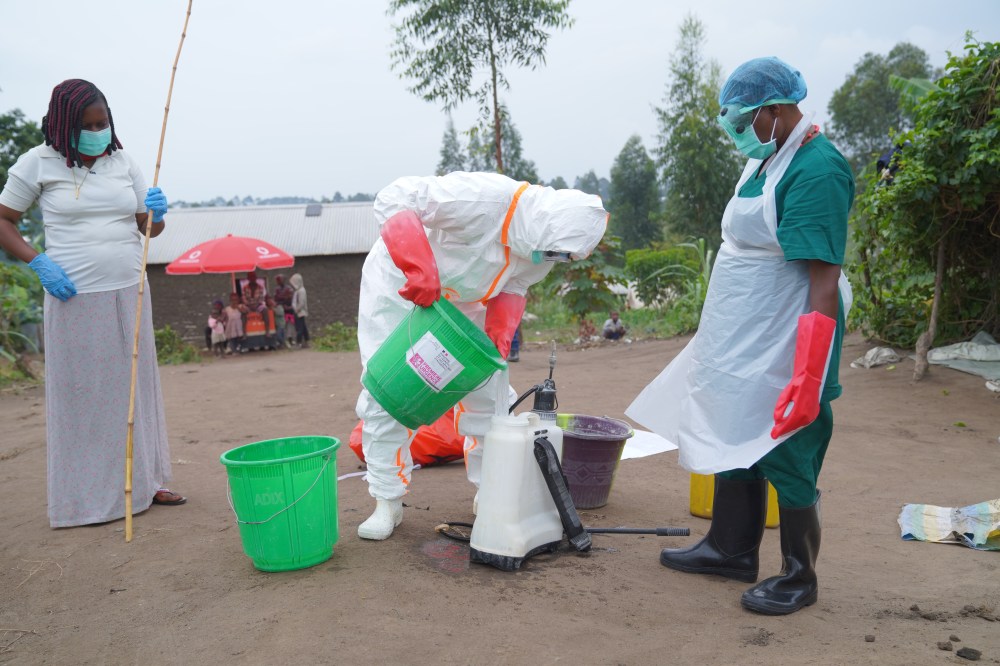
Wiza Bondele, centre, a health worker on the prevention and control team, seen at work in Ituri province, eastern Congo, Wednesday, Aug 5, 2026. (AP Photo/Dieudonne Dirole)

Dr. Thierno Balde, WHO’s incident manager for the Ebola response, said the genetic sequencing was conducted under the leadership of Dr. Steve Ahuka, head of the virology department at Congo’s National Institute for Biomedical Research.

Confirmed cases of Ebola in this outbreak have reached 4,200, including over 1,900 deaths, according to the latest government figures.

WHO assesses the global risk of spread as low because Ebola does not travel through the air, making it much harder to spread than respiratory viruses. Cases detected outside the affected region have so far been quickly identified and contained without leading to sustained transmission, according to the agency.

The outbreak declared on May 15 is unlike most previous ones for Ebola because the rare Bundibugyo virus responsible for it has no approved vaccines or treatments. Early testing was conducted for the more common type of Ebola, contributing to delays.

The outbreak is unfolding in some of the most challenging conditions imaginable, with strikes by some unpaid health workers, threats by rebel groups, anger from long-traumatized communities and misinformation asserting that Ebola isn’t real. Health teams travel remote, unpaved roads and have reported shortages of protective gear, while a vast population of displaced people struggles to find reliable water sources for washing hands.

This Ebola outbreak has killed more people at a quicker rate than any other, including the 2014-2016 outbreak in West Africa that is considered the worst on record with over 11,000 deaths out of at least 28,000 cases. That one took about eight months to reach 1,000 deaths.
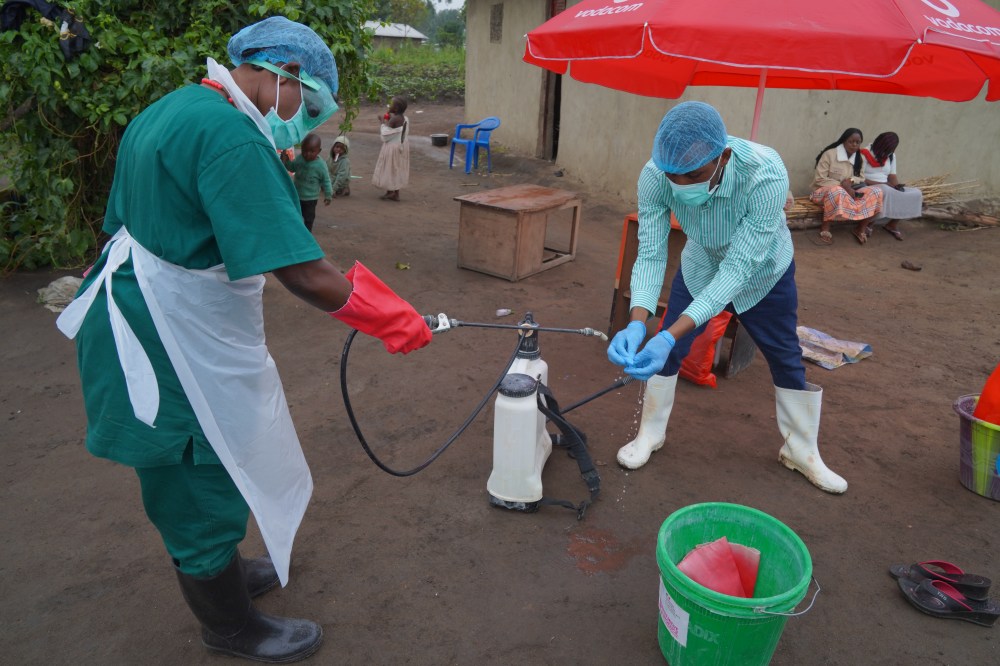
Wiza Bondele, Right, a health worker on the prevention and control team, seen at work in Ituri province, eastern Congo, Wednesday, Aug 5, 2026. (AP Photo/Dieudonne Dirole)

Ebola is rare but highly contagious and can be contracted from bodily fluids such as vomit, blood or semen and with contaminated surfaces and materials such as bedding and clothing. The disease it causes is severe and often fatal.

Last week, WHO Director-General Tedros Adhanom Ghebreyesu said Ebola is spreading faster than efforts to fight it. New cases are doubling in some hot spots, Tedros said on X after meeting with officials in the capital, Kinshasa.

Health authorities have said between 60% and 70% of new cases are recorded outside of contacts being monitored, and that the outbreak is spreading at an “alarming” rate.

Access to healthcare in the region already had been challenged by years of rebel conflict in one of Congo’s most remote and vulnerable areas, near the borders of South Sudan, Uganda and Rwanda. Now some pregnant women and others are avoiding health centers for fear of the virus, at risk to their lives.

Several past Ebola outbreaks have also been declared weeks or months late, including the 2014-2016 West Africa outbreak. That outbreak was declared in March 2014, although the first human case later was found to have occurred in December 2013.

___
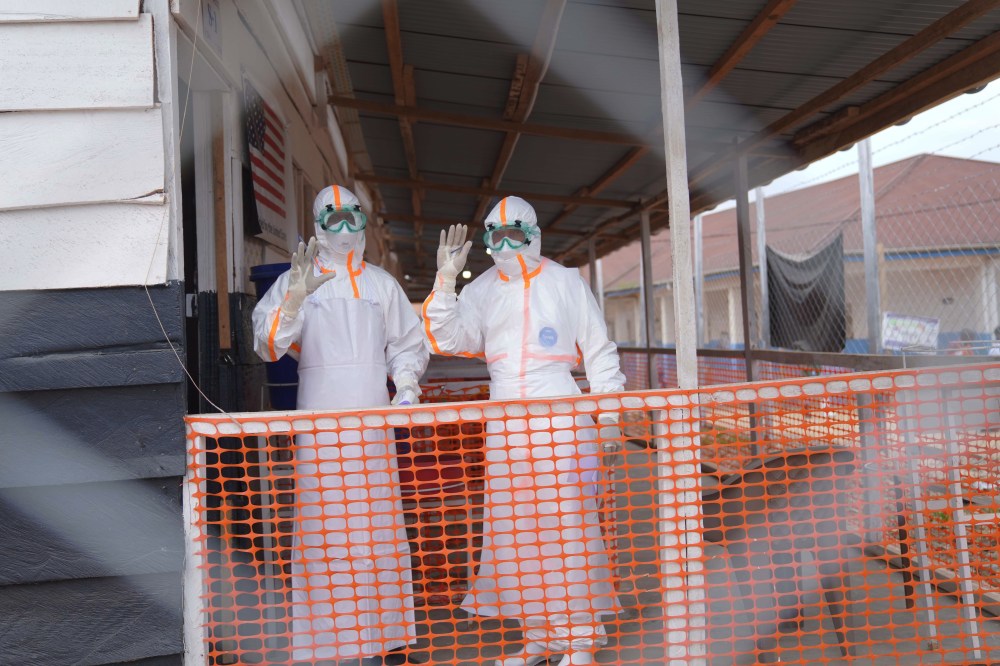
Health workers in protective gear wave inside an Ebola treatment centre in Bunia, Congo, Monday, Aug. 10, 2026. (AP Photo/Dieudonne Dirole)

Banchereau reported from Dakar, Senegal.

___

This version corrects the second reference to the WHO director-general to Tedros.

Report Error Submit a Tip

More Stories

Europe anxious as ever about immigration

Kyle Volpi Hiebert 5 minute read 2:00 AM CDT

It was only a matter of time before immigration would again panic Europe. The issue has roiled the continent’s politics ever since its 2015 migrant crisis, when 1.3 million unauthorized migrants crossed its borders that summer. They exposed a broken immigration system in the process, triggering a populist backlash that hasn’t dimmed.

All those same tensions were reignited in late July, when 72,000 migrants converged on the Spanish exclave of Ceuta in just 24 hours. The city — a holdover from Spain’s colonial era — is Europe’s only land border with Africa, nestled next to Morocco. It was almost instantly overrun.

Dozens of people died in the chaos, while the reasons for the sudden influx remain unknown. However, virtually all the arrivals were sent back to Morocco almost immediately; some spent a few days in makeshift holding centres. None were recorded as finding their way to mainland Europe.

Still, the episode inflamed divisions in a region caught in existential limbo. Ultranationalist political parties are ascendant — yet low birth rates and stagnant productivity mean Europe’s future largely hinges on accepting more newcomers.

Making the right move on rail lines

Editorial 4 minute read Preview

Making the right move on rail lines

Editorial 4 minute read 2:01 AM CDT

It’s a familiar sound in Winnipeg.

(No, not sirens, which are now almost a constant.)

It’s the 3 a.m. distant and lonesome train horn, the sound of a train crew working through the night hours, the horn giving its warning at level crossings. Some Winnipeggers hear far more: when the night is still enough, they can hear the rhythmic “tap-tap, tap-tap” of rail wheels on the tracks as long trains thread through the city.

Sounds romantic, in its own way. Unless, of course, the romance is close enough to your bedroom window to wake you up.

Read
2:01 AM CDT

Signs the Carney approach is working

Editorial 4 minute read Preview

Signs the Carney approach is working

Editorial 4 minute read Wednesday, Aug. 12, 2026

It was, if nothing else, a glowing review in trying times.

Matt Winkler, the editor in chief emeritus of Bloomberg News, spoke last week on Bloomberg Business News Daily about a recent Bloomberg analysis of the performance of the Canadian economy, and this country as a target for investment

“This is one of the greatest periods for overseas investment in Canada that we’ve seen in the century, and it may be unprecedented, because we have to wait for the rest of the year. … Money is pouring into Canada like we have not seen from everywhere. Stocks and bonds are the obvious beneficiaries,” Winkler said. He argued that Canada is both liked and seen as reasonable.

“The point is… Canada since Mark Carney became prime minister in 2025, has outperformed everyone in America and also the Eurozone and anywhere in the world. The 10 largest stock markets in the world, Canada appreciated the most, more than 40 per cent. … Its bond market is also doing great, partially because the inflation rate in Canada, unlike the Eurozone or America, is actually trending lower, and is outperforming both the Eurozone and the U.S.”

Read
Wednesday, Aug. 12, 2026

Moving rail lines outside city would make Winnipeg ‘major transportation hub’

Carol Sanders 6 minute read Preview

Moving rail lines outside city would make Winnipeg ‘major transportation hub’

Carol Sanders 6 minute read Wednesday, Aug. 12, 2026

After decades of calls to move rail traffic to the outskirts of Winnipeg, a plan that would benefit residents, railways and taxpayers is now on track, says the former Winnipegger leading the way.

A rail line bypass south of the city, using Crown-owned land and the Manitoba Hydro corridor, would take 20 years to complete, remove 120 railway crossings that are a safety risk and free up about 250 acres of Winnipeg land over time for development, Lloyd Axworthy said Wednesday.

“The visions that we have have to be implemented,” Axworthy said at a news conference announcing the launch of a 90-day feasibility study to move freight rail traffic out of Winnipeg’s urban core along Manitoba Hydro’s southern transmission corridor, connecting east to west along the Perimeter Highway.

The former federal transport minister and Manitoba MP was tasked by Premier Wab Kinew in October 2024 to lead a two-year rail relocation feasibility study.

Read
Wednesday, Aug. 12, 2026

Fusion pop-up coming to street food festival

Tiago Resko 4 minute read Preview

Fusion pop-up coming to street food festival

Tiago Resko 4 minute read 2:01 AM CDT

After surviving breast cancer and watching her husband live through a brain tumour, Marilyn Magtoto decided it was time to take a chance.

Magtoto left her corporate job as a mortgage specialist in July to start M3 Cravings, a pop-up restaurant that blends the traditional Filipino cuisine she grew up on with Mexican street food.

“To me it was like, how much longer do I want to put on hold this thing I’ve been wanting to do for a while now?” Magtoto says. “People may think I’m crazy for leaving behind a corporate professional career I’ve been doing for 22 years, but you know what — it’s worth it.”

Magtoto will now have the chance to share her food at the Streat Feast Festival at The Forks to Sunday; the event brings together people from a variety of backgrounds to share their culture through food, art and performances.

Read
2:01 AM CDT

PCs say Hutterite colonies singled out by Bill 21

Alex Lambert 4 minute read Preview

PCs say Hutterite colonies singled out by Bill 21

Alex Lambert 4 minute read 2:01 AM CDT

SOURIS — Members of Hutterite colonies in the province took aim at the NDP government’s proposed changes to drinking water legislation during a public meeting Thursday in Souris.

The meeting was hosted by Progressive Conservative MLA Colleen Robbins (Spruce Woods) to hear from rural residents about their concerns over Bill 21, which the government says will improve oversight on wells and other water systems in the province.

“There’s not enough clarity, but I feel that the overreach that this bill will bring is not clearly defined, and it could have a lot of negative consequences,” attendee Gilbert Hofer, a member of Green Acres colony near Wawanesa, said after the meeting, which drew about 20 people.

The legislation would allow public health officers to designate the type of water source based on its intended use, water quality and use duration rather than solely the number of connections it has.

Read
2:01 AM CDT