Beyond keeping out bugs, the screen door safeguards Americans’ trust in others
Advertisement
Read this article for free:
or
Already have an account? Log in here »
To continue reading, please subscribe:

Digital Subscription
One year of digital access for only $205*
- Enjoy unlimited reading on winnipegfreepress.com
- Read the E-Edition, our digital replica newspaper
- Access News Break, our award-winning app
- Play interactive puzzles
*First annual payment billed as $205.00 + GST for one year. This annual subscription will automatically renew at $233.00 + GST every 52 weeks (10% off the regular annual price of $259.35). Offer available to new and qualified returning subscribers only. Cancel any time.
To continue reading, please subscribe:
Add Free Press access to your Brandon Sun subscription for only an additional
$1 for the first 4 weeks*
- Enjoy unlimited reading on winnipegfreepress.com
- Read the E-Edition, our digital replica newspaper
- Access News Break, our award-winning app
- Play interactive puzzles
*Your next Brandon Sun subscription payment will increase by $1.00 and you will be charged $17.95 plus GST for four weeks. After four weeks, your payment will increase to $24.95 plus GST every four weeks.
Read unlimited articles for free today:
or
Already have an account? Log in here »
ANN ARBOR, Mich. (AP) — The metallic screech followed by a sad excuse for a bang. The tap-tap-tap of a cat eager to come in before dusk. The erratic thumping of moths doomed by the siren-pull of the kitchen light. Morning brings the soft knock of a neighbor, friend or relative who knows there is no need for the formality of ringing a doorbell.
The screen door, despite — or thanks to — its modest making, is fundamental to the American home, to the suburban and rural soundscape and to what remains of our collective innocence.
The door that is barely a door. Made of lightweight aluminum or wood, with a wire mesh and a latch lock that gives under a thumb nudge, it is about as shabby as a barrier gets. Its mission to let the breeze in and keep the mosquitos, pesky flies and assorted vermin out appears simple, but its impact goes beyond that.
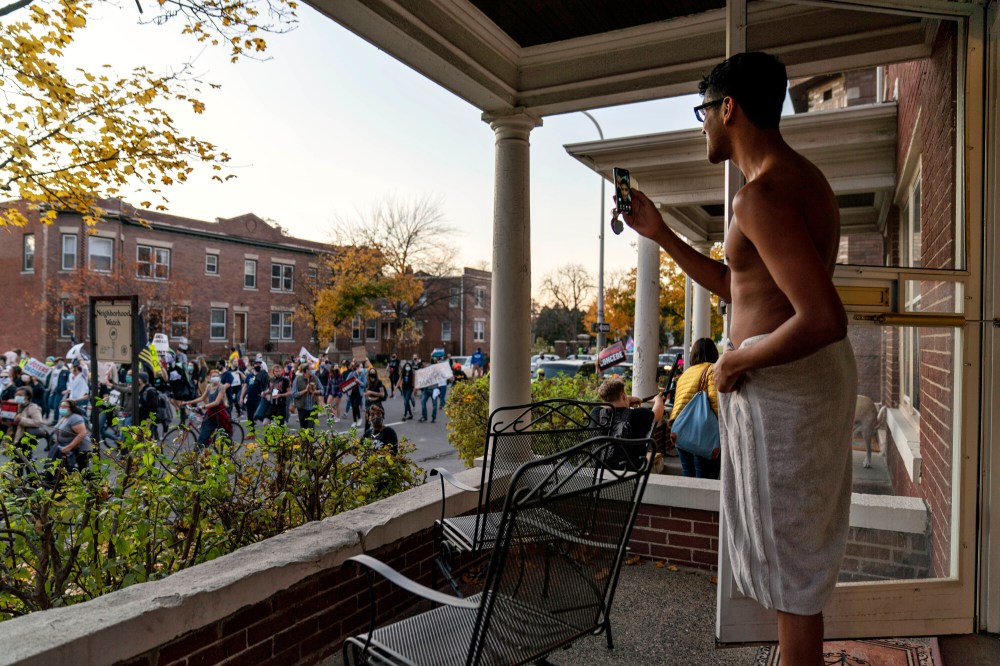
Semi-transparent, a screen door is an invitation, allowing a peek inside. It says someone is there. In architectural terms, it means this threshold wants breaching.
The screen door creates a liminal space, a quasi-open passage where one can see, hear and even smell what nature and the local community offer on the other side.
Its sieve-like surface gives way to the semi-private backyard. It allows a grandmother to leave the sturdy, opaque real backdoor wide open, almost forgotten, until it is time to go to bed. In the meantime, she can listen to songbirds, contemplate her flowerbeds or keep an eye on her grandchildren at play.
Fittingly, there exists what appears to be an apparently apocryphal origin story of the screen door. It says it was invented by a woman in Iowa in the late 19th century. Accurate or not, it is one of those modern myths worth embracing.
As if it were a symbol of good behavior, the screen door resists being slammed. Its closing mechanism cushions the blow, gently pushing back against the tug of a human hand, wheezing as it finally gives in.
At best, the creaking of a screen door announces a loved one’s arrival. It demands our trust in the outside world. It tempers our anger, quells our suspicions.
Once shut, the quiet says you are home.
___
Part of a recurring series, “American Objects,” marking the 250th anniversary of the United States. For more American objects, click here. For more stories on the anniversary, click here.