Making the right move on rail lines
Advertisement
Read this article for free:
or
Already have an account? Log in here »
To continue reading, please subscribe:
Digital Subscription
One year of digital access for only $1.44 a week*
- Enjoy unlimited reading on winnipegfreepress.com
- Read the E-Edition, our digital replica newspaper
- Access News Break, our award-winning app
- Play interactive puzzles
*Billed as $5.77 plus GST every four weeks. After 52 weeks, price increases to the regular rate of $19.95 plus GST every four weeks. Offer available to new and qualified returning subscribers only. Cancel any time.
To continue reading, please subscribe:
Add Free Press access to your Brandon Sun subscription for only an additional
$1 for the first 4 weeks*
- Enjoy unlimited reading on winnipegfreepress.com
- Read the E-Edition, our digital replica newspaper
- Access News Break, our award-winning app
- Play interactive puzzles
*Your next Brandon Sun subscription payment will increase by $1.00 and you will be charged $17.95 plus GST for four weeks. After four weeks, your payment will increase to $24.95 plus GST every four weeks.
Read unlimited articles for free today:
or
Already have an account? Log in here »
It’s a familiar sound in Winnipeg.
(No, not sirens, which are now almost a constant.)
It’s the 3 a.m. distant and lonesome train horn, the sound of a train crew working through the night hours, the horn giving its warning at level crossings. Some Winnipeggers hear far more: when the night is still enough, they can hear the rhythmic “tap-tap, tap-tap” of rail wheels on the tracks as long trains thread through the city.
File
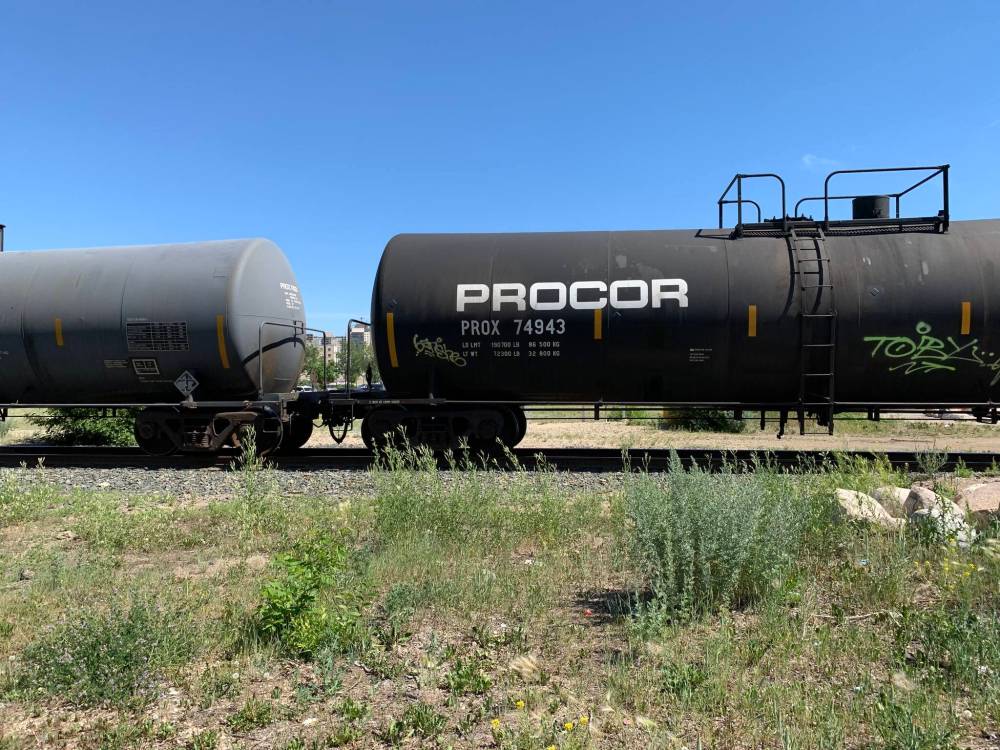
Dangerous goods travel by rail through Winnipeg
Sounds romantic, in its own way. Unless, of course, the romance is close enough to your bedroom window to wake you up.
The bottom line is that it’s also something that residents of Winnipeg shouldn’t have to deal with. Major rail corridors and rail yards shouldn’t be in the backyards of residents. City streets shouldn’t be blocked by trains and whole parts of the city shouldn’t have to face the risks of accidents and potential derailments.
Accidents happen, especially when you’re dealing with thousands of miles of track and lengthy trains of tanker cars. The only question, really, is who ends up being the winner of the disaster lottery. Everything in the world can be done to keep railways safe, but rail wheels can crack or their axles can overheat, tracks or switches can fail.
Railways in Canada have, on average, around 1,000 accidents with 60 deaths per year. The fact is that railroad accidents tend to take place in areas outside cities — but that’s because the majority of rail lines are not in urban areas.
So Wednesday’s announcement of a new plan to take rail lines out of Winnipeg is good news.
The current plan being reviewed? To examine the feasibility of running a new bypass rail line south of Winnipeg on a combination of Crown-owned land and the Manitoba Hydro transmission corridor. The work would take two decades — and a lot of money — but would remove more than 100 railway crossings and open up 250 acres of land for potential development.
All of that is good and all of it is necessary. Rail lines through a city — especially, as in Winnipeg’s case, when they don’t have to run through a city but are essentially grandfathered in — are a safety risk.
But there are caveats. One is cost — and not just the cost of building the new rail lines.
There are the costs of decommissioning old rail lines and infrastructure such as bridges, assuming financial responsibility for the infrastructure that remains and the costs of workarounds while decades of construction take place.
This is not untrammelled forest land being purchased from a developer to create new greenspace. This is heavily-used industrial land.

And railway companies are businesses — they will want to make the best deal they can, one which may look at the question of who should shoulder the environmental costs of remediating rail corridors that have decades of potential contamination, everything from carcinogens that have leached from creosoted railway ties to herbicides for plant control to incidental spills of fuel and lubricating oils.
The North End rail yards are essentially a legacy site, with rail installations dating back to the 1880s, which means that the lands have seen materials and potential contamination that would be a long way from current environmental standards.
There will be building costs, cleanup costs, planning costs — and the list goes on. While Winnipeg certainly shouldn’t have railway corridors in city neighbourhoods, that doesn’t mean that the city and the provincial and federal governments should carry all the costs to handle the change.
It can be done — The Forks is living, breathing proof of that.
But, just as in trade negotiations, no deal is better than a bad deal.