

A bridge out of time
Corroded Arlington overpass yields way for new hope of spanning urban chasm

Advertisement
Read this article for free:
or
Already have an account? Log in here »
To continue reading, please subscribe:

Digital Subscription
One year of digital access for only $205*
- Enjoy unlimited reading on winnipegfreepress.com
- Read the E-Edition, our digital replica newspaper
- Access News Break, our award-winning app
- Play interactive puzzles
*First annual payment billed as $205.00 + GST for one year. This annual subscription will automatically renew at $233.00 + GST every 52 weeks (10% off the regular annual price of $259.35). Offer available to new and qualified returning subscribers only. Cancel any time.
To continue reading, please subscribe:
Add Free Press access to your Brandon Sun subscription for only an additional
$1 for the first 4 weeks*
- Enjoy unlimited reading on winnipegfreepress.com
- Read the E-Edition, our digital replica newspaper
- Access News Break, our award-winning app
- Play interactive puzzles
*Your next Brandon Sun subscription payment will increase by $1.00 and you will be charged $17.95 plus GST for four weeks. After four weeks, your payment will increase to $24.95 plus GST every four weeks.
Read unlimited articles for free today:
or
Already have an account? Log in here »
It’s an interesting quirk of timing, perhaps, that the end of two of Winnipeg’s most unlovely features are coming into view in the same few weeks. The rail lines that split the city in half, and the bridge that was built to tie it back together. The original problem, and the solution.
And in the confluence of those two ends, we have an opportunity to dream of what a better Winnipeg can be.
At a news conference on Wednesday, former federal transport minister Lloyd Axworthy laid out a vision for a rail line bypass that would remove more than 120 railway crossings from Winnipeg, route them through Crown and Manitoba Hydro corridor land south of the city, and reclaim 250 acres in the urban core for greenspace and development.
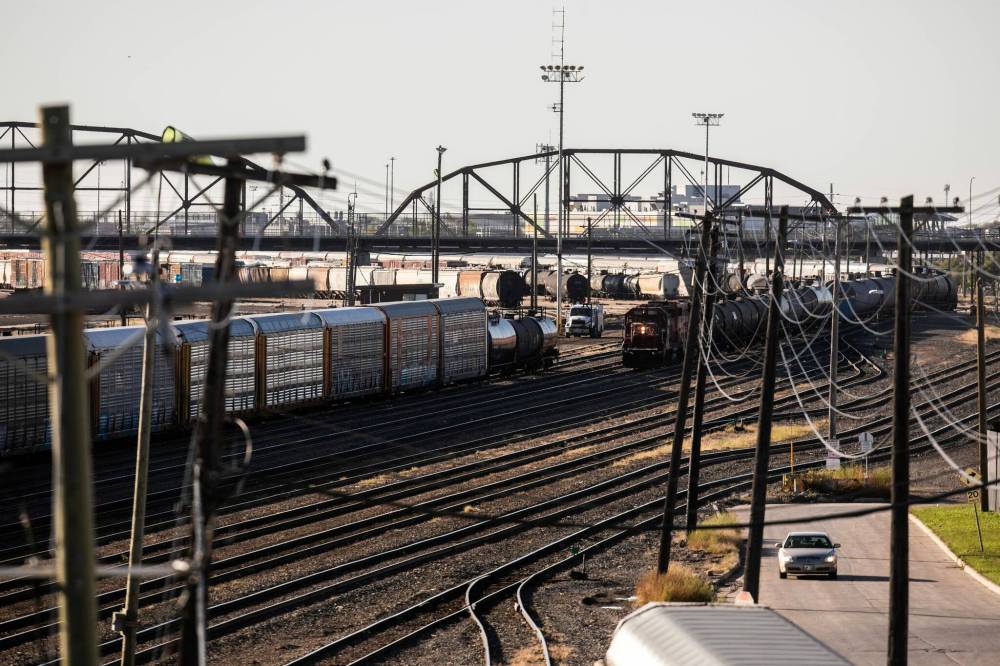
The shuttered Arlington Street Bridge in 2024. (Mikaela MacKenzie / Free Press files)
The next step is to focus on how to make it happen. Nothing of this scope comes easy. This new bypass plan emerged from a two-year feasibility study that Premier Wab Kinew had tasked Axworthy with back in 2024. Now, Axworthy will helm a new 90-day feasibility study zooming in on that route specifically.
If the results of that study are promising, and if the plan moves forward, it won’t be quick. The initial changes would be slow, Kinew said: in the first few years, it could look as simple as a rail crossing here and there vanishing. The full re-route would take 20 years to complete, with a lot of careful balancing to protect commerce, the environment and jobs.
That’s all the more reason to act now. In his comments to media on Wednesday, Axworthy emphasized that the window of opportunity to make the move will close; even if that weren’t the case, it’s time. We’ve wrestled with the problem of the rail lines long enough. They make Winnipeg a worse and less hospitable place for residents. They’ve got to go.
The “whys” are fairly self-evident. In a city as car-dependent as this, one of the first complaints about the rail lines is their effect on traffic. (The silver lining, I suppose, is it’s a convenient excuse: “So sorry I’m late, I got stuck behind a train” is an instantly sympathetic situation to most Winnipeggers.)
The more overarching problem runs deeper. Most major cities in the world do not have their urban core bisected by freight rail. The tracks and particularly the massive rail yard that borders the North End form a bleak visual barrier, dividing the city both physically and spiritually, hampering cohesive development and separating neighbourhoods from each other.
More than a century ago, the Arlington Bridge was supposed to bring the sides together. It was completed in 1912, for a total cost of almost $260,000. In today’s dollars, that’s a bit north of $7 million — though just try and build a 2,155-foot bridge for that amount now. (The city’s proposed new design will cost over $150 million, not including removal of the old.)
Here, let’s give the grand old bridge some respect. To Winnipeggers at the time, it must have seemed a marvel, a sign of the immense promise contained in this bustling young city on the plains. A monument of modern engineering, proof of all that their hometown was becoming, and a busy thoroughfare to keep a growing community connected.
Times changed. The bridge aged. The economic hope that once surrounded it died. What remained, in modern times, was a visual testament to a Winnipeg mired in the decay of what had come before. Like the rail yards it spanned, the bridge was — dare I say it? — grimly functional but ugly. Rusting steel on concrete piers, closing in heavy, like a cage.
Now, little by little, the visual signs of that chapter of Winnipeg’s life are transforming. It’s been almost three years since the bridge was suddenly closed after city inspectors found it was unsafe, the steel too corroded. Further assessments found it was unsalvageable. With that, one of Winnipeg’s most characteristic features met an unceremonious end.
Dismantling of the 114-year-old bridge began a few weeks ago; it will take 18 months to finish. Already, if you drive north up Arlington Street and come to a stop at the construction fencing blocking off the bridge’s mouth, you can see the first stage of its slow demise, the bones of its old construction emerging into view.
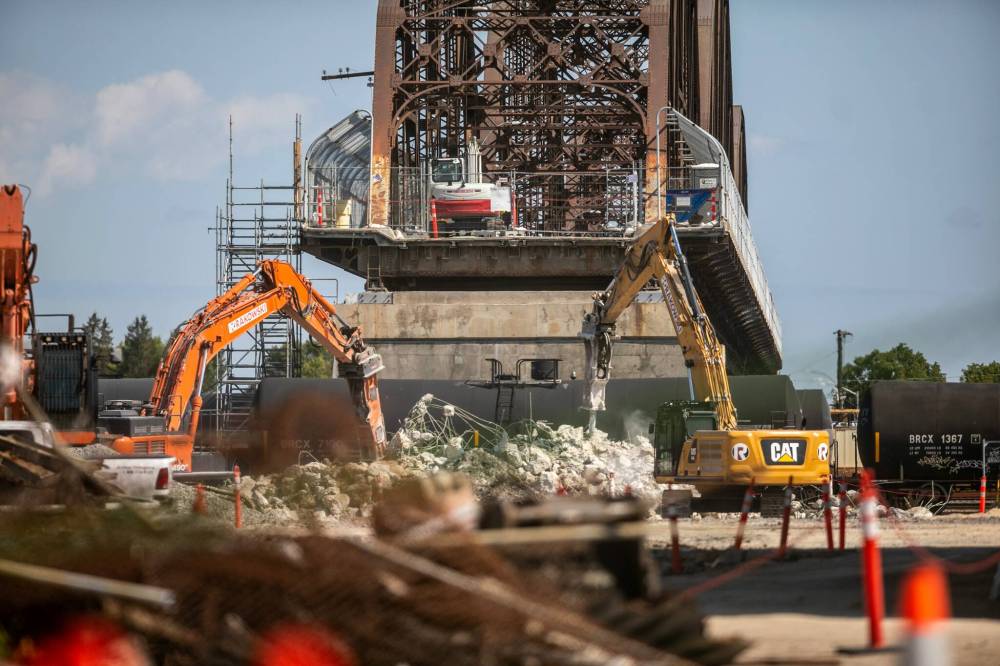
MIKAELA MACKENZIE / FREE PRESS
The south ramp of the Arlington Street Bridge has been reduced to rubble. The demolition is expected to take 18 months.
I wish I could say that, when I went to observe the bridge earlier this week, I felt a swell of sad nostalgia at the sight of it coming down. I didn’t. It had lived the most impressive measure of its life well before I was born. A landmark, but not a happy one, and it doesn’t make one too wistful to see even a locally famous eyesore go.
Yet we shouldn’t forget that, even as the bridge deteriorated, it clung to its purpose of connection. In feedback about the city’s design for a new bridge, community advisers gave moving statements about how vital it had been to unite divided neighbourhoods and allow folks travelling by foot or bicycle or wheelchair to remain linked to the rest of the city.

We should keep those sentiments top of mind as Axworthy works to gas up momentum for a relocation plan. The rail lines and the bridge were always tied together. What will Winnipeg be like when the rail lines are gone? It’s too early to say, but what is certain is that there will be more potential.
For years, when I drove over the Arlington Bridge, I would glance out over the brown-and-grey expanse of the rail yards and try to imagine something different. A brief reverie of what it would be like to look out, not on a vista of metal and dirt, but on a scene of trees and green, of pedestrian routes and places for people to live, relax and play.
It could be beautiful, if we make it that way — and that beauty could better support the neighbourhoods nearby.
Above all, a total rail reroute would make Winnipeg feel more connected, seamless, and alive. There’s a long way to go. Yet in a city that, for better and worse, has often stubbornly stayed the same, constrained by the relics of a past that no longer make sense in the present, even the growing talk of change feels hopeful.
melissa.martin@freepress.mb.ca
Melissa Martin
Reporter-at-large
Melissa Martin reports and opines for the Winnipeg Free Press.
Every piece of reporting Melissa produces is reviewed by an editing team before it is posted online or published in print — part of the Free Press‘s tradition, since 1872, of producing reliable independent journalism. Read more about Free Press’s history and mandate, and learn how our newsroom operates.
Our newsroom depends on a growing audience of readers to power our journalism. If you are not a paid reader, please consider becoming a subscriber.
Our newsroom depends on its audience of readers to power our journalism. Thank you for your support.
Melissa Martin
Reporter-at-large
Melissa Martin reports and opines for the Winnipeg Free Press.
Every piece of reporting Melissa produces is reviewed by an editing team before it is posted online or published in print — part of the Free Press‘s tradition, since 1872, of producing reliable independent journalism. Read more about Free Press’s history and mandate, and learn how our newsroom operates.
Our newsroom depends on a growing audience of readers to power our journalism. If you are not a paid reader, please consider becoming a subscriber.
Our newsroom depends on its audience of readers to power our journalism. Thank you for your support.
Advertisement Advertise With Us
Advertisement Advertise With Us