Full steam ahead
Character revisits life’s memories, both good and bad, on the eve of his death
Advertisement
Read this article for free:
or
Already have an account? Log in here »
To continue reading, please subscribe:

Digital Subscription
One year of digital access for only $205*
- Enjoy unlimited reading on winnipegfreepress.com
- Read the E-Edition, our digital replica newspaper
- Access News Break, our award-winning app
- Play interactive puzzles
*First annual payment billed as $205.00 + GST for one year. This annual subscription will automatically renew at $233.00 + GST every 52 weeks (10% off the regular annual price of $259.35). Offer available to new and qualified returning subscribers only. Cancel any time.
To continue reading, please subscribe:
Add Free Press access to your Brandon Sun subscription for only an additional
$1 for the first 4 weeks*
- Enjoy unlimited reading on winnipegfreepress.com
- Read the E-Edition, our digital replica newspaper
- Access News Break, our award-winning app
- Play interactive puzzles
*Your next Brandon Sun subscription payment will increase by $1.00 and you will be charged $17.95 plus GST for four weeks. After four weeks, your payment will increase to $24.95 plus GST every four weeks.
Read unlimited articles for free today:
or
Already have an account? Log in here »
Bestselling author Matt Haig returns to the world of his blockbuster novel The Midnight Library in his newest title, The Midnight Train, billed as a companion to the 2020 hit. Less a sequel and more a sister, The Midnight Train is a tender reminder to live life to the fullest.
Once again exploring what happens when we die — and, more profoundly, what happens when we truly live — The Midnight Train takes on the concept of life flashing before your eyes when you die. Science confirms it: our brains show strong electrical activity for a few moments after our hearts stop beating, and survivors claim to relive memories. So when Wilbur Budd dies of a heart attack, it registers as a small surprise that he has the opportunity to replay his memories one by one.
At one minute after midnight on the eve of his death, Wilbur experiences a fleeting sense of calm and harmoniousness. Then a train arrives in his subconsciousness bearing a figure from Wilbur’s past, a kind bookstore owner named Mrs. Bagdale, who volunteers to serve as his spirit guide as he travels through his life to the train’s final destination: eternity.
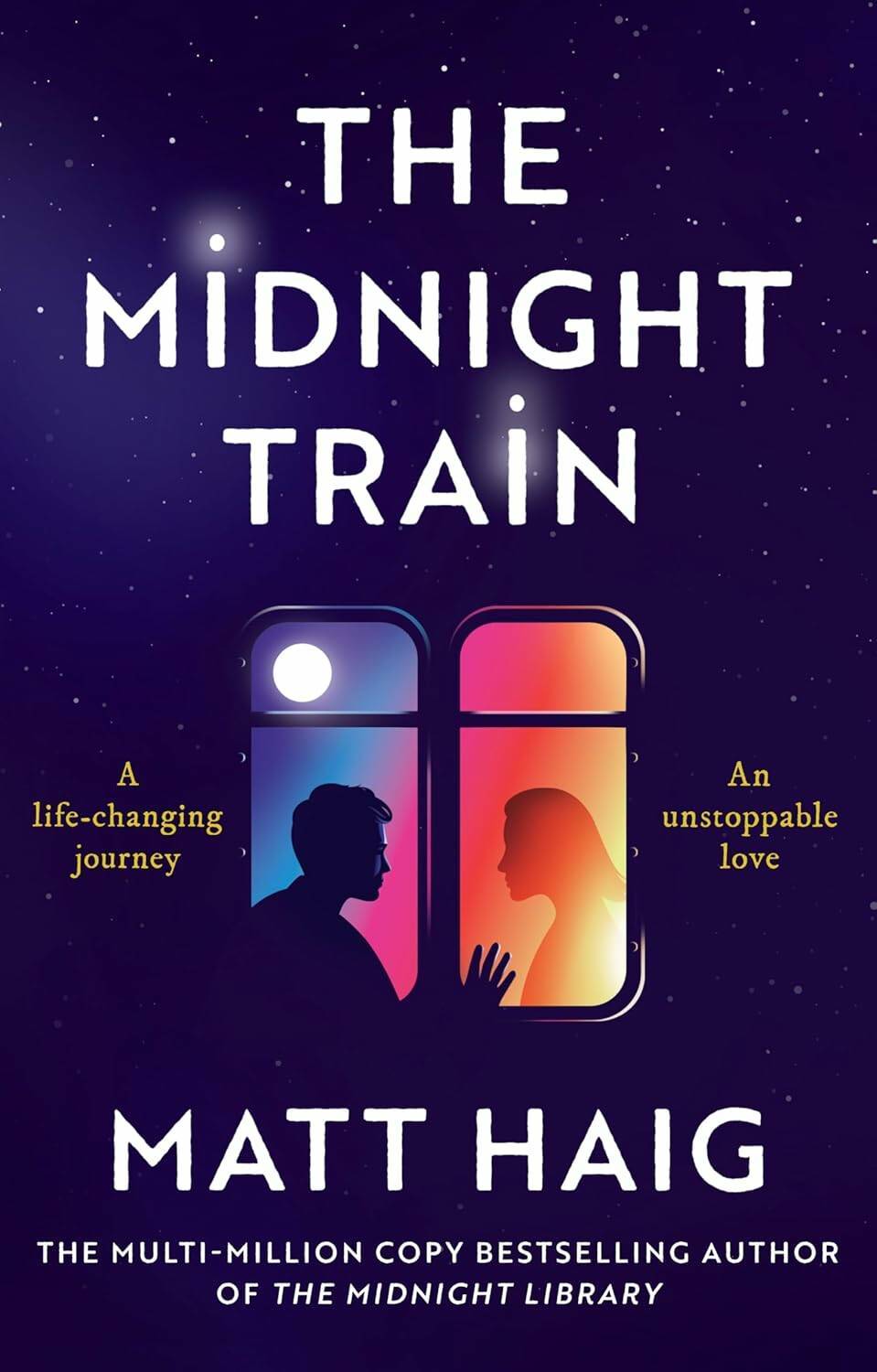
The Midnight Train
There only four rules Wilbur must follow: don’t meddle, don’t try to get your past self’s attention, get back on the train when it arrives and never be there when your past self falls asleep.
Wilbur relives his earliest memories, rediscovering the cornerstones of his childhood: a love of reading that grew out of a desire to escape the confines of his drab surroundings, an older brother who was both a fierce protector and an agent of chaos, and a mother who was widowed and overwhelmed, all set in the backdrop of a struggling yet hopeful postwar Britain.
But not every destination the train stops at is a pleasant one — in fact, some are Wilbur’s most painful memories. Yet the point of the train is to view your life so you can understand it — Wilbur, then, must face his past experiences, however uncomfortable they make him.
He sees his triumphs, he witnesses his mistakes, he experiences disappointments and he laps up achievements. And most of all, he watches himself fall in love with the two hallmarks of his life: books and Maggie.
Books were Wilbur’s playground — they gave him strength and freedom. As a youth working part-time in Mrs. Bagdale’s bookshop, he developed an incredible knack for identifying the perfect book recommendation for every patron, and he eventually turned that skill into a thriving bookselling business.
Maggie, meanwhile, was his solace and joy — with her, he became his best and truest self. She kept his despair at bay, quietly supported his dreams and made sacrifices again and again to secure their best future.
As Wilbur witnesses certain aspects of his life soar while others sink, he begins to grapple with the realization that it may be too late to change the ultimate outcome — but perhaps not impossible. Does he break the rules of the train and risk eternity, or does he use the wisdom he’s gained to manifest the do-over he and Maggie deserve?

Through Wilbur, we learn what can propel someone forward and what can hold someone back. We see how Wilbur made wrong choices that felt right in the moment but incredibly wrong in retrospect. We see how success can alter goals and derail happiness.

Kan Lailey photo
Writing with clarity and compassion, Matt Haig reminds us what is truly important in life — not the accolades we accumulate, but the people we choose to spend our time with.
Writing with clarity and compassion, Haig reminds us what is truly important — that it’s not the accolades you accumulate, but the people you choose to spend your time with that build a full life.
The Midnight Train is a mirror. Reading it requires introspection — and like Wilbur’s experience on the train, that introspection can be deeply painful.
And yet, if you’re willing to examine your life the way Wilbur does, you’ll likely come away with a renewed resolve to live your best life now, while you still can.
Katrina Sklepowich is a professional booklover who runs a blog at LiterallyKatrina.com when she isn’t working as a communicator at RRC Polytech.