

Montreal mayor says city to provide police with body cameras and give them new powers
Advertisement
Read this article for free:
or
Already have an account? Log in here »
To continue reading, please subscribe:
Digital Subscription
One year of digital access for only $1.44 a week*
- Enjoy unlimited reading on winnipegfreepress.com
- Read the E-Edition, our digital replica newspaper
- Access News Break, our award-winning app
- Play interactive puzzles
*Billed as $5.77 plus GST every four weeks. After 52 weeks, price increases to the regular rate of $19.95 plus GST every four weeks. Offer available to new and qualified returning subscribers only. Cancel any time.
To continue reading, please subscribe:
Add Free Press access to your Brandon Sun subscription for only an additional
$1 for the first 4 weeks*
- Enjoy unlimited reading on winnipegfreepress.com
- Read the E-Edition, our digital replica newspaper
- Access News Break, our award-winning app
- Play interactive puzzles
*Your next Brandon Sun subscription payment will increase by $1.00 and you will be charged $17.95 plus GST for four weeks. After four weeks, your payment will increase to $24.95 plus GST every four weeks.
Read unlimited articles for free today:
or
Already have an account? Log in here »
MONTREAL – The mayor of Montreal and the city’s police chief have unveiled a plan that they say will restore public trust in law enforcement after a series of controversies and allegations of misconduct.
Mayor Soraya Martinez Ferrada said the city would equip police officers with body cameras and expand their powers to sanction unruly citizens, as part of the plan. But she noted the strategy would require additional action by the provincial government to implement as well as a debate at city hall.
Both measures are aimed at addressing some long-standing concerns about recent altercations between police and civilians as well as new allegations about police misconduct that rocked a station in a multicultural neighbourhood in the northern part of the city, the mayor said at a news conference.
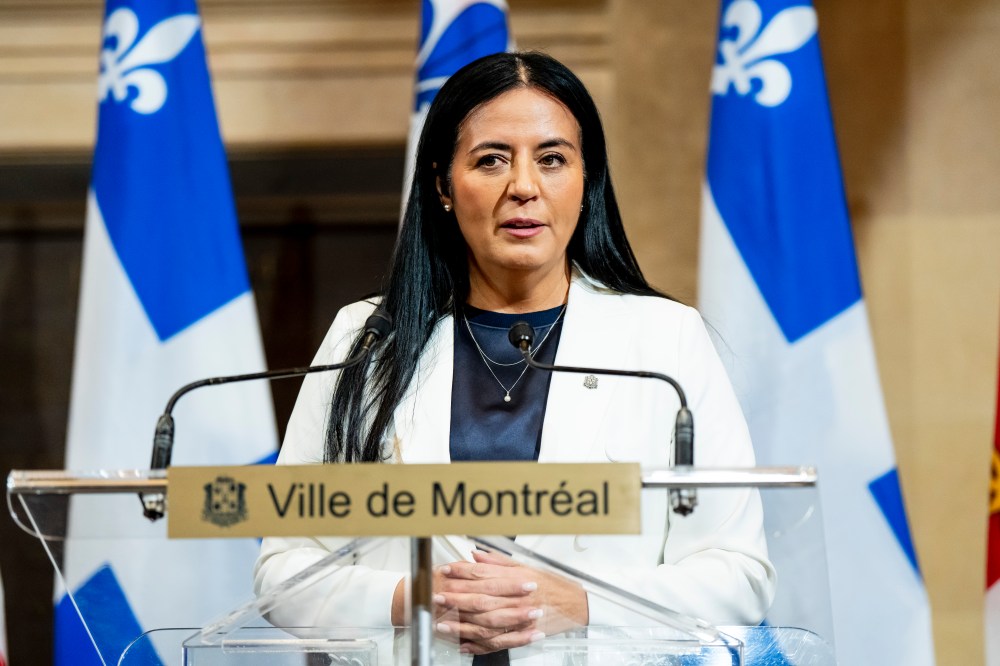
“Police work is becoming more and more complex, and our municipalities are facing more and more situations of instability, aggressiveness, and intimidation,” the mayor said. “The citizens, they want … transparent institutions and practices that continue to improve. Our responsibility as an employer is to act.”
Martinez Ferrada’s administration also says it will conduct a review of police interactions with civilians to study what leads them to stop people and whether they are respecting established criteria.
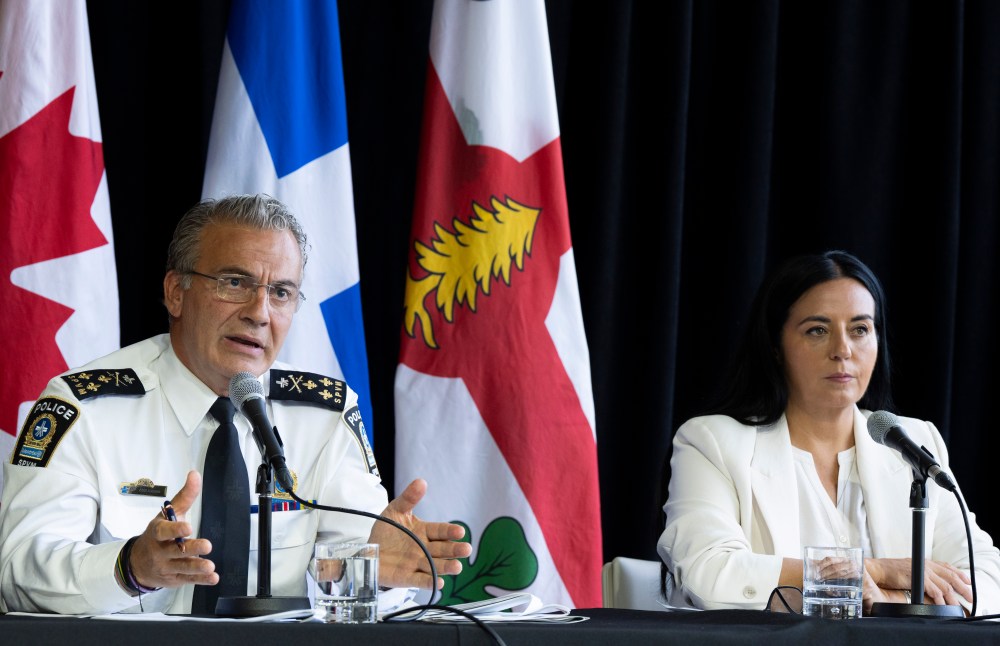
Speaking alongside the police chief and the head of the police brotherhood, Martinez Ferrada said the city plans to adopt a new bylaw banning insults toward city employees, including police as part of the city’s new approach.
A debate around banning insults against police in Montreal was sparked in March after videos of a man insulting a police officer with a barrage of misogynistic comments went viral.
The brotherhood has been advocating for such a rule for over a decade.
If adopted, the bylaw could give police new powers to issue fines for someone who insults them or another municipal employee. Such rules are in place in municipalities including Quebec City, Sherbrooke, Que., and Laval, Que.
“Montrealers have every right to criticize the city, challenge our decisions, and hold us accountable. It is part of our democracy,” the mayor said. “The bylaw is about protecting the people who serve Montreal every day.”
Some lawyers and social justice advocates are questioning whether the city should give police more powers, without public consultation, while mired in scandal.
Friday’s announcement comes two months after police dismantled a 16-member patrol unit at a station in the Montréal-Nord neighbourhood, following allegations of criminal behaviour and misconduct in their interactions with racialized residents.
Ted Rutland, a professor of geography at Concordia University who researches policing in Canada, notes that police already have several tools to handle situations with belligerent citizens.
In an interview, he said police can charge citizens with obstruction of justice, uttering threats, hate speech, or libel.
The man who posted the video of himself insulting an officer was charged with defamatory libel under the Criminal Code in July and pleaded not-guilty.
But Rutland warns a new bylaw that prohibits insults could disproportionately impact victims of racial profiling, the unhoused, and other vulnerable people.
“There are people who are rightly frustrated by what they’re experiencing,” he said. “This gives the police another tool to punish them even further.”
Despite criticism that a new bylaw banning insults could encroach on Charter rights like freedom of expression, dignity and privacy, Police Chief Fady Dagher said on Friday that “freedom of speech is not absolute.”
Yves Francoeur, the head of the brotherhood, said the goal “is not to hand out fines” but to “prevent violations of dignity and to avoid violent verbal escalations.”
The mayor said a motion would be tabled at the next council meeting on Monday for debate about the bylaw and that she expected it to be adopted in September.
Lawyer Mike Diomande, who led a successful class-action lawsuit alleging systemic racism amid Montreal’s police force, expects the bylaw to be challenged in court, if adopted.
“When it comes to fundamental rights, it’s up to the courts to draw the line,” he said. “It’s not up to the police to decide what constitutes an insult and what doesn’t. That leads to arbitrariness.”
Body cameras ‘within a year’
Martinez Ferrada said the city aims to roll out body cameras within a year.
Dagher said cameras “help objectively document police intervention, police interaction and promote a better understanding of events.”
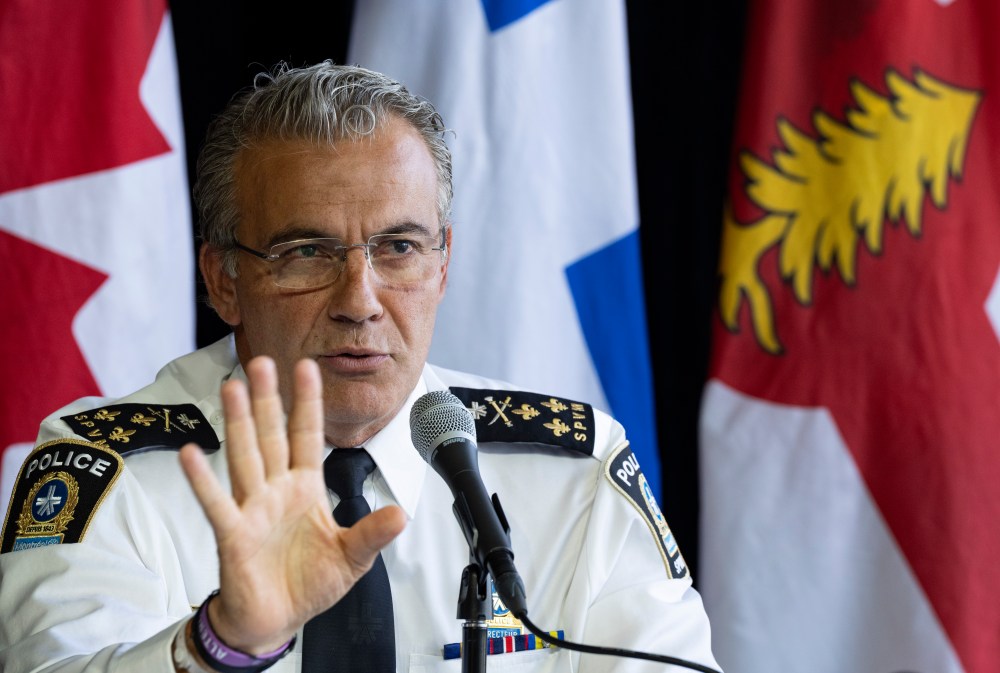
However, both the mayor and police chief said there are logistical details around privacy, data collection, video storage and their use in courts that need to be hashed out before every officer receives a camera.
The Quebec coroner released a report earlier this week urging Montreal’s police service to adopt body cameras after the death of 29-year-old Abisay Cruz. The report said police and witness accounts of officers’ behaviour leading up to Cruz’s death differed significantly and that cameras would increase accountability.
Martinez Ferrada’s administration earmarked $40 million for police cameras in its first budget. But the mayor has said she needed co-operation from the provincial government to ensure footage can be submitted as proof in court.
She said Friday’s announcement aims to pressure the government to move on the issue.
When asked if she believes body cameras will be enough to restore public trust in police, the mayor said “the answer is no.”
“There’s much work to be done and many conversations to have,” she said. “This is one of the tools, but this is not the magic tool … It’s going to take time.”
This report by The Canadian Press was first published Aug. 21, 2026.