

Yukon First Nations firefighters wonder why they haven’t been called to help in B.C.
Advertisement
Read this article for free:
or
Already have an account? Log in here »
To continue reading, please subscribe:

Digital Subscription
One year of digital access for only $205*
- Enjoy unlimited reading on winnipegfreepress.com
- Read the E-Edition, our digital replica newspaper
- Access News Break, our award-winning app
- Play interactive puzzles
*First annual payment billed as $205.00 + GST for one year. This annual subscription will automatically renew at $233.00 + GST every 52 weeks (10% off the regular annual price of $259.35). Offer available to new and qualified returning subscribers only. Cancel any time.
To continue reading, please subscribe:
Add Free Press access to your Brandon Sun subscription for only an additional
$1 for the first 4 weeks*
- Enjoy unlimited reading on winnipegfreepress.com
- Read the E-Edition, our digital replica newspaper
- Access News Break, our award-winning app
- Play interactive puzzles
*Your next Brandon Sun subscription payment will increase by $1.00 and you will be charged $17.95 plus GST for four weeks. After four weeks, your payment will increase to $24.95 plus GST every four weeks.
Read unlimited articles for free today:
or
Already have an account? Log in here »
Fire crews with Yukon First Nations Wildfire say they are ready, willing and able to help with out-of-control fires burning in British Columbia and are wondering why they haven’t received the call.
The organization’s CEO Nick Mauro said he had 40 or so firefighters with the skills and training ready to go and despite having sent crews to both Alberta and B.C. in other fire seasons, they haven’t received the call this year.
Mauro pointed out that international crews were being used to fight B.C’s. wildfires but not his Canadian crews, putting some of the blame on the Yukon government, while also attributing certification problems to “gatekeeping” that was a form of discrimination.
“So we’ve been told by Yukon government, they just don’t have the capacity to send our crews out,” he said.
“(I’m) trying to understand why that’s the case, why they’re willing to send their crews out … but not our sustained action crews is really frustrating.”
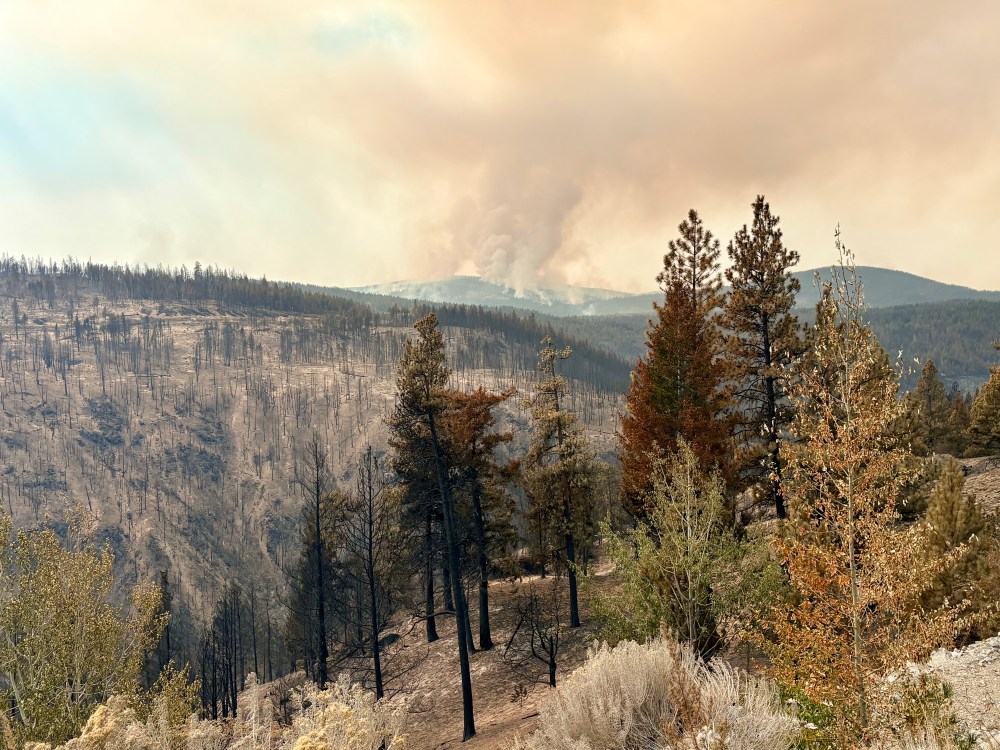
B.C.’s wildfire fight this season has involved crews from across around Canada and internationally, including from Australia, Mexico, New Zealand and Costa Rica. Last month, the Yukon government sent 24 of its firefighters to Terrace, B.C.
Wildfire resources from across Canada and internationally are co-ordinated through the Canadian Interagency Forest Fire Centre.
In a statement, the agency said it did not determine the type of resources mobilized between agencies, or hire firefighters, and its role was to co-ordinate requested resource types between agencies.
“Each individual provincial or territorial fire management agency is responsible for their own hiring and contracting, and from these hired and contracted resources, CIFFC ensures that requested resources can be mobilized,” the statement said.
The B.C. Wildfire Service said in a statement that it was up to the Yukon government to have initiated any deployment in B.C.
The wildfire service said it reaches out to the interagency centre to ask for specific resources like crews or helicopters and the request is then circulated to the other provincial and territorial governments.
“Because this company is located in the Yukon and does not operate in B.C., their deployment here would need to be initiated by the territorial government in the Yukon and co-ordinated through CIFFC.”
Wayne Potoroka, the spokesperson for the Yukon Department of Community Services, said in a statement that Yukon First Nations Wildfire firefighters had been offered for deployment.
But he said it was always up to those requesting help to determine “the amount and type of crews that they are looking for to fill the operational need.”
The statement said all fire crews, including those with Yukon First Nations Wildfire, were given equally given opportunities through the interagency centre to deploy as availability allowed.
He said Yukon First Nations Wildfire crews had been released by the Yukon government twice to support firefighters in the Northwest Territories.
Yukon First Nations Wildfire is a partnership between nine Yukon First Nations.
Mauro said he was also frustrated that its crews have been unable to get top Type 1 certification that is given automatically to crews run by provincial and territorial governments.
He said his crews have the same qualifications but can’t be certified as Type 1 — the variety most provinces ask for — because they are considered a “non-government” crew.
“It’s super frustrating and on so many levels. The system we operate in wasn’t built with Indigenous-led crews in mind. Honestly, it feels a lot like gatekeeping and for Indigenous-led crews specifically, it functions as discrimination, whether or not that was the intent or not,” he said.
“The nations that YFNW represents are self-governing and so we’re asking for the same opportunities that these other governments get across Canada, the same trust and the same seat at the table to be able to designate these members and these Indigenous crews as Type 1”
The Canadian Interagency Forest Fire Centre said it was “continuing to work with Indigenous partners to better understand and address barriers to the participation and deployment of Indigenous wildfire resources.”
This report by The Canadian Press was first published Aug. 21, 2026.