

Sculpture’s designers create celebratory safe space
Winnipeg team behind national LGBT monument spent six years bringing it to fruition

Advertisement
Read this article for free:
or
Already have an account? Log in here »
To continue reading, please subscribe:

Digital Subscription
One year of digital access for only $205*
- Enjoy unlimited reading on winnipegfreepress.com
- Read the E-Edition, our digital replica newspaper
- Access News Break, our award-winning app
- Play interactive puzzles
*First annual payment billed as $205.00 + GST for one year. This annual subscription will automatically renew at $233.00 + GST every 52 weeks (10% off the regular annual price of $259.35). Offer available to new and qualified returning subscribers only. Cancel any time.
To continue reading, please subscribe:
Add Free Press access to your Brandon Sun subscription for only an additional
$1 for the first 4 weeks*
- Enjoy unlimited reading on winnipegfreepress.com
- Read the E-Edition, our digital replica newspaper
- Access News Break, our award-winning app
- Play interactive puzzles
*Your next Brandon Sun subscription payment will increase by $1.00 and you will be charged $17.95 plus GST for four weeks. After four weeks, your payment will increase to $24.95 plus GST every four weeks.
Read unlimited articles for free today:
or
Already have an account? Log in here »
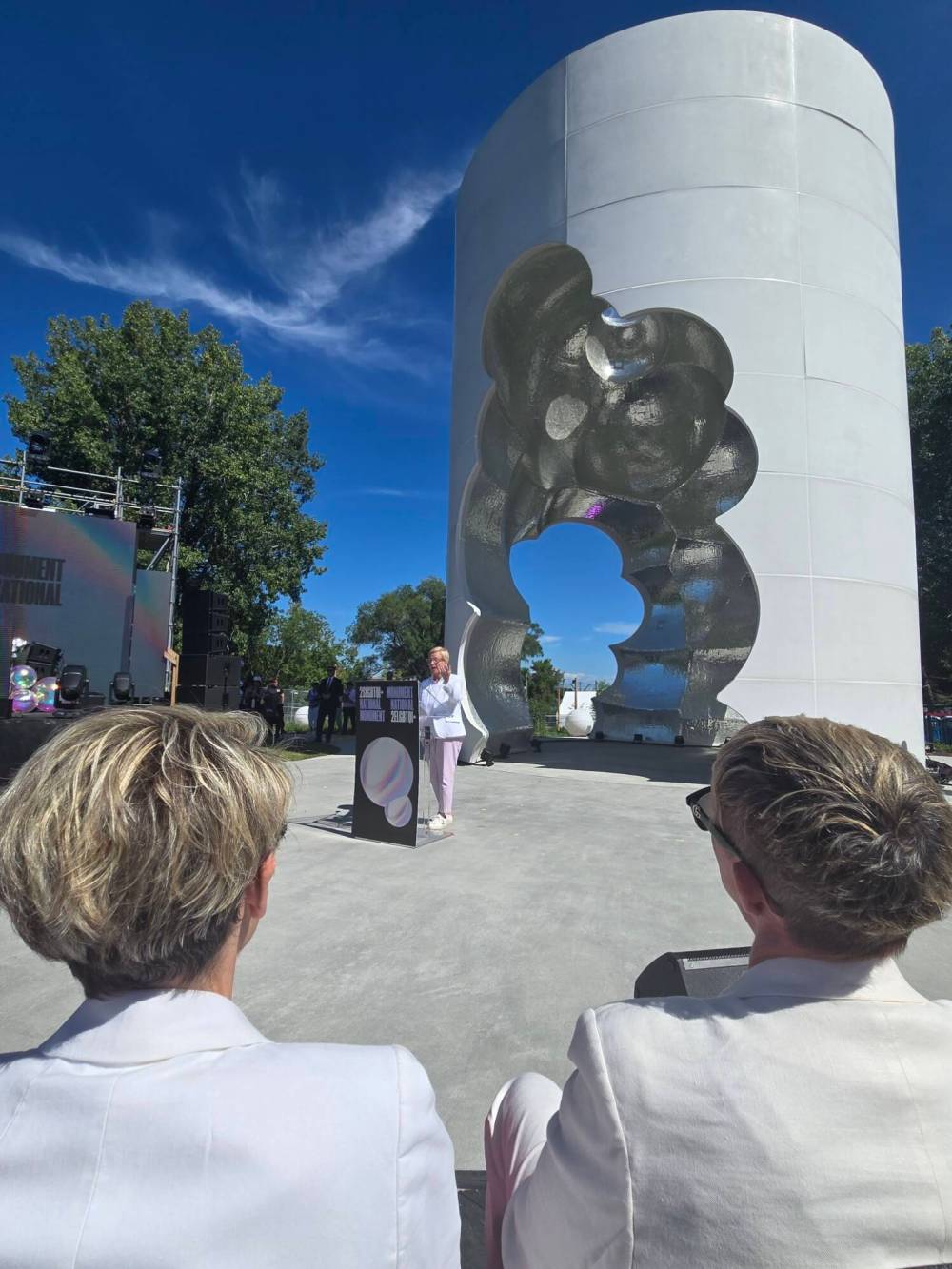
The Winnipeg team behind a national monument recognizing the LGBT Purge were in Ottawa to celebrate its official unveiling Friday.
Thunderhead is the work of local artists Shawna Dempsey and Lorri Millan, Liz Wreford and Peter Sampson of Public City Architecture, and knowledge keeper Albert McLeod, who served as cultural adviser for the project.
The team beat out 31 international submissions for the project, which is permanently located at 201 Wellington St. in Ottawa along the Ottawa River, in view of Parliament.
SUPPLIED
Thunderhead, a national monument recognizing the LGBT Purge designed by a Winnipeg team, is unveiled to the public Friday in Ottawa.
“We are a beacon internationally around the world of what democracies can do about inclusion, about human rights,” McLeod said.
The Purge was a government campaign that systematically harassed and fired LGBTTQ+ members of the Canadian Armed Forces, the RCMP and the federal public service between the 1950s and 1990s.
The monument’s conception came after 719 Purge survivors won a class-action lawsuit against the federal government in 2018. Of the settlement money, $15 million was set aside to pay for the monument’s design and construction.
The funds used would have gone to Purge victims had they lived long enough to make a claim in the class action.
The monument is designed to represent a thundercloud, which symbolizes an incoming storm. In Indigenous culture thunderheads are clouds that are home to the thunderers, which are beings whose storms renew the land.
“We thought that was appropriate for this pushback against homophobia and transphobia, but also you know that after the rain, everything is replenished and things are put back where they’re supposed to be,” McLeod explained.
SUPPLIED
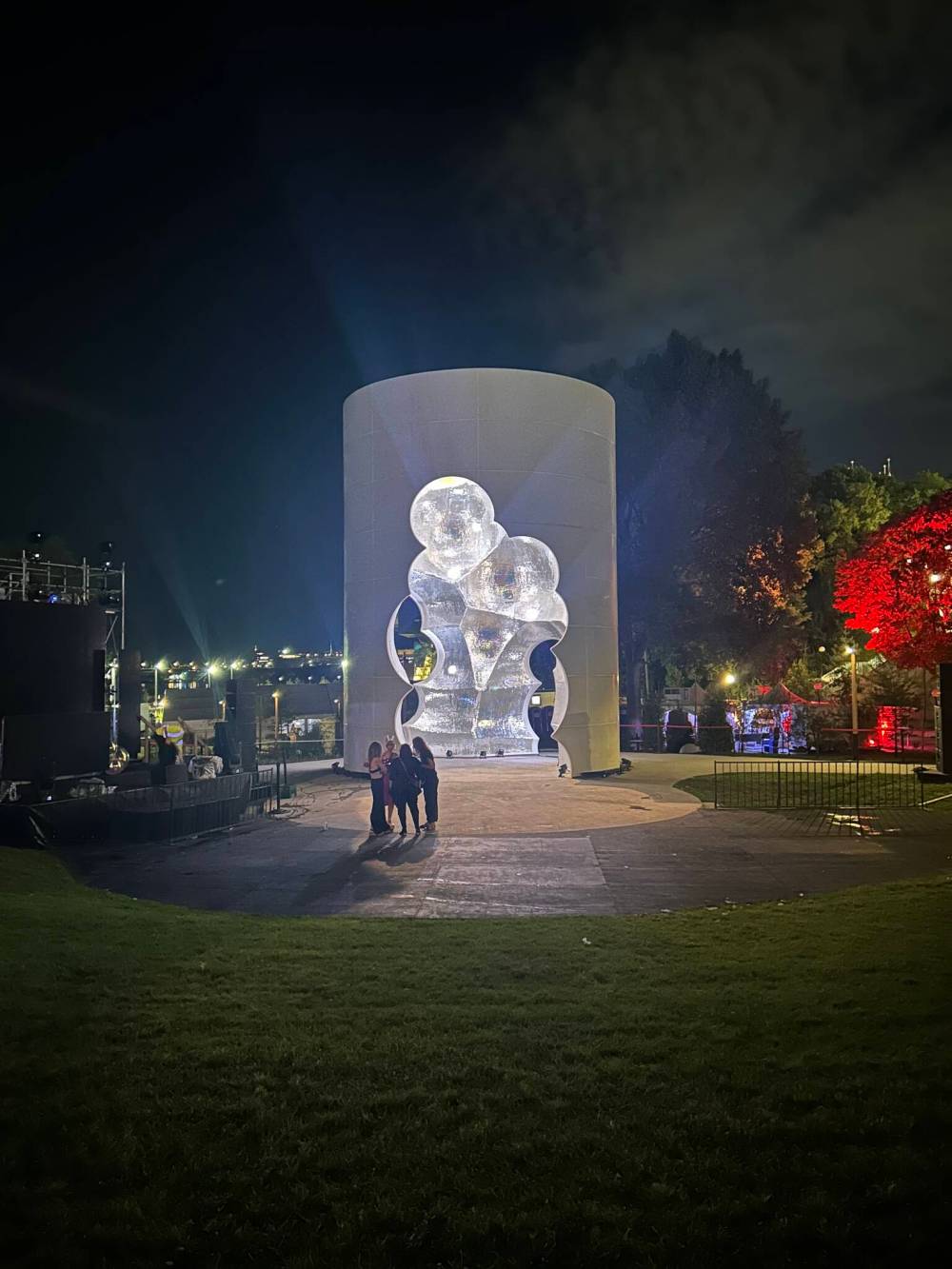
The monument intentionally includes a stage element where people can take up space and be seen.
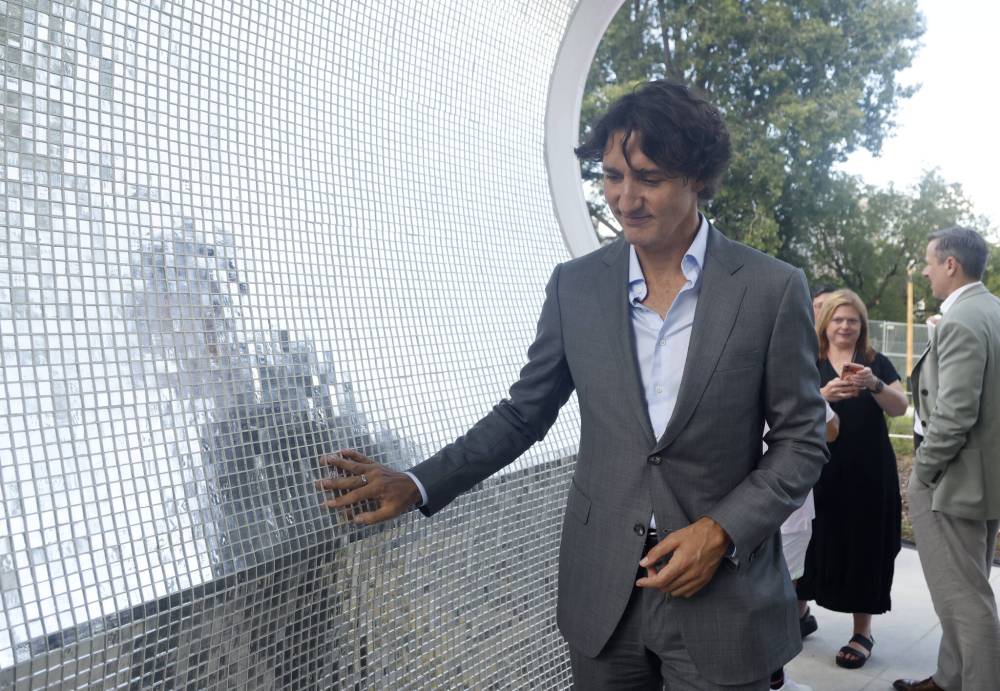
The monument is an inverted cloud that visitors can walk though. The interior of the monument is adorned with mirrored panels that are supposed to represent disco balls, an homage to the disco era of the 1970s, as well as those in the queer community who have died.
Longtime artistic partners Dempsey and Millan — known for such performance pieces as Lesbian National Parks and Services and installations such as Wild Ride — came up with the concept, inspired by Prairie thunderstorms.
At the Ottawa event, Dempsey said, “We needed it to be a space where we could bring our total selves, where we could bring our pain and our passion, where we could bring our protests and our playfulness.
“We really wanted it to embody the queer love of beauty and glam and our queer love for each other.”
A design like Thunderhead had never been done before, but from conception to completion, little had to change, which principal landscape architect Wreford says rarely happens.
The structure is made out of glass fibre-reinforced concrete and glass panels, and took two years to build.
“To hold on to an idea from the beginning right through to the end over six years is really difficult and takes a lot of work and pressure on everybody involved. So it’s been pretty intense, but so worth it,” Wreford said.
The Winnipeg team spent five years on its design and construction and had to travel to Ottawa often to oversee its construction.
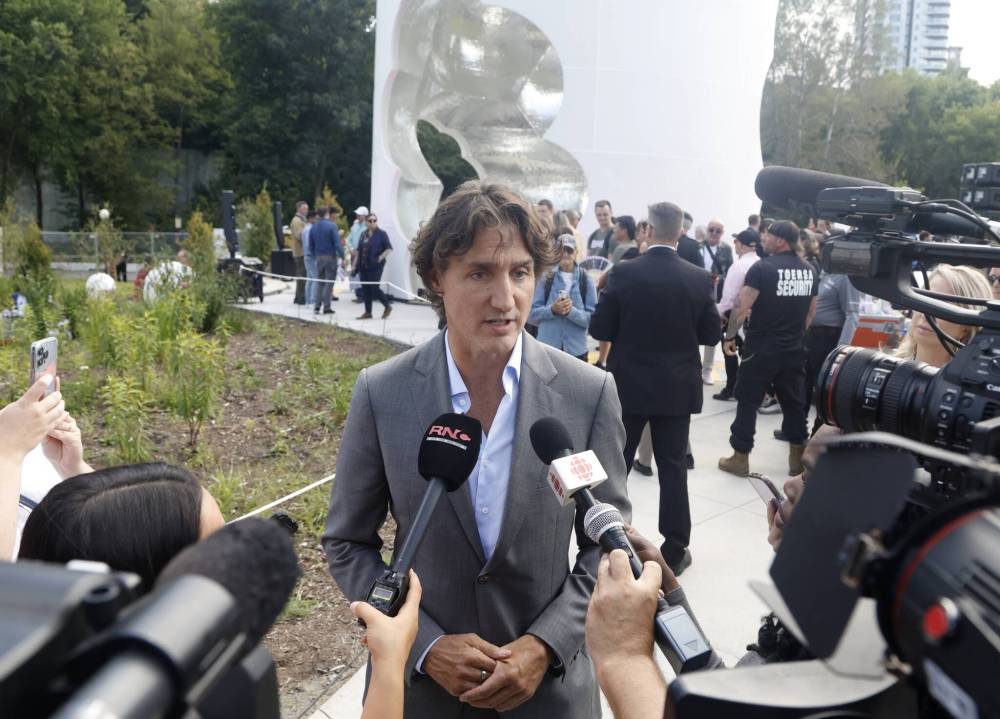
Friday’s unveiling was attended by Purge survivors and various dignitaries from the federal government, including former prime minister Justin Trudeau, who formally apologized for the Purge in 2017.
The monument also features a tribute to the map markers used by the government to surveil queer gathering spots in Ottawa, a narrative wall, a healing circle that can be used for ceremonies and a fruit orchard. The healing circle includes 13 stones that were collected by two spirit people from every province and territory in Canada.

Given the current political climate in the United States, where President Donald Trump has repealed several federal policies aimed at protecting the LGBTTQ+ community, Wreford said the monument matters more now than ever.
“The most important comment that we heard was someone came up to me and said, ‘I feel safe in here’ and I don’t think there’s many public spaces that feel safe to a lot of people and a lot of communities,” she said. “And to have created one that allows people to inhabit a public space and feel safe in that way and seen and heard is so incredible and such an honour.”
Similar monuments exist elsewhere, such as the Homomonument in central Amsterdam, which uses granite pink triangles to evoke the cloth badges Nazi used in concentration camps to identify LGBTTQ+ people.
— with files from the Canadian Press
nicole.buffie@freepress.mb.ca
Nicole Buffie
Multimedia producer
Nicole Buffie is a reporter for the Free Press city desk. Born and bred in Winnipeg, Nicole graduated from Red River College’s Creative Communications program in 2020 and worked as a reporter throughout Manitoba before joining the Free Press newsroom as a multimedia producer in 2023. Read more about Nicole.
Every piece of reporting Nicole produces is reviewed by an editing team before it is posted online or published in print — part of the Free Press‘s tradition, since 1872, of producing reliable independent journalism. Read more about Free Press’s history and mandate, and learn how our newsroom operates.
Our newsroom depends on a growing audience of readers to power our journalism. If you are not a paid reader, please consider becoming a subscriber.
Our newsroom depends on its audience of readers to power our journalism. Thank you for your support.
Nicole Buffie
Multimedia producer
Nicole Buffie is a reporter for the Free Press city desk. Born and bred in Winnipeg, Nicole graduated from Red River College’s Creative Communications program in 2020 and worked as a reporter throughout Manitoba before joining the Free Press newsroom as a multimedia producer in 2023. Read more about Nicole.
Every piece of reporting Nicole produces is reviewed by an editing team before it is posted online or published in print — part of the Free Press‘s tradition, since 1872, of producing reliable independent journalism. Read more about Free Press’s history and mandate, and learn how our newsroom operates.
Our newsroom depends on a growing audience of readers to power our journalism. If you are not a paid reader, please consider becoming a subscriber.
Our newsroom depends on its audience of readers to power our journalism. Thank you for your support.
Related Articles
National monument marking LGBTQ+ persecution unveiled in Ottawa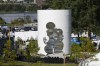
Advertisement Advertise With Us
Advertisement Advertise With Us