

Manitoba Hydro’s strategy: Deny, deny, deny
Advertisement
Read this article for free:
or
Already have an account? Log in here »
To continue reading, please subscribe:
Digital Subscription
One year of digital access for only $1.44 a week*
- Enjoy unlimited reading on winnipegfreepress.com
- Read the E-Edition, our digital replica newspaper
- Access News Break, our award-winning app
- Play interactive puzzles
*Billed as $5.77 plus GST every four weeks. After 52 weeks, price increases to the regular rate of $19.95 plus GST every four weeks. Offer available to new and qualified returning subscribers only. Cancel any time.
To continue reading, please subscribe:
Add Free Press access to your Brandon Sun subscription for only an additional
$1 for the first 4 weeks*
- Enjoy unlimited reading on winnipegfreepress.com
- Read the E-Edition, our digital replica newspaper
- Access News Break, our award-winning app
- Play interactive puzzles
*Your next Brandon Sun subscription payment will increase by $1.00 and you will be charged $17.95 plus GST for four weeks. After four weeks, your payment will increase to $24.95 plus GST every four weeks.
Read unlimited articles for free today:
or
Already have an account? Log in here »
Here’s a good story…
A man walks into your office and says, “Have I got a deal for you! I want $3 billion (plus perhaps a bit more) to build you something that you might use three or even four times a year, for maybe 30-60 hours each time. Sign here.”
You might respond… “and I’ve got a lovely bridge for sale…”
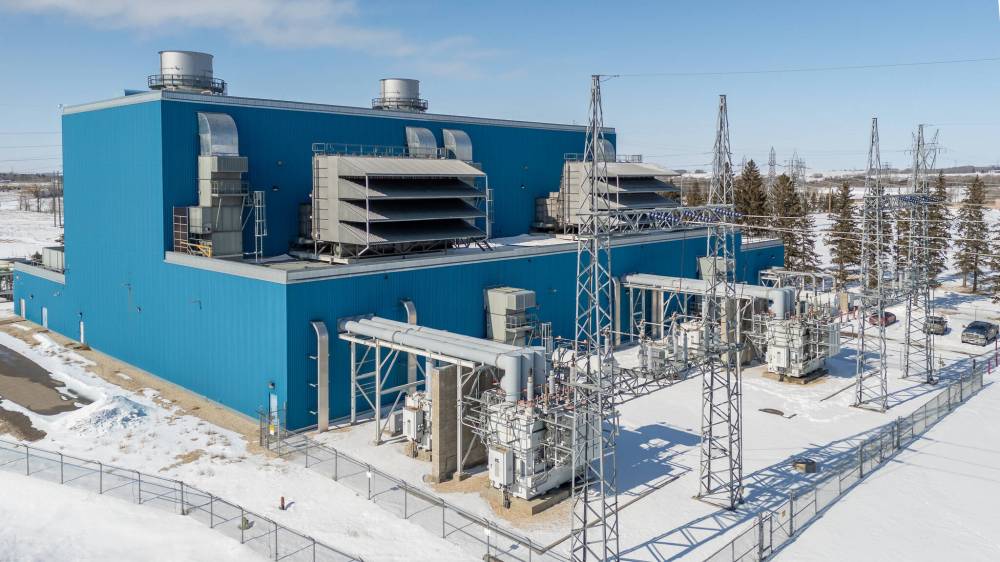
Manitoba Hydro photo
Manitoba Hydro’s Brandon gas turbines haven’t always be available when needed.
That is exactly what Manitoba Hydro wants — $3 billion or more, plus the fossil fuel bonus for peak load events that happen a few times each year. They assure us that the gas turbines will only be used very occasionally. At the same time, they tell us that we are headed for a crisis of energy supply by 2030.
These two statements don’t go together very well.
Either we will only need them a little bit or we will need them a lot after 2030.
Apparently, when we have had these peak events in the past few years, no one noticed … Hydro coped. They imported power from the U.S.A., which happens every year, in fact, not just at times of peak demand. They do have a couple of older turbines already in Brandon, but they failed several times in recent years, just when they were needed.
Poor maintenance, they said, as if that were a decent excuse.
Now we can finally understand what has happened. Instead of developing our own, privately-funded wind farms and selling power to Manitoba Hydro at far less than the cost of power from either Wuskwatim or Keeyask, Hydro is buying excess wind power from the U.S.A.
When the wind lessens there, we send them power from our vast storage lakes. Manitoba Hydro firms up U.S. wind. Perhaps they get a good rate for that; we don’t know. It is “commercially confidential.”
Though Hydro is a public, Crown corporation, it appears to have no concern for the broader well-being of Manitobans.
Without public knowledge and consent, it has deliberately stalled wind or major solar developments in Manitoba so it can make some money firming up American wind power.
It has denied the value of decentralizing the southern grid system with renewables such as wind, solar, biomass or battery backup.
It has denied the value of the jobs created by a robust wind industry.
It has denied rural municipalities the tax income from wind farms and the rent to land owners for erecting a turbine on their property.
The rural municipalities around the St. Leon Wind Farm have received over $16 million from that wind farm and landowners about the same. That is not small change in any community.
Hydro also denies the efficiency of wind, valuing it at only 20 per cent of its capacity.
Most Manitobans may believe that every Hydro dam produces its full, stated capacity all the time, but that’s not true.
Hydro’s older annual reports state that the capacity factor of the entire hydro system, that is the percentage of time it can guarantee power for all customers, is only 66 per cent.
Manitoba wind, on the other hand, has a capacity factor of 44 per cent.
In winter, when peak demands occur, it is higher, reaching 55 per cent on windy days. That’s because in winter the air is more dense and thus has more energy to turn those big turbine blades.
However, the biggest loss we encounter by denying wind energy development is in not using wind to deliberately smooth out our water storage use.
If, for example, we could use wind to help Hydro use less water in normal seasons and thus ensure higher freeze-up storage every year, the peak capacity of the whole system would grow.
Even an increase to 70 per cent would make a large difference in our ability to meet peak demands.
The current Public Utilities Board hearings have received many submissions seeking to overturn the rush to gas turbines without seriously examining all alternatives.

They have received a very strong report from an independent technical analysis that the current Hydro plan is biased towards its preferred solution and not technically capable of reaching the conclusions Hydro states.
That alone should send Hydro back to the drawing board, preferably with outside help, to seriously examine all the options for meeting future peak events.
Wind, solar and batteries have come a long, long way in 20-plus years.
How is it possible that the rest of the world is wrong?
Tim Sale is a former Manitoba minister of energy.